Best DIY Candy Kit Reviews for Family Fun Night Activities
With clear comparisons of safety, age-appropriate suitability, and delicious flavors, you can choose kits that deliver easy-to-follow instructions and supervise

This article contains Amazon affiliate links. As an Amazon Associate, CandiesAndSweets earns from qualifying purchases.
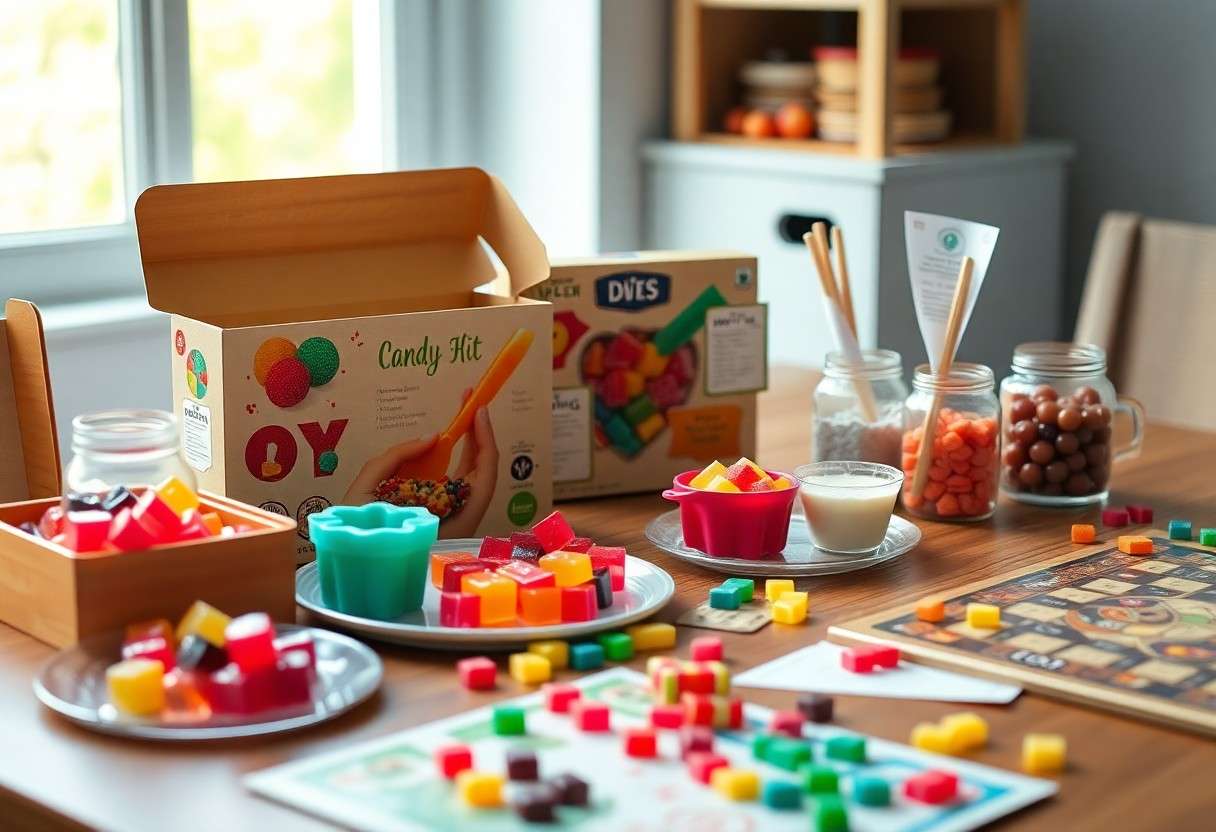
With clear comparisons of safety, age-appropriate suitability, and delicious flavors, you can choose kits that deliver easy-to-follow instructions and supervised fun while avoiding choking hazards or allergen risks.
Essential Criteria for Selecting DIY Candy Kits
Checklist to select kits that match your family: you should prioritize included tools, realistic prep time, easy cleanup, and safety-tested components while watching for small pieces or choking hazards.
Look for clear age ratings, step-by-step photos, full ingredient lists, and reliable reviews so you can judge whether a kit is a fun, manageable fit for your group.
Ingredient Quality and Safety Standards
Ingredients should be transparent and high-quality; you should prefer kits using natural ingredients and minimal preservatives while avoiding excessive artificial dyes.
Verify label details for common allergens, country of origin, and third-party safety-tested certifications before you unbox and let kids handle components.
Complexity Levels for Different Age Groups
Match difficulty to age: you should choose very simple mixes for toddlers, guided recipes for school-age kids, and complex molding or tempering for teens to keep tasks age-appropriate.
Consider whether instructions let you scale steps in stages so you can add responsibility, build motor skills, and avoid frustration.
Keep risky tasks like heating, boiling, or cutting for adults; you can assign stirring, decorating, and measuring to kids so you reduce exposure to hot surfaces and sharp tools.
Top-Rated Japanese Popin’ Cookin’ Kits
Popin’ Cookin’ kits deliver precise, playful projects that let you build tiny, edible masterpieces with kids. You’ll appreciate the clear step-by-step molds and the way recipes simplify portioning, so you can focus on fun rather than cleanup. Use these kits for a relaxed family night or as a quirky dessert option that sparks conversation.
You should note that many kits include small parts and powdered mixes, so supervise younger children closely and follow package age recommendations to keep the experience safe and enjoyable.
Miniature Sushi and Bento Creations
Miniature sushi kits let you assemble candy rice, seaweed, and toppings that mimic real bento art, giving you a delightful, hands-on craft that looks impressive on the plate. You can guide kids through shaping and decorating while practicing patience and attention to detail. You might also enjoy our guide on Why Do Chocolate Candies Sometimes Taste Fruity?.
Kids gain fine motor control and creative judgment as they press, mold, and plate each piece, and you’ll like how these activities double as a gentle lesson in presentation and portioning; watch sugar content if anyone in your group limits sweets.
Interactive Texture and Color-Changing Chemistry
Interactive kits teach basic cause-and-effect by transforming textures and colors with water or simple mixing; you’ll see immediate results as powders puff into gummy-like bites or dyes shift hue. Expect lively reactions that keep children engaged and curious. You might also enjoy our guide on How are chocolate candies crafted in small artisan shops?.
Textures often change from powder to gel, so you should handle mixtures on washable surfaces and keep wiping materials handy; many kits use non-toxic, food-grade ingredients but still require adult supervision during preparation.
Safety guidance: keep kits away from very young children due to choking hazards, avoid contact with eyes, and be prepared for possible staining since some colorants may stain clothing or skin; wash hands after handling and dispose of leftovers as instructed.
Best Kits for Chocolate and Gummy Enthusiasts
You can pick kits that mix chocolate and gummy projects for every age, with clear safety instructions and easy cleanup to keep family fun stress-free.
Kits from trusted brands include tempered-chocolate tools and pectin-based gummy mixes so you can control texture and portions; avoid kits lacking temperature guidance.
Professional-Grade Silicone Mold and Tempering Sets
Silicone molds with food-grade certification let you unmold candies easily, and you should choose sets that include a reliable thermometer so you can temper chocolate without overheating, since hot chocolate can burn.
Temper tools using the included instructions so you can achieve glossy finishes, and always supervise helpers because hot sugar and chocolate pose burn risks.
High-Yield Gummy Mixes and Natural Flavor Profiles
Gummy mixes that promise high yield let you stretch ingredients into multiple batches, and you can select natural-flavor kits that skip artificial dyes for a cleaner taste.
Opt for pectin or agar formulas when you want firmer chew, and check labels so you can avoid allergens and tailor sweetness for picky eaters.
Packaged mixes often demand precise timing and cooling, so you should use a kitchen scale and chill molds thoroughly to achieve consistent texture; follow exact measurements.
Nostalgic Candy Crafting: Taffy and Hard Sweets
This selection helps you choose kits for taffy and crystallized sweets so you can enjoy old-fashioned treats while keeping safety front of mind, since hot sugar stages require adult supervision.
Traditional Taffy Pulling Experiences
You’ll enjoy kits with clear instructions and sturdy tools for the taffy pull, but ensure an adult handles the boiling sugar and that children use the provided gloves to prevent burns.
Rock Candy and Sugar Crystallization Projects
Try kits that include clean jars, seeded sticks, and measured sugar so you can grow large crystals over several days while learning about sugar crystallization and enjoying a decorative, edible result.
Keep jars undisturbed and covered during growth, and follow cooling and stirring notes closely because dust or premature movement can stop crystal formation and ruin your batch.
Educational Value of Confectionery Projects
You gain practical math and science practice by measuring, timing, and observing reactions while making candy, which reinforces fractions, ratios, and cause-and-effect thinking. Hands-on experiments turn abstract ideas into tangible lessons that you can repeat and modify to test outcomes.
Mixing ingredients teaches you about states of matter and temperature control; watching sugar crystallize or caramelize shows visible chemical change. Hot sugar can burn, so you should supervise heat-related steps and use proper protective measures.
Practical Applications of Food Science
Observing texture, temperature, and ingredient interactions helps you explore basic food science concepts like crystallization, emulsions, and pH without a lab. Controlled experiments-changing one variable at a time-let you form and test hypotheses while keeping safety and cleanliness a priority.
Enhancing Fine Motor Skills and Instructional Literacy
Handling piping bags, molds, and tiny decorations strengthens your fine motor control and hand-eye coordination as you squeeze, place, and adjust delicate pieces. Small parts can be choking hazards, so you should monitor young children closely during detailed tasks.
Reading recipes and following step-by-step instructions improves your procedural reading and attention to sequence; interpreting measurements and labels teaches practical literacy you use every day. Check labels for allergens before you begin to keep activities safe for everyone.
Conclusion
Taking this into account, you can choose DIY candy kits that match your family’s ages, time, and skill level; look for clear instructions, safe ingredients, and reusable tools to get the best experience. You will create hands-on activities that teach simple cooking skills while delivering sweet results, and selecting kits with varied projects keeps every family night fresh and fun.


