Circular Economy Principles Transform Confectionery Industry Waste Management Practices
Many confectionery businesses are adopting circular economy principles to revolutionize their waste management practices. By implementing strategies that priori

This article contains Amazon affiliate links. As an Amazon Associate, CandiesAndSweets earns from qualifying purchases.
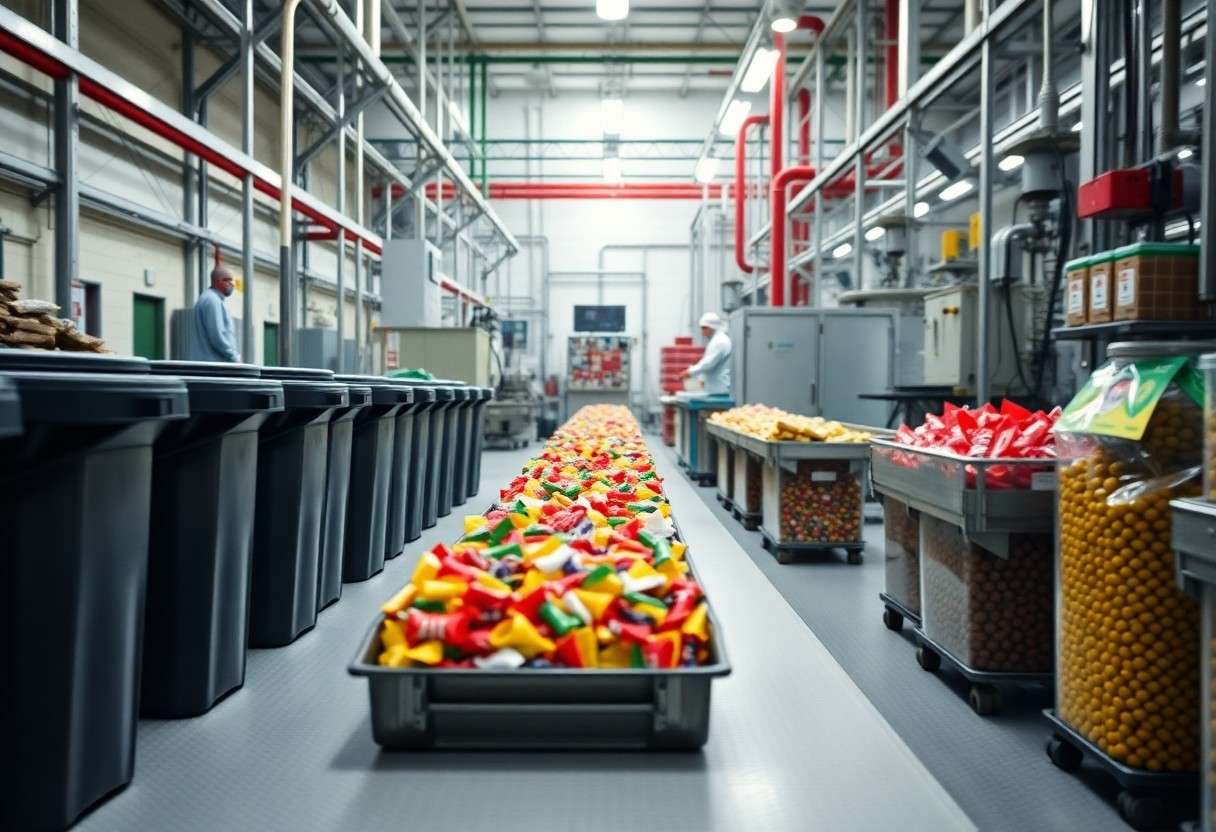
Many confectionery businesses are adopting circular economy principles to revolutionize their waste management practices. By implementing strategies that prioritize sustainability, you can reduce waste, enhance resource efficiency, and create a positive environmental impact. This approach not only benefits your company’s bottom line but also aligns with the growing consumer demand for eco-friendly practices. Discover how integrating these principles can lead to innovative solutions, effectively managing waste while contributing to a greener future for the confectionery industry.
Circular Economy in Confectionery
Definition and Key Principles
A circular economy focuses on redefining growth by prioritizing resource longevity, waste reduction, and sustainability. In the confectionery industry, this translates to designing products that minimize resource extraction and environmental impact while maximizing reuse and recycling. You can implement practices such as designing recyclable packaging, creating take-back programs, and utilizing food waste as a resource for new products, thus shifting away from the traditional linear model of produce-consume-dispose.
Important principles include designing for durability, promoting resource efficiency, and fostering innovation in waste transformation. Confectionery companies are beginning to embrace sustainable sourcing of ingredients, opting for local and organic producers, which reduces transportation emissions and supports local economies. By prioritizing these principles, you establish a more resilient supply chain that can adapt to shifting consumer preferences and regulatory demands.
Benefits of Circular Economy Approaches
Adopting circular economy practices in the confectionery sector brings numerous benefits, including cost savings, enhanced brand reputation, and improved regulatory compliance. By reducing waste, you lower disposal costs and can even find new revenue streams through the sale of by-products. This model not only appeals to eco-conscious consumers but also strengthens relationships with stakeholders, positioning your brand as a leader in sustainability.
Economic advantages emerge from a shift toward more efficient resource use, where companies can save on raw materials and waste management expenses. For instance, companies that practice waste-to-energy innovations, where by-products from candy production are converted into energy, demonstrate not only sustainability but also profitability. This alignment of environmental and financial goals ultimately empowers your business to thrive in an increasingly conscientious marketplace, enhancing customer loyalty and market competitiveness.
Current Waste Management Practices in the Confectionery Industry
Waste management in the confectionery industry often relies on traditional disposal methods, focusing on landfilling and incineration. With increasing pressures for sustainable practices, a gradual shift towards recycling and composting is taking place. However, many manufacturers still face the challenge of effectively managing the diverse types of waste generated during production, packaging, and distribution processes. Recent studies indicate that a considerable portion of waste remains unaccounted for, ultimately leading to inefficiencies and lost resources.
Common Waste Types
The confectionery sector produces various waste types that significantly impact the environment and overall efficiency. Key waste types include:
- Excess raw materials
- Packed waste from packaging materials
- Expired or damaged products
- Food processing waste such as sugar dust or chocolate shavings
- Contaminated materials that cannot be reused
Perceiving the composition of these waste streams can aid in identifying potential opportunities for resource recovery and reprocessing.
| Waste Type | Source |
|---|---|
| Excess raw materials | Production process |
| Packed waste | Packaging operations |
| Expired products | Inventory management |
| Food processing waste | Manufacturing |
| Contaminated materials | Quality control |
Challenges Faced by Manufacturers
Manufacturers encounter various challenges in waste management, primarily driven by industry standards, consumer preferences, and regulatory pressures. A lack of standardized practices makes it difficult to implement comprehensive waste reduction strategies. Additionally, the fast-paced nature of the confectionery market can lead to overproduction and wastage. Compliance with increasingly stringent regulations regarding waste disposal and recycling further adds complexity, often resulting in increased operational costs.
These challenges underscore the need for manufacturers to adopt innovative waste management solutions. Integrating technology for waste tracking and optimizing production practices can help minimize waste generation. Additionally, collaboration with suppliers to enhance the recyclability of packaging materials can significantly reduce overall waste impact.
Circular Economy Strategies for Waste Reduction
Redesigning Products and Packaging
To effectively reduce waste in your confectionery business, start by rethinking how you design your products and packaging. Use materials that are biodegradable or compostable, ensuring that they leave a minimal environmental footprint. For example, consider switching from plastic wrappers to plant-based materials, which not only appeal to eco-conscious consumers but also align with sustainability goals. Additionally, simplify your packaging design to minimize excess material while still maintaining product integrity, potentially leading to lower production costs.
Collaborate with designers and engineers to create multi-functional packaging that can serve a purpose beyond just containing the product. Your packaging can be designed for reuse, such as creating containers that can be transformed into serving dishes or storage solutions after their initial use. This approach not only fosters brand loyalty but also encourages consumers to actively participate in waste reduction efforts.
Implementing Recycling and Upcycling Techniques
Integrating recycling and upcycling techniques into your operations can significantly mitigate waste. Establish partnerships with local recycling facilities to ensure that all recyclable materials from your production process are properly managed. Implement a reverse logistics system that allows you to collect used packaging from consumers for recycling, supporting a closed-loop system. By tracking your waste stream, you can continuously identify materials that can be recycled more efficiently, thereby reducing landfill contributions.
Upcycling offers an innovative avenue to turn what would typically be waste into valuable products. For instance, leftover ingredients from confectionery production can be transformed into unique snack items or beauty products. Sharing stories about how your business repurposes waste can resonate with consumers, building a stronger connection to your brand and encouraging them to choose your products over competitors.
The upcycling process not only showcases creativity but also drives consumer engagement and reinforces your commitment to sustainability. Consider launching initiatives where customers can submit ideas for upcycling initiatives or participate in workshops focused on repurposing leftover materials, fostering a community that supports circular economy principles.
Case Studies of Successful Circular Economy Implementation
- Unilever: Achieved 100% recyclable packaging for its ice cream brands, resulting in a 20% reduction in plastic waste by 2022.
- Ferrero: Reclaimed 50,000 tons of cocoa shell waste annually to produce energy and fertilizers, generating savings of €4 million each year.
- Mondelez International: Implemented initiatives that turned 100% of its cardboard packaging into recyclables, which has diverted over 25,000 tons of waste from landfills.
- Candy Kites: Utilized surplus confectionery waste to create eco-friendly energy bars, leading to a revenue increase of 30% since launch.
Industry Leaders and Their Practices
Leaders in the confectionery sector have embraced circular economy principles, reimagining how they handle waste and materials. For example, Mars, Incorporated has implemented a comprehensive program that maximizes resource efficiency across its supply chain. This includes reusing byproducts from chocolate production to create new products and minimizing waste through optimized operations. By partnering with local suppliers, Mars has enhanced its sourcing strategy while supporting regional economies.
Nestlé’s approach involves innovation in product design, primarily focusing on biodegradable packaging solutions. By investing over $2 billion in sustainable packaging technologies, Nestlé aims to reduce its carbon footprint significantly. These initiatives have led to impressive waste reduction metrics and set a benchmark for other companies in the sector to follow.
Measurable Outcomes and Benefits
Implementing circular economy practices generates tangible results that significantly benefit your confectionery business. Companies actively engaged in these strategies have reported considerable savings in waste management costs. For example, Unilever’s transition to circular packaging has not only reduced environmental impact but has also allowed for a 15% decrease in overall packaging costs.
Additional outcomes often include increased consumer loyalty and enhanced brand reputation. Brands that prioritize sustainability resonate well with environmentally conscious consumers, translating into stronger market positions. Companies like Ferrero demonstrate measurable improvements, where integrating energy recovery from waste has led to a 10% increase in overall operational efficiency.
Focusing on measurable outcomes reinforces the business case for adopting circular economy principles. Enhanced efficiency in resource utilization reduces costs, while innovative recycling and upcycling efforts lead to new product lines and revenue streams. Combining these elements not only mitigates waste but also positions your brand as a frontrunner in sustainable practices, appealing to a growing demographic that values corporate responsibility.
Stakeholder Engagement in Circular Economy Transformation
Role of Manufacturers
Your role as a manufacturer extends beyond production; embracing circular economy principles can redefine your environmental footprint. By integrating waste reduction strategies into your operational processes, you can reroute excess materials back into your production cycle. Companies like Mars, Incorporated have initiated programs for reusing byproducts from the manufacturing process, significantly lowering waste sent to landfills. Implementing closed-loop systems not only contributes to sustainability but also enhances your brand reputation among eco-conscious consumers.
Involvement of Consumers and Communities
Engaging consumers and local communities is vital for a successful circular economy transformation. Your transparency regarding waste management practices can foster trust and encourage consumer participation in sustainability initiatives. Programs like sharing reward points for returning used packaging can incentivize consumers to recycle more effectively while creating a sense of community around your brand. Research indicates that 73% of consumers are willing to change their consumption habits to reduce their environmental impact, showcasing the potential for a collaborative effort.
Policy and Regulation Supporting Circular Economy Initiatives
Government Policies and Incentives
Your understanding of circular economy principles can be enhanced by examining how government policies shape the confectionery industry’s waste management practices. Many countries have established incentives aimed at promoting sustainable practices among manufacturers. For instance, tax breaks and grants for companies investing in eco-friendly packaging or waste reduction technologies can significantly offset initial investment costs. In the EU, the Circular Economy Action Plan outlines specific targets for reducing waste in food production, which directly impacts how confectionery companies manage their byproducts and excess materials. These policies encourage you to innovate, enabling a shift towards sustainable practices that not only benefit your business but also align with global environmental objectives.
The effectiveness of such policies becomes evident in case studies, where countries have successfully increased recycling rates through legislations. For example, nations that have implemented extended producer responsibility (EPR) frameworks see higher rates of packaging recovery. This legislation holds you accountable for the lifecycle of your products, prompting you to design products that are simpler to recycle or reuse, further embedding circular economy principles into your operations.
Industry Standards and Collaborations
Your engagement with industry standards, such as the ISO 14001 environmental management standard, can drive more sustainable practices within the confectionery sector. These standards provide a structured framework for you to manage environmental responsibilities effectively, often leading to improved operational efficiencies and waste reduction. Collaborations between manufacturers and stakeholders such as suppliers, recyclers, and NGOs create networks that streamline resource sharing and innovation, directly impacting the circular economy. Companies that work together on shared goals can leverage collective expertise to enhance sustainability initiatives, resulting in more impactful waste management strategies.
Partnerships also foster transparency and shared knowledge around best practices, allowing you to adopt new technologies and processes for waste reduction. For example, coalitions focused on eliminating plastic waste encourage collective action among companies to improve packaging methods, ultimately transforming how waste is handled throughout the supply chain. By aligning with industry standards and collaborations, you position your business not only as a compliant entity but as a proactive leader in the circular economy movement.
To wrap up
With these considerations, you can see how embracing circular economy principles not only enhances sustainable practices but also optimizes waste management in the confectionery industry. By shifting your focus to resource efficiency and waste reduction, you can significantly minimize the environmental impact of your operations while potentially lowering costs. Adopting these principles makes you a part of a broader movement towards sustainability that appeals to both environmentally conscious consumers and investors.
As you explore opportunities to implement these practices, consider the strategic advantages they provide. You can learn about innovative solutions and new approaches by delving deeper into resources like Revolutionizing Waste Management Practices. This knowledge empowers you to not only improve your waste management systems but also position your business as a leader in sustainability within the confectionery sector.


