What Makes Coconut Milk Chocolate Taste Better Than Regular Chocolate
Just you notice how silky coconut fat rounds cocoa bitterness, while natural sweetness and lactose-free creaminess make the bar taste richer and kinder to sensi

This article contains Amazon affiliate links. As an Amazon Associate, CandiesAndSweets earns from qualifying purchases.
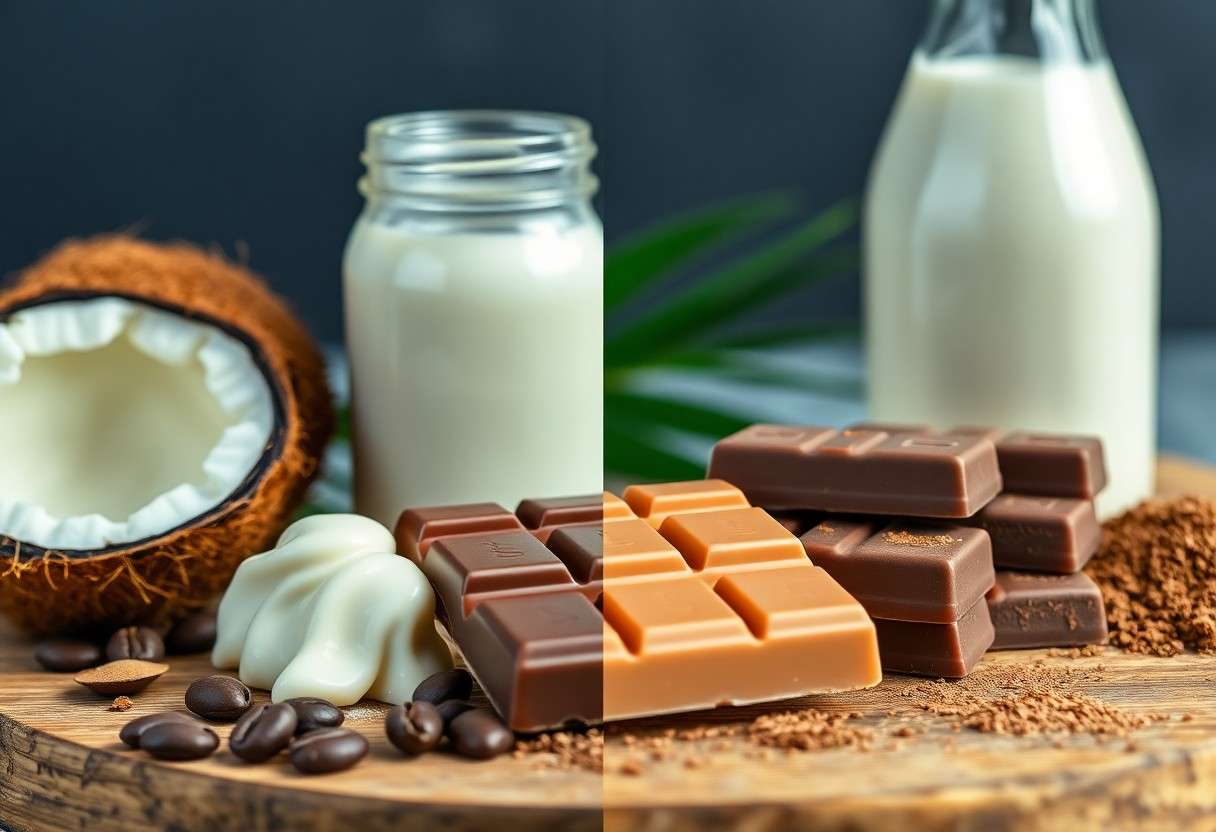
Just you notice how silky coconut fat rounds cocoa bitterness, while natural sweetness and lactose-free creaminess make the bar taste richer and kinder to sensitive stomachs, though coconut oils can alter texture and may trigger allergies.
The Lipid Profile: Medium-Chain Triglycerides and Mouthfeel
Coconut milk chocolate contains a higher proportion of medium-chain triglycerides (MCTs), which you perceive as a clean, quick-melting creaminess that coats the tongue without heavy waxiness.
You will find that those MCTs interact differently with cocoa solids, producing lighter mouthfeel and faster flavor release; overheating can cause fat separation, which ruins texture.
Analyzing the melting point of coconut fats
Melting point of coconut fats sits closer to mouth temperature than many cocoa butter fractions, so you experience earlier melt and amplified aroma as the fat liquefies in the mouth.
Achieving a superior velvety texture
Silkier texture comes from MCTs forming a thin, even lipid film; when you temper and emulsify precisely, coconut fats yield a velvety, lingering finish without heaviness.
Avoid aggressive heating and rapid cooling, since phase separation and graininess will destroy that velvety effect; you should aim for gentle warming and stable emulsification to preserve mouthfeel.
Flavor Synergy and Aromatic Complexity
Coconut fat carries and releases volatile cocoa notes so you perceive deeper, layered aromas; you notice creamier mouthfeel and intensified fruity, toasted nuances that make coconut milk chocolate feel more complex than plain variants.
Complementing the natural bitterness of cacao
Bitterness in dark cacao is tempered by coconut’s fats and sugars, allowing you to discern subtle floral and citrus notes. You gain contrast with reduced harshness, but note that excess coconut can mask delicate single-origin flavors.
The role of coconut’s inherent sweetness
Sweetness from coconut balances cacao acids and lets you focus on nuance instead of sharp edges. You experience rounded sweetness and a silkier finish, but be aware that coconut adds saturated fat and extra calories.
Beyond texture, coconut brings lactones and vanillin-like compounds that amplify tropical and creamy aromas, so you detect layers absent in regular chocolate; you should also consider allergy risks for sensitive individuals when choosing coconut milk chocolate.
Nutritional Advantages Over Dairy
Coconut milk chocolate replaces dairy emulsions with a plant base, so you often skip lactose and many milk proteins, enjoying no lactose and frequently lower cholesterol intake compared with regular milk chocolate.
You also ingest medium-chain triglycerides from coconut that your body can use for quicker energy, though the ingredient contains higher saturated fat, so you should moderate portions to limit potential negative effects on blood lipids.
Bioavailability of plant-based fats
Plant-based medium-chain fatty acids in coconut milk are rapidly absorbed, reaching circulation faster than long-chain dairy fats and giving your body quicker fuel while improving the chocolate’s melt and mouthfeel for you.
Digestive benefits for sensitive palates
Lower lactose and fewer milk proteins mean you often experience less bloating and discomfort when you choose coconut milk chocolate, so your digestion can feel noticeably gentler after a serving.
If you have a milk allergy or lactose intolerance, coconut milk chocolate can be a safer option, but if you have a tree-nut allergy or coconut sensitivity you must check labels and avoid products that could trigger reactions.
The Clean Label Advantage
Clean labels matter to you when choosing chocolate; coconut milk bars often list just cocoa, sugar, and coconut milk, giving you short, transparent ingredient lists that read more like food than chemistry.
Eliminating the need for synthetic emulsifiers
Coconut milk brings natural fats and proteins that help bind cocoa and sugar, so manufacturers can avoid adding synthetic emulsifiers and keep formulations simpler for you.
You may accept a slightly different shelf profile or gentle separation in exchange for bars labeled with no added emulsifiers, which appeals if you avoid processed additives or have sensitivities.
Minimalist ingredient lists in craft chocolate production
Craft makers often favor coconut milk because it aligns with minimalist ingredient lists, letting you focus on origin, roast, and cacao varietal without hidden stabilizers.
Minimalist labels make it easier for you to verify sourcing and quality, and they reduce the chance that producers mask inferior cocoa with chemical fixes-an advantage if you prioritize flavor clarity.
Another benefit for you is that fewer ingredients let subtle cocoa notes shine through; coconut milk contributes a creamy mouthfeel without heavy processing, so you experience a cleaner, more expressive chocolate flavor.
Environmental and Ethical Sustainability
You weigh environmental and ethical trade-offs when choosing coconut milk chocolate, since coconut typically yields lower greenhouse gas emissions than dairy but can drive deforestation and monocultures if mismanaged. Producers you support determine whether the net impact protects biodiversity or accelerates habitat loss.
Comparing carbon footprints: Coconut vs. Dairy
Comparison of key metrics
| Metric | Coconut vs Dairy |
|---|---|
| Greenhouse gases | Coconut: generally lower emissions (no methane). Dairy: high emissions from ruminant methane. |
| Land use | Coconut: tropical plantation expansion can cause deforestation risk. Dairy: extensive pasture and feed-crop conversion. |
| Water use & welfare | Coconut: lower water and no animal welfare impacts. Dairy: high water use and animal welfare concerns. |
Comparing lifecycle footprints helps you favor products that cut total emissions, not just on-farm figures; check processing and transport to see the real carbon cost.
Supporting regenerative agroforestry
Agroforestry systems mix coconuts with shade trees and crops, increasing soil carbon and habitat complexity so you back carbon sequestration and richer biodiversity when you choose those sources.
Seek brands that publish supply-chain traceability and support farmer training in mixed-species planting, because greenwashing can mask ongoing habitat loss where production expands into native forest.
To wrap up
You find coconut milk chocolate more enjoyable because the medium-chain fats and natural sugars in coconut deliver a silkier, creamier mouthfeel that smooths cocoa’s bitterness. The subtle coconut aroma rounds flavor notes, while lower dairy proteins reduce astringency and allow cocoa and sugar to blend more cleanly. If you prefer softer melts and a tropical accent, coconut milk chocolate consistently produces a more balanced, indulgent bite than standard milk chocolate.


