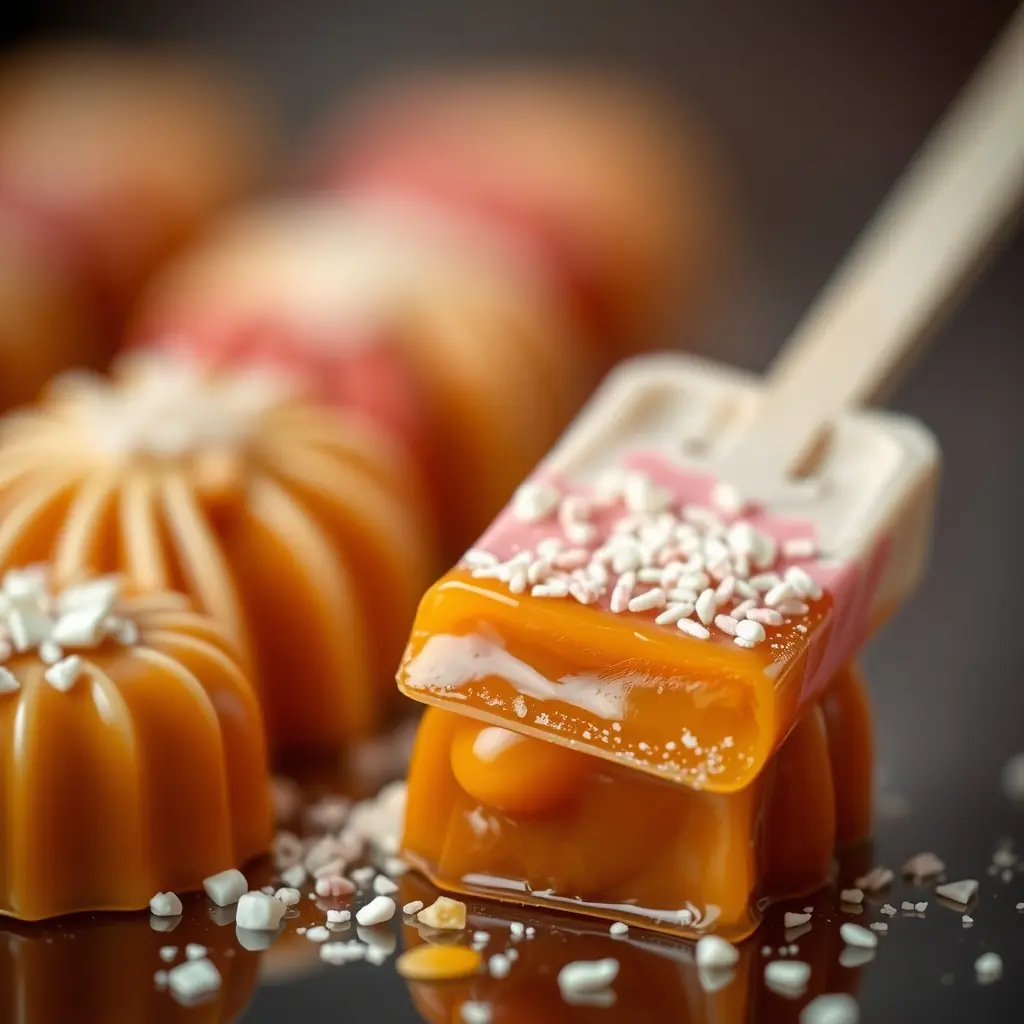
Dulces Secretos: 6 Hechos Fascinantes sobre el Mundo de las Golosinas
Descubre los secretos detrás de tus dulces favoritos y conoce la historia detrás de algunos de los productos más emblemáticos de la industria

 Guardar
El mundo de las golosinas es rico en historia y tradición. Desde los pequeños detalles en la fabricación de los dulces hasta las anécdotas detrás de sus nombres, hay mucho que descubrir en este apasionante universo.
En este artículo, exploraremos algunos de los hechos más interesantes y sorprendentes sobre el mundo de las golosinas, desde su origen hasta su evolución a lo largo de los años. Prepárate para descubrir los secretos detrás de tus dulces favoritos y conoce la historia detrás de algunos de los productos más emblemáticos de la industria.
PEZ was invented in 1927 in Vienna, Austria by Eduard Haas III, originally marketed as a breath mint and smoking alternative; the name comes from the first, middle, and last letters of the German word for peppermint, 'Pfefferminz.'
Source: PEZ Candy official history
The Baby Ruth bar, launched by Curtiss Candy Company in 1921, was officially claimed by the company to be named after President Grover Cleveland's daughter Ruth Cleveland (who had died in 1904) — a story historians widely believe was a legal dodge to invoke baseball star Babe Ruth's fame without paying for the rights.
Source: HISTORY.com
Gummy bears were invented in 1922 by Hans Riegel of Haribo (founded 1920 in Bonn, Germany) as the 'Tanzbär' (Dancing Bear), a soft fruit gum modeled on trained performing bears; the original bears were 1.5 inches tall and made with gum arabic, not gelatin.
Source: Smithsonian Magazine
A standard 1.69 oz (47.9g) share-size pack of milk chocolate M&M's contains about 240 calories, 34g of carbohydrates (30g of it sugar), and 10g of fat.
Source: myfooddata (USDA-sourced)
The word 'lollipop' as applied to hard candy on a stick was trademarked in 1931 by the Bradley Smith Company of New Haven, CT, which had been selling 'Lolly Pops' since 1908; founder George Smith reportedly named it after a racehorse.
The red-and-white stripes on candy canes are a 20th-century addition — candy canes were originally solid white peppermint sticks, with striping and mass automation (via Gregory Keller's candy cane machine) not arriving until the 1950s.
Source: The Conversation