How Candy Became Part of Educational Tools
Many of you may not realize that candy has steadily transformed from a simple treat into an innovative educational tool. By integrating sweet confections into l

This article contains Amazon affiliate links. As an Amazon Associate, CandiesAndSweets earns from qualifying purchases.
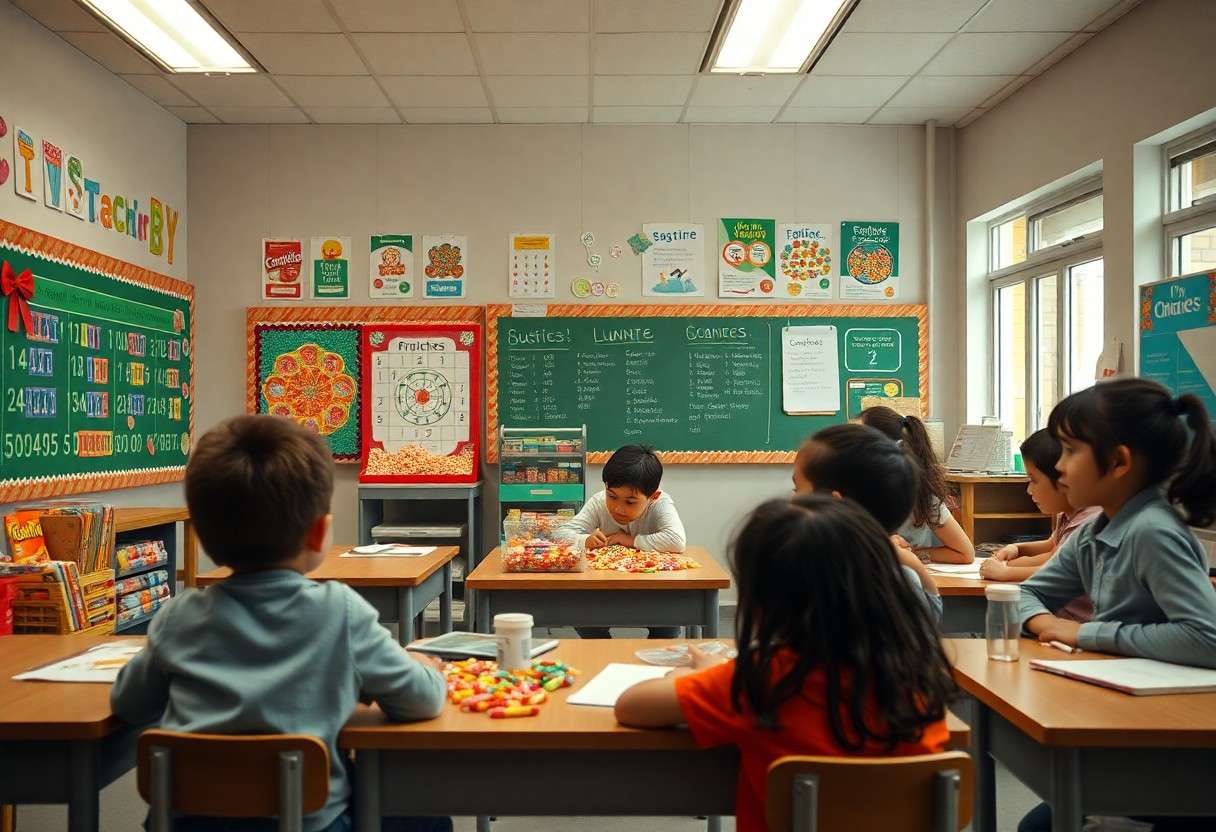
Many of you may not realize that candy has steadily transformed from a simple treat into an innovative educational tool. By integrating sweet confections into learning environments, educators have discovered a fun and engaging way to help students grasp complex concepts. In this post, you’ll explore the fascinating journey of how candy became a valued resource in classrooms, enhancing your understanding of creative teaching methods that turn the ordinary into extraordinary learning experiences.
The Historical Intersection of Confectionery and Education
Sweet Beginnings: Candy’s Role in Early Learning
Candy has not always been just a treat for indulgence; its history in educational settings traces back centuries. In the Renaissance period, sweets were used as rewards for children who excelled in their studies. Teachers often handed out small confections to those who demonstrated good behavior or achieved academic milestones, creating a connection between learning and positive reinforcement. This practice laid the groundwork for the idea that sweets could serve as effective motivational tools in education. Candies, especially colorful ones, drew attention and excitement, transforming the classroom into a more engaging environment.
The development of alphabet-shaped candies in the 19th century marked another innovative intersection of education and confectionery. Teachers leveraged these goodies as hands-on tools for teaching literacy to young children. These edible letters not only made learning the alphabet fun but also introduced tactile components into education that helped enhance memory retention. Such practices are rooted in the belief that combining sensory experiences with lessons can significantly boost a child’s ability to learn, paving the way for modern educational approaches that still employ similar concepts today.
Sugar Coated Knowledge: Classroom Practices of the Past
Classrooms of bygone eras were filled with innovative methods to capture students’ imaginations and bolster their learning experiences. Sweets, particularly in the Victorian and early 20th centuries, became integral to these methods. Reward systems involving candies encouraged students to participate and engage in their lessons actively. Teachers would organize spelling bees, and the victor would be rewarded with treats. This not only instilled a sense of competition but also made education enjoyable and coalescent with social interactions.
Beyond mere rewards, the use of candy as a multi-sensory educational tool extended into teaching concepts involving math and science. For example, simple candy counting activities would involve students using candy to visualize numbers and basic arithmetic operations. Lessons transformed into hands-on experiences as students learned fractions through sharing their sweets or measuring them for recipes in home economics classes. Such methods embodied the idea that education could extend beyond textbooks and into tangible, memorable experiences, making lessons stick with students long after the bell rang.
The Psychology Behind Candy as a Reward
The Science of Sugary Incentives: Motivation and Learning
Your brain has a remarkable way of linking rewards with positive experiences, and candy fits perfectly into this framework. The consumption of sugar can trigger the release of dopamine, a neurotransmitter associated with pleasure and satisfaction. As a result, when you use candy as a reward in educational settings, it can enhance motivation and reinforce learning. For children, this psychological underpinning makes tasks seem less daunting and more enjoyable. When faced with a challenge, the expectation of receiving a sweet treat can fuel your drive to complete activities, thus creating a powerful cycle of learning and reward.
Behavioral Conditioning: Reinforcing Positive Outcomes with Candy
Using candy as a reward ties back to behavioral conditioning, a concept rooted in the research of psychologists like B.F. Skinner. When you reward desirable behaviors with sweets, you create an association in your mind that helps reinforce those behaviors. This Pavlovian response isn’t exclusive to animals; it seamlessly applies to educational contexts. For instance, if a student completes a writing assignment and is rewarded with a piece of candy, the anticipation of that reward may motivate them to replicate this behavior in the future.
In essence, behavioral conditioning using candy emphasizes consistent reinforcement. The more frequently you associate completing tasks with receiving candy, the stronger the motivation becomes. Your brain begins to crave the reward, making the act of learning itself more enjoyable, and often less of a chore. Over time, students may internalize this association, leading to improved study habits and better academic performance.
Through this lens, consider how many academic professionals utilize candy not just as a treat, but as a tool to build a positive learning habit. When you consistently reward students with sweets after completing tasks, it fosters an environment where they associate learning with pleasure. This strategy not only encourages immediate results but also has the potential to cultivate lifelong learning patterns, reaffirming the idea that motivation and rewards can go hand in hand in creating effective educational experiences.
Candy in Modern Educational Settings: A Double-Edged Sword
Balancing Nutrition and Motivation: Teachers’ Perspectives
Your role as a teacher often involves finding creative ways to engage students effectively. Candy can fuel motivation, incentivizing students during lessons or as rewards for achieving homework milestones. For instance, a study from the Journal of Educational Psychology revealed that classrooms allowing small treats saw a 15% increase in student participation. However, this sweet reward system walks a fine line; many teachers grapple with concerns over sugar intake and associated health issues. Acknowledging the pleasure candy brings, some educators advocate for moderation while implementing structured guidelines surrounding its use.
In your own classroom, you might strive to weave candy into learning strategies without compromising your students’ health. Teachers are increasingly turning to non-food rewards like praise or extra recess time, realizing that alternative reinforcement can be just as effective. The goal remains clear: foster an environment where academic achievements are celebrated while maintaining an awareness of students’ nutritional needs. Many find themselves actively learning about more health-conscious alternatives to popular sugary treats, ensuring that motivation from sugary snacks fits within a broader context of encouragement and support.
The Debate: Healthy Alternatives vs. Traditional Treats
The discussion surrounding candy in educational settings brings to light a pivotal debate about healthy alternatives versus traditional sweets. This choice often becomes a reflection of broader societal health trends. Some schools are now mandating policies that eliminate sugary snacks from classrooms altogether, advocating for fresh fruits and vegetables, whole grains, and protein-based snacks. Schools in certain districts saw a marked improvement in overall student health, as evidenced by their participation in wellness programs and health assessments that reported a decrease in obesity rates.
Finding a balance is imperative in how you approach this debate. While traditional candy might seem like a harmless reward, it is imperative to consider long-term effects on health and behavior. A variety of programs now offer inventive solutions for healthier rewards, like fruit-based snacks or vegan, low-sugar candies. The shift towards healthier alternatives not only addresses dietary concerns but also reinforces messages about nutrition and well-being. This approach equips you to create a classroom that is both engaging and health-conscious, emphasizing learning and the joy of healthy living.
Innovative Uses of Candy in Lessons
Hands-On Learning: Incorporating Candy into STEM Education
In STEM education, candy offers an engaging way to explore complex concepts. For example, using candy pieces like gummy bears or M&Ms allows you to visualize scientific principles like density, buoyancy, or even chemical reactions. One popular activity involves the simple yet fascinating experiment where students observe how gummy bears expand in different solutions, providing real-time data that sparks discussions on osmosis and molecular behavior. Moreover, constructing models of structures using candies as building blocks has an added layer of enjoyment while also honing practical skills in design and engineering.
Math also benefits significantly from the inclusion of candy, particularly when teaching probability or statistics. By using candy to create experiments, you can easily show concepts like sampling distributions or the basics of data collection. An engaging lesson could involve counting and categorizing candies, where students develop hands-on experience with real data sets. This not only boosts participation but also helps you gauge understanding through interactive activities that feel more like play than study.
The Art of Teaching with Sweets: Creative Language and Arts Applications
Candy serves as a unique tool for enhancing language arts learning, a method that brings storytelling to life. One effective technique involves asking students to create narratives based on specific candies, encouraging them to weave imaginative tales that include characters inspired by their favorite treats. This approach not only sparks creativity but also allows you to assess vocabulary usage and storytelling structure in an enjoyable context. Art projects that use candy as materials—like creating mosaics or sculptures—also foster fine motor skills while blending visual arts with culinary creativity, making the learning experience multi-dimensional.
Incorporating candy into an art lesson allows you to examine color theory through candy wrappers or explore concepts of texture and shape with different candies. Using sweets, students can analyze designs and patterns, subsequently using their findings to create a piece influenced by their exploration. By fostering a connection between edible treats and artistic expression, you create a vibrant classroom atmosphere that encourages students to think outside the box while boosting their enthusiasm for learning.
Cultural Perspectives on Candy in Education
Global Sweet Traditions: How Different Cultures Use Candy as Learning Tools
Across various cultures, candy takes on unique roles that extend beyond simple indulgence. In Japan, for example, traditional candies like ‘wagashi’ are often used in tea ceremony practices to teach precision, ritual, and respect for art. Students learn about the historical significance and craftsmanship involved in making these sweets, fostering a connection to their cultural heritage while simultaneously enhancing their understanding of cooperative learning and patience. In contrast, in Mexico, the celebration of Día de los Muertos incorporates sugar skulls, offering not only a treat that honors deceased loved ones but also an opportunity for children to learn about family history, traditions, and the importance of remembrance in their cultural identity.
Such practices underscore that candy is not merely a sugary distraction in educational contexts but an engaging tool that connects students to their own cultures. In many traditions, the act of making candy—whether it’s pulling taffy or crafting homemade lollipops—becomes an experiential learning opportunity where math, science, and art converge. These experiences allow you as an educator to highlight cross-disciplinary skills while fostering an appreciation for cultural diversity among students.
Candy and Celebrations: Building Community Engagement through Treats
Celebrations are integral to community and cultural bonding, and candy often plays a pivotal role in these events, creating a shared experience that strengthens relationships. School events like Halloween parades or Valentine’s Day parties provide not just a break from the routine but opportunities for engagement, creativity, and collaboration. You may notice that when children share candies or work together to create themed treats, they learn valuable lessons about generosity and teamwork. Such shared activities encourage social interaction, making the classroom environment more inclusive and enjoyable.
The impact of celebrations on community building goes beyond the classroom. Research shows that festive moments involving shared treats can improve classroom morale and cohesion. For instance, when your students participate in a candy-making project for a school fundraiser, they not only hone critical skills in teamwork and creativity but also engage with their broader community through service. This practice not only enriches their educational experience but also instills a sense of responsibility and pride, creating a lifelong connection between education and local culture.
Summing up
Summing up, the integration of candy into educational tools arose from an understanding of how sensory experiences enhance learning. You may find it fascinating that by leveraging the appeal of candy, educators are able to engage students more effectively, making subjects like math and science more relatable and interactive. This approach not only keeps learners interested but also fosters a positive learning environment where concepts can be grasped through play and exploration.
This shift toward incorporating candy as a teaching aid highlights the evolving nature of education, where traditional methods give way to innovative strategies that cater to different learning styles. As you explore this trend, consider how incorporating elements of fun, like candy, can transform your teaching or learning experience, creating memorable moments that resonate well beyond the classroom. The marriage of education and enjoyment shows that learning can be both enlightening and pleasurable, encouraging a lifetime love for acquiring knowledge.


