How Fair Trade Cacao Supports Ethical Sourcing
Over your chocolate habit, you can back Fair Trade cacao that pays fair prices, protects against child labor, and promotes sustainable farming, so you enjoy tre

This article contains Amazon affiliate links. As an Amazon Associate, CandiesAndSweets earns from qualifying purchases.
Part of our Sustainable & Eco-Friendly Chocolate & Candy guide.
Over your chocolate habit, you can back Fair Trade cacao that pays fair prices, protects against child labor, and promotes sustainable farming, so you enjoy treats with a clear conscience.
The Bitter Truth: Why Conventional Cocoa is a Hot Mess
Reality: you love chocolate, but the supply chain often hides child labor, poverty wages, and hidden middlemen that wipe out farmers’ margins while keeping costs low for big brands.
Markets push yields and cheap beans, so you end up funding systems with weak traceability where abuse stays buried under glossy packaging and clever marketing.
Child Labor: The Ingredient Nobody Asked For
Workers on many farms include children doing hazardous tasks like using machetes and mixing agrochemicals, which means your snack can carry a human cost-exploitation.
Families trapped by debt often send kids to the fields, so you face a choice: buy into that cycle or favor products with transparent, fair pay and verified sourcing.
Deforestation: Taking the “Forest” Out of Rainforest
Forests are cleared for cocoa, so you can be consuming goods tied to habitat loss and rising carbon emissions when sourcing is unregulated.
Chainsaws and slash-and-burn clearances turn rich ecosystems into barren monocultures, which strips soil, displaces wildlife, and worsens climate risks you already feel. You might also enjoy our guide on Ethical Cacao Sourcing: Revolutionizing the Chocolate Industry.
Commitments like Fair Trade premiums and strict traceability give you the power to choose brands that pay farmers to protect trees and keep forests standing.
Fair Trade 101: More Than Just a Pretty Logo
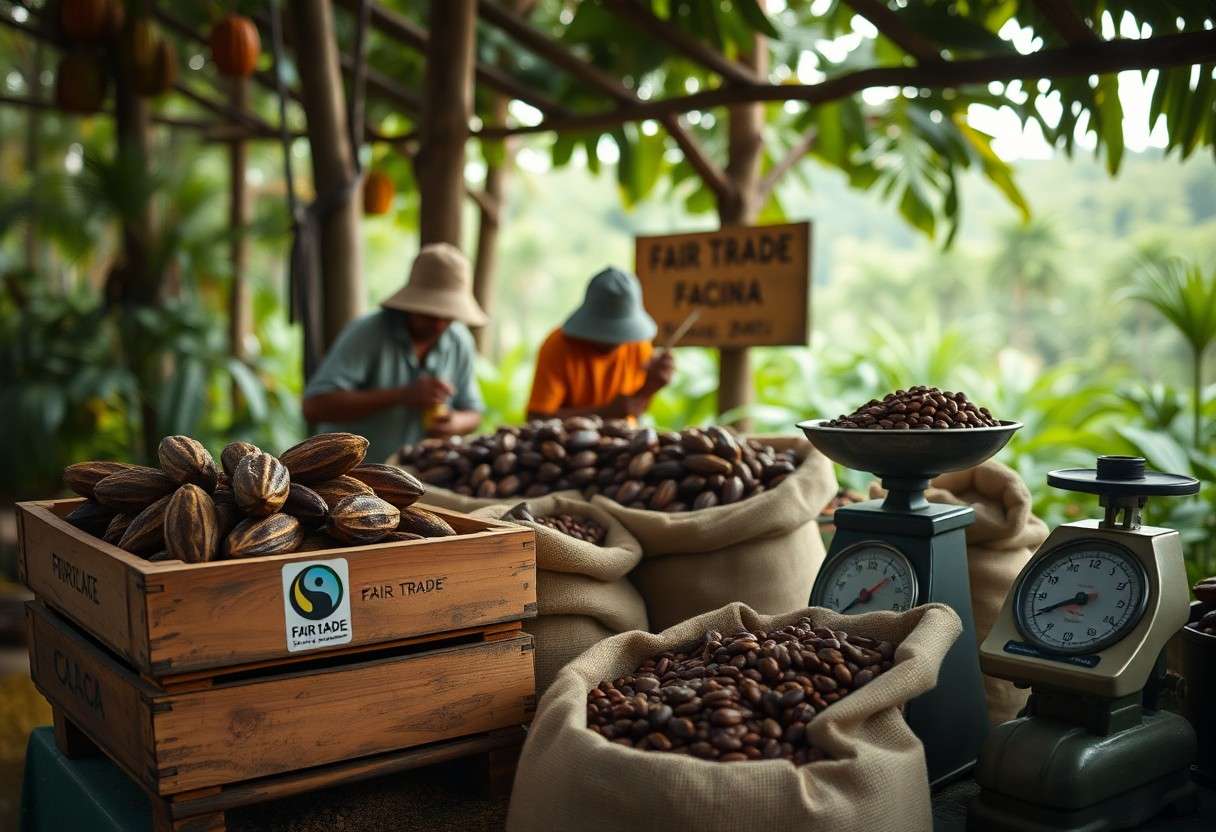
You spot the Fair Trade label and should know it’s more than a pretty logo: it signals standards on wages, working conditions, and bans on child labor that directly affect the cacao in your chocolate.
Standards also demand traceability and audits so you don’t unknowingly support exploitation, while encouraging better farming practices and environmental care that keep quality high and supply steady. You might also enjoy our guide on Best Organic Candy Brands Supporting Fair Wages.
The Minimum Price: Because Farmers Can’t Live on Vibes
Guarantees like the Fair Trade minimum price mean you pay a bit more so farmers aren’t crushed by volatile markets, providing a real safety net that keeps communities fed and farms viable.
The Social Premium: Funding Schools, Not Just Snacks
Communities receive the Fair Trade social premium as extra funds you help provide, and those dollars typically go to schools, clean water, or clinics instead of disappearing into opaque chains.
Money is pooled and voted on by cooperatives you support, so your purchase can directly fund a teacher’s salary or build a classroom rather than lining middlemen’s pockets.
Traceability: Stalking Your Chocolate from Bean to Bar
You can track each lot through Fair Trade systems, seeing harvest dates, cooperative IDs, and premium payments so the route from farm to wrapper is visible. That reduces child labor risk and channels extra income back to families.
Blockchains and certified audits build an immutable trail that stops middlemen from washing bad batches, so you spot dodgy switches before they reach shelves. That kind of visibility protects workers and brands with verifiable records.
Supply Chain Transparency: No More Cocoa Ghosting
Cooperatives publish farm-level ledgers and shipment notes so when you scan a label you can confirm origin, price premiums, and certification status. That exposes cocoa ghosting and forces clearer, fairer buying.
Digital Receipts: Proving Your Bar Has Nothing to Hide
Scans attach a timestamped digital receipt to your bar showing harvest date, cooperative, and Fair Trade premium paid so you know funds reached the source. That holds brands accountable while you snack.
Receipts sometimes include GPS tags, weight manifests, and third-party audit notes so you can verify claims and flag discrepancies directly to certifiers; you become a watchdog with a taste for justice.
Power to the People: Strengthening the Farmer’s Hand
You see Fair Trade give farmers real clout in negotiations, so you can watch market rules bend toward more stable incomes rather than volatile spot prices.
Collectives let producers share knowledge and costs, so you witness improved quality control and access to training that brings premium prices.
Cooperatives: Strength in Numbers (and Chocolate)
Cooperatives teach you bookkeeping and quality checks while presenting a united front to buyers, which wins longer contracts and steadier cash flow.
Pooling harvests trims middlemen and makes it easier for you to meet certification rules, unlocking better market access and fairer terms.
Gender Equity: Breaking the Cocoa Ceiling
Women gain leadership roles in Fair Trade structures so you can spot wage gaps narrow and household decisions balance differently.
Growing female-led initiatives means you often see investments in schools and clinics, lowering the risk of child labor and boosting community resilience.
Programs provide you with training, childcare support, and microloans that let women reinvest earnings-resulting in higher yields and stronger households.
Earth-Friendly Eats: Saving the Planet One Bite at a Time
You get to choose chocolate that funds climate-smart farming: fair trade premiums support agroforestry and community projects, cutting deforestation and boosting farmer resilience so your snack tastes like progress, not exploitation.
Regenerative Farming: Giving the Soil a High Five
Cacao planted with regenerative methods returns nutrients through cover crops, compost, and shade trees, letting yields climb without synthetic inputs; by buying these bars you back soil health and reduced use of chemical fertilizers.
Biodiversity: Keeping the Jungle Jiving
Jungle-friendly farms preserve canopy layers and native trees, creating refuges for birds, insects, and mammals that enrich ecosystems and flavor-those habitats protect endangered species and sustain key pollinators.
Protecting biodiversity also means creating habitat corridors, planting native shade species, and banning harsh pesticides that can wipe out beneficial insects; when you pick certified cacao you lower the risk of pesticide contamination and back real ecological recovery.
The Ethical Eater’s Guide to the Grocery Aisle
You scan shelves like a detective; choosing Fair Trade cacao signals you prefer beans tied to better wages, safer work and a lower risk of child labor. Your small purchase nudges supply chains toward long-term contracts that actually stabilize farmers’ livelihoods.
Label Literacy: Decoding the Ethical Alphabet Soup
Look beyond pretty packaging: the Fair Trade seal, cooperative names and batch codes give concrete traceability, unlike vague buzzwords. You can compare claims quickly-organic addresses pesticides, while Fair Trade focuses on wages and community premiums.
The Price of Virtue: Why Goodness Costs a Few Extra Cents
Expect to pay a few extra cents per bar for a price premium that funds community projects, health care and seeds; that premium funds steps toward living wages rather than empty marketing. You’re buying both flavor and fairness.
That premium often flows to cooperatives that finance schooling, clinics and tools to prevent slash-and-burn farming, reducing the pressure that drives exploitation and deforestation. You’re literally tipping the balance toward steadier incomes and healthier forests.
Final Words
You get to savor chocolate knowing Fair Trade cacao pays farmers stable, above-market wages and funds community projects, which reduces pressure to cut corners. Producers adopt eco-friendly farming and traceable supply chains, so you can point at a wrapper and trust the story. Those fair premiums also improve working conditions and shrink child labor risks, letting you enjoy a treat that tastes like good ethics and better mornings. You might also enjoy our guide on Fair Trade Practices in the Global Confectionery Supply Chain.