Best Lavender Honey Caramels for Floral Flavor Enthusiasts
It's your concise guide to choosing lavender honey caramels: look for potent floral aroma, prefer pure honey and real cream, and note allergen risks from honey

This article contains Amazon affiliate links. As an Amazon Associate, CandiesAndSweets earns from qualifying purchases.
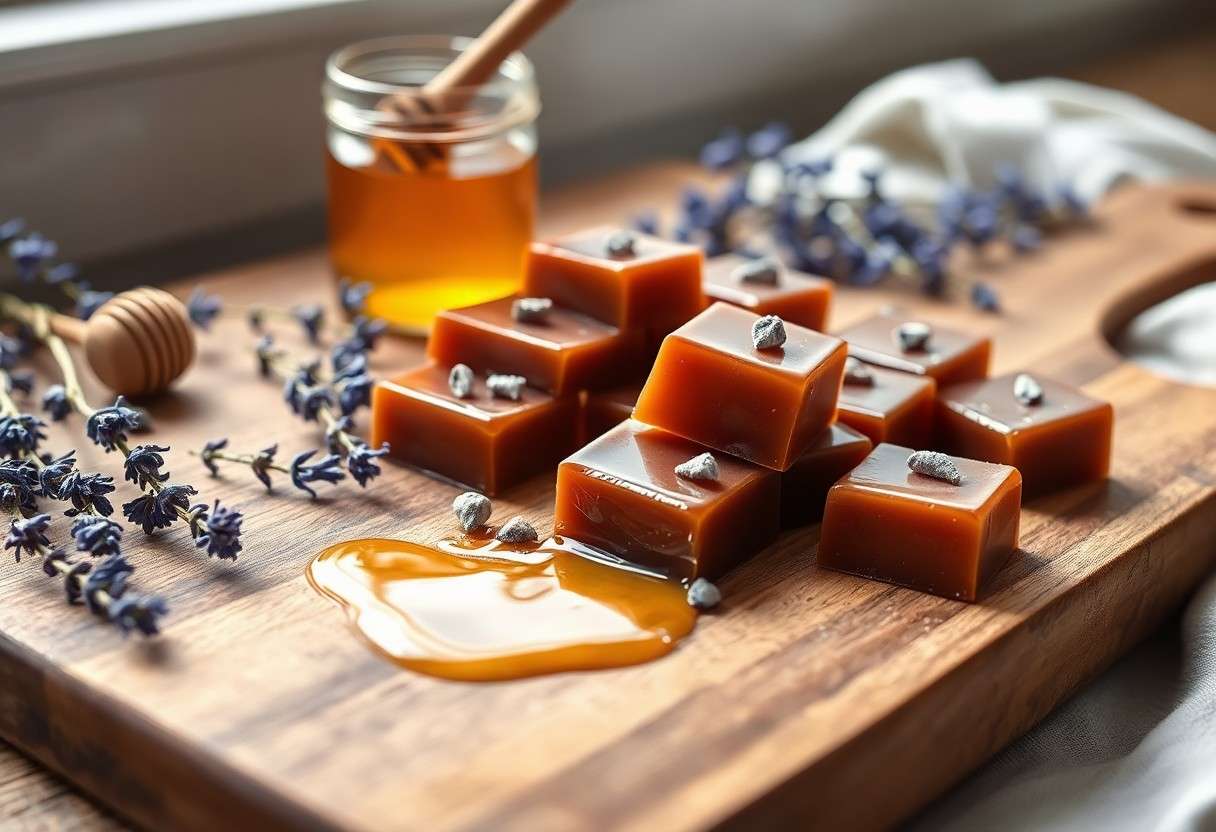
It’s your concise guide to choosing lavender honey caramels: look for potent floral aroma, prefer pure honey and real cream, and note allergen risks from honey or dairy.
The Science of Floral Infusion
Experiment with low-temperature infusion and short steep times so you bring forward delicate floral esters without extracting bitter terpenes, and avoid concentrated imperative oils because overinfusion can produce bitterness or digestive upset while gentle methods preserve the bright floral aroma you want.
Selecting Culinary-Grade Lavender Species
Choose culinary varieties such as Lavandula angustifolia for sweet, honey-friendly notes, and avoid lavandin or ornamental strains that often deliver medicinal, soapy flavors, so you preserve clean floral character.
Optimizing Honey Varietals for Flavor Synergy
Pair lighter honeys like acacia or orange blossom with lavender so you let delicate florals shine, whereas darker varietals such as buckwheat can clash, and you should test small batches to find the ideal balance.
Start with a conservative ratio-try about 1-2% dried lavender by weight or one teaspoon per 100g of caramel base-and you can increase cautiously, keeping in mind that small changes amplify floral intensity and can quickly become overpowering.
Key Quality Indicators for Premium Caramels
Texture guides you toward caramels that release cleanly from the wrapper; seek a soft chew with a slight snap and avoid batches that become sticky and clumpy, which signal overheating or poor sugar control.
Aroma reveals the balance between honey and lavender-you should smell a gentle floral note without any soapy or medicinal off-aromas, since those indicate excessive lavender or low-quality honey.
Achieving the Perfect Non-Stick Texture
Silky mouthfeel comes from precise cooking and timely cooling; you must stop heating when the thermometer hits the target to prevent graininess or crystallization.
Heat control lets you manage moisture and chewiness, so you should monitor temperature and stir consistently to secure a clean, non-stick finish that releases from foil without residue.
The Role of High-Fat Grass-Fed Dairy
Butterfat enriches flavor and mouthfeel, so you will taste a rounder, more sustained sweetness when you use grass-fed dairy, producing a pronounced buttery depth that complements lavender honey.
Cream quality changes setting behavior and shelf stability, and you should pick high-fat, fresh dairy to avoid weak set or oil separation that ruins texture.
Sourcing matters because pasture-fed herds yield milk higher in beta-carotene and omega fats, which can subtly improve color and texture-test small batches so you can measure the taste difference.
Top-Rated Artisanal Lavender Honey Brands
Choose brands that list lavender cultivar and hive location so you can taste a distinct floral signature; makers using single-origin lavender and raw honey deliver the purest profiles. You should also note that these caramels contain honey – unsafe for infants under 1 year.
Compare customer notes on aroma and texture, focusing on reports of a long-lasting floral finish and a soft, buttery chew that avoids graininess. You will prefer labels that publish harvest dates and purity testing.
Leading Small-Batch Confectioners
Seek small-batch confectioners who source local lavender and partner with microapiaries to preserve freshness; their limited runs often produce a clean, concentrated floral impact. You can expect clear sourcing statements and batch numbers that help you assess consistency.
Award-Winning Profiles in the Boutique Market
Celebrate makers whose caramels have taken regional awards for balance between perfume and sweetness, since those honors signal careful recipe control and tasting-room praise. You will often find award notes highlighting subtle floral complexity and restrained sweetness.
Winners commonly use gentle caramelization and hand-finishing techniques that protect aroma intensity, so you will notice a luxurious mouthfeel and pronounced lavender presence compared with mass-market versions.
Producers with accolades typically share judges’ comments and batch details, allowing you to confirm why a product stood out and whether its profile matches your preferred floral intensity and texture.
Evaluating the Sensory Experience
Evaluate how the caramel’s floral thread unfolds as you taste: you should perceive a bright lavender lift up front, a honeyed middle, and a warm, buttery finish; watch for any chemical or metallic off-notes that undermine the profile.
Identifying Top, Middle, and Base Flavor Notes
Detect the top notes by inhaling before you bite-you should find crisp lavender and light citrus; follow with the middle where honey and caramel round the experience, and finish by checking for a toasted, buttery base.
Assessing Aromatic Intensity and Mouthfeel
Judge aromatic strength by holding the caramel near your nose-if you find it too faint the infusion is weak, if it overwhelms you it signals excess oil; you press gently to assess whether the chew is silky, grainy, or cloying.
Observe how the aroma persists after swallowing: if the lavender lingers pleasantly you have a balanced infusion, whereas a persistent astringent or medicinal note indicates overuse; you should also note whether the coating leaves a silky film or an unpleasant dryness.
Conclusion
So you can select the best lavender honey caramels by choosing artisan batches that pair culinary-grade lavender with single-origin honey, yielding pronounced floral notes and a smooth, chewy finish. You will favor small-batch makers who list simple ingredients and clear sourcing.


