How Matcha Infused Chocolates Blend Japanese and Western Flavors
You taste how matcha's grassy umami and subtle bitterness enhances Western chocolate, blending Japanese tea tradition with European confectionery craft; antioxi

This article contains Amazon affiliate links. As an Amazon Associate, CandiesAndSweets earns from qualifying purchases.
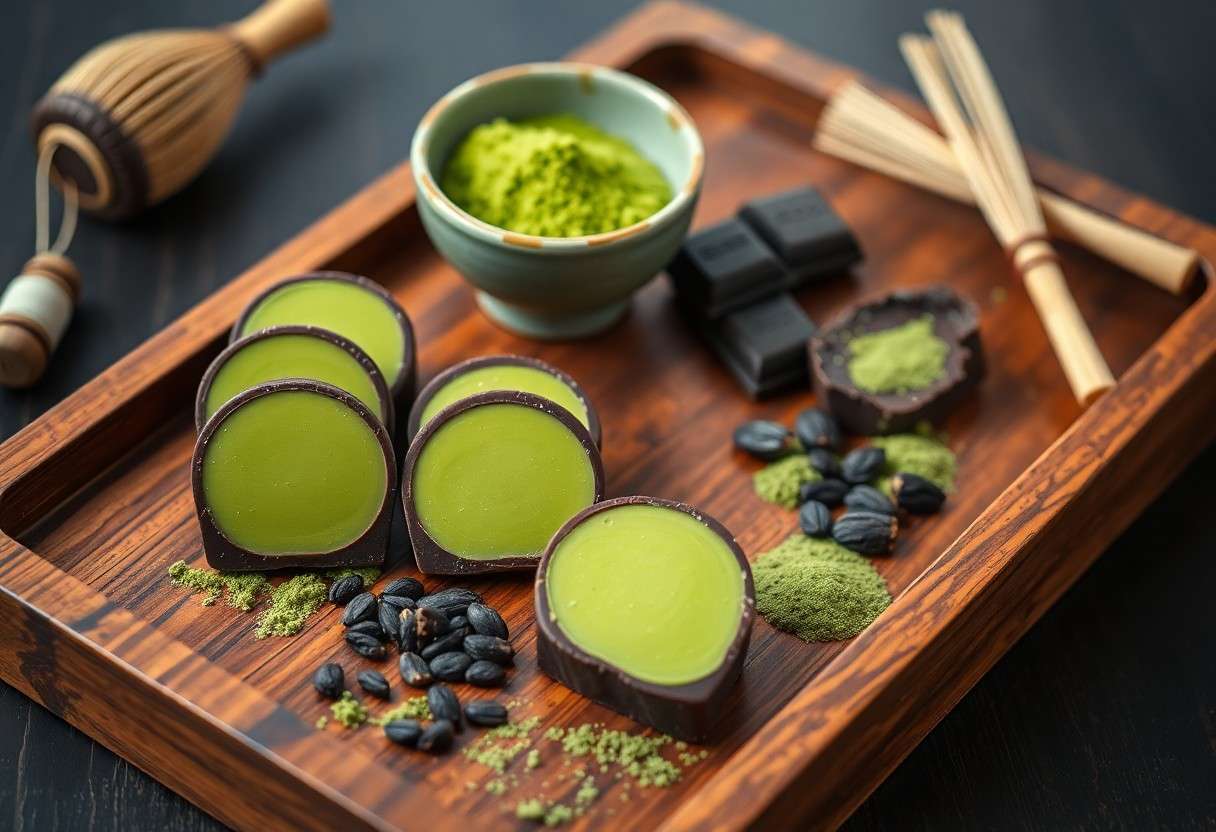
You taste how matcha’s grassy umami and subtle bitterness enhances Western chocolate, blending Japanese tea tradition with European confectionery craft; antioxidant-rich matcha offers health appeal while moderate caffeine can affect sensitive people.
The Heritage of Matcha and Western Cacao
Heritage informs how you perceive each bite: Japanese matcha stems from ritualized tea gardens producing shade-grown, stone-ground ceremonial leaves, while Western cacao traveled through trade into refined chocolate-making traditions. You notice that marrying matcha’s vegetal umami with cacao’s roasted depth creates a dialogue of techniques and histories.
Cultivation and Grade Standards of Japanese Green Tea
Fields receive deliberate shading and careful plucking so you get high L-theanine and vivid green color; producers sort leaves into ceremonial and culinary grades to guide your use. You should prefer certified sources because poor imports may carry pesticide residues that undermine purity and flavor.
The Evolution of European Chocolate Craftsmanship
European chocolatiers refined fermentation, roasting and conching to coax complex flavors, so you now encounter bars that showcase bean origin and technique. You value small-batch makers who emphasize single-origin beans and controlled conching, while avoiding mass products with excess sugar and additives that obscure cacao nuance.
You observe that tempering and cocoa butter ratios determine glossy appearance and snap, which matter when matcha is folded into ganache; proper technique preserves texture, whereas over-roasting will blunt floral and umami notes you seek in the pairing.
The Science of Flavor Pairing
You can trace how matcha’s amino acids, volatile aromatics, and cocoa’s fatty matrix interact to create layered flavor sensations; theanine-driven umami softens acidity while cocoa butter concentrates aroma.
Matcha contributes chlorophyll, catechins, and delicate vegetal notes that bind with sugar and fat in chocolate, so you sense both green brightness and cocoa depth; catechin-driven astringency must be controlled.
Harmonizing Umami and Sweetness
Balancing matcha umami with chocolate sweetness requires proportion and timing; you adjust sugar, milkfat, or dark cocoa percentage so theanine-enhanced savory notes sing rather than dominate.
Managing Bitterness and Astringency Profiles
Amino acids like theanine mitigate perceived bitterness, but you still must monitor extraction and powder quality since oversteeping or low-grade matcha can spike harshness.
Tannins interact with proteins in milk and sugar to reduce astringency, so you can use cream or lecithin to soften edges while preserving green tea clarity.
Texture adjustments-fat content, particle size, melting point-change how bitterness is released; you test formulations to find the sweet spot where mouthfeel masks dry astringency without muting matcha character.
Technical Challenges in Confectionery Infusion
Chocolate makers must balance matcha’s sensitivity to heat and moisture against cocoa’s fat matrix, because you risk oxidation and bitterness if you overheat or expose powders to humidity.
Infusing forces you to manage particle size and dispersion so the powder doesn’t disrupt crystal formation or cause fat migration; precise formulation and packaging determine whether the matcha note stays bright or fades.
Tempering Techniques for Matcha-Infused Solids
Careful control of your tempering window matters: you should lower holding temperatures slightly and use seeding to help cocoa butter form stable crystals while minimizing heat exposure to the matcha.
Watch your incorporation method-sieving matcha and adding it at the final, coolest stage or blending it into a cooled ganache reduces surface defects and chocolate bloom, improving texture and appearance.
Achieving Color Stability and Vibrancy
Matcha loses green through heat, light, and oxygen, so you must use low-heat incorporation, opaque packaging, and nitrogen flushes to preserve the vibrant green you want customers to see.
Temperature control during production and storage is paramount because exposure to warmth accelerates chlorophyll breakdown; you should also choose higher-grade powders with finer particle profiles for stronger color retention.
Protect matcha pigment further by considering microencapsulation or oil-based dispersions that shield chlorophyll and volatiles; these methods reduce aroma loss and extend shelf life while keeping flavor balanced.
Texture and Mouthfeel Integration
Balance between matcha’s powdery leaf and chocolate’s fat defines mouthfeel; you must control particle size, temper, and fat ratios so matcha’s delicate aromatics remain perceptible and grit is minimized. Use fine sieving and low-shear mixing to preserve scent while achieving smoothness.
Textural contrast-crisp shell with a creamy interior-gives you a satisfying bite; you should temper for proper snap and tune ganache viscosity to avoid a greasy finish. Avoid high shear or heat because overheating will make matcha bitter and dull its floral notes.
The Role of Cocoa Butter in Enhancing Tea Aromatics
Cocoa butter’s melting profile carries volatile compounds, so you can use it to buoy green tea notes and prolong finish; increasing its proportion in the fat phase helps cocoa butter amplify green notes without masking them. Keep temperatures moderate to protect those volatile tea notes that define freshness.
Developing Silky Matcha Ganache and Praline Centers
Creating a silky matcha ganache requires gentle heat, finely sifted matcha, and a balanced chocolate-to-cream ratio; you should whisk until glossy and strain to remove leaf remnants. Adding a touch of cocoa butter or butter can improve mouth-coating and deliver that silky texture you want.
Experiment with small batches: bloom matcha in warm (not boiling) cream off the heat, then pour over chopped chocolate and let sit before stirring to form an emulsion. Adjust firmness by changing chocolate-to-cream ratio, fold in praline paste for texture, and always chill briefly to set centers; overheating will make matcha bitter, so monitor temps closely.
Cultural Synthesis and Global Market Trends
Global demand for matcha-infused chocolates shows how you can witness Japanese and Western flavors converge: premium bars marry ceremonial-grade tea with European ganache, driving rapid market growth. You should monitor caffeine concentration in small-batch confections, since potent matcha can affect sensitive consumers.
Markets increasingly reward provenance and narrative, so you will favor brands that disclose origin and processing while committing to sustainable sourcing. You can expect labeling rules and import standards to shape how producers present hybrid products.
Innovation within Japanese Wagashi Traditions
Traditional wagashi artisans inspire you to respect texture and seasonality when fusing matcha with chocolate, preserving techniques while introducing cocoa. You will observe a renewed artisanal interest among younger consumers drawn to hybrid sweets.
Chefs and confectioners encourage you to fine-tune ratios so the delicate matcha umami remains prominent rather than masked by sugar or fat. You can anticipate careful training to keep wagashi standards amid experimentation.
The Rise of East-West Fusion in Artisanal Markets
Artisanal chocolatiers demonstrate how East-West fusion creates new favorites, pairing matcha with salted caramel, citrus, or single-origin chocolate to expand flavor profiles. You should be cautious of products using low-grade matcha, which erodes authenticity.
Collaborations between Japanese tea masters and Western chocolatiers give you traceable blends and storytelling that command premium pricing; traceability often signals quality. You can assess bars by origin labels and producer notes.
Consumers now seek ethical and sensory experiences, so you will encounter limited editions, tasting menus, and subscription boxes emphasizing sustainability and provenance; check caffeine warnings if you are sensitive.
Summing up
Summing up, you see how matcha infused chocolates marry Japanese umami and grassy bitterness with Western sweetness and creamy textures, creating a balanced flavor profile that appeals to both traditionalists and adventurous palates. You can appreciate how precise matcha quality and chocolate pairing techniques deliver nuanced contrasts, making these confections a refined example of culinary cross-cultural fusion.


