The Complete Premium Chocolate Production Process
Chocolate starts your tour as you learn how bean quality shapes taste; you'll see roasting, grinding, conching and tempering that demand care to avoid burns fro

This article contains Amazon affiliate links. As an Amazon Associate, CandiesAndSweets earns from qualifying purchases.
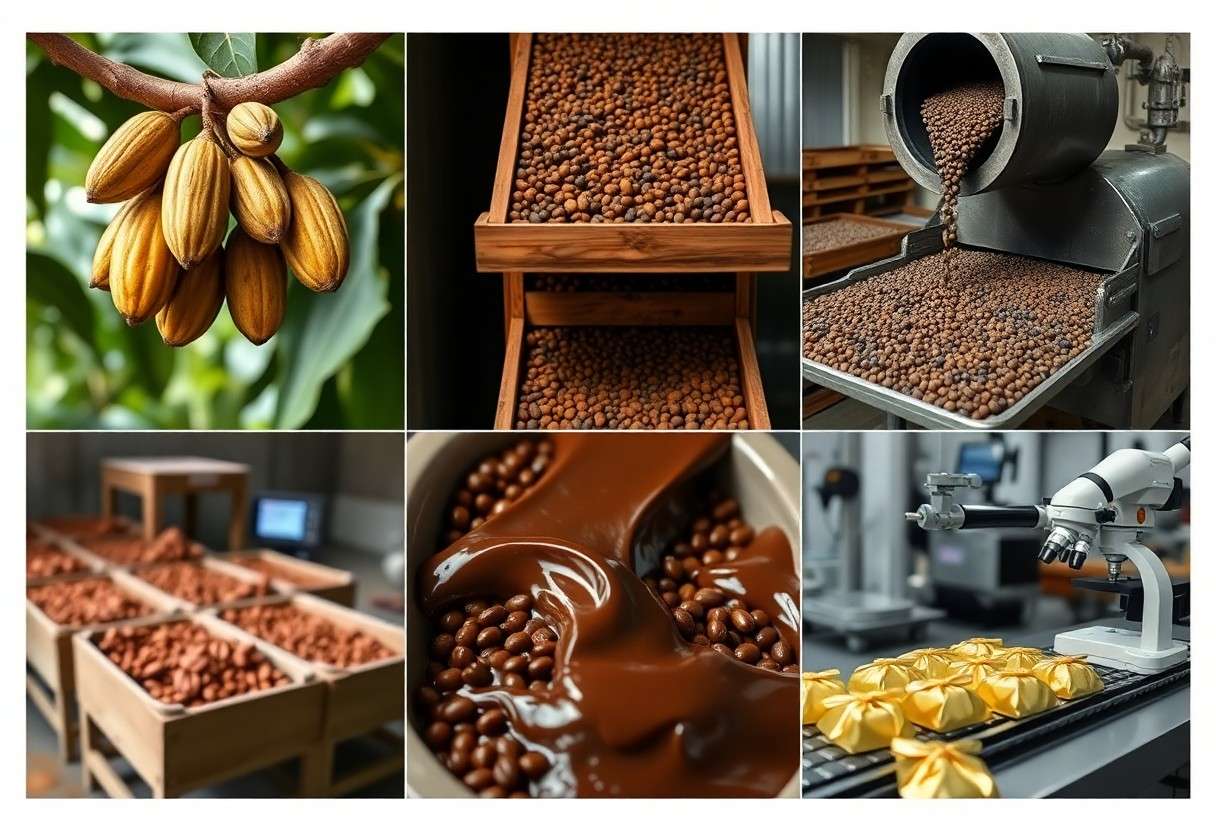
Chocolate starts your tour as you learn how bean quality shapes taste; you’ll see roasting, grinding, conching and tempering that demand care to avoid burns from molten chocolate while rewarding you with silky, complex flavor and glossy bars you’ll crave.
Bean Genesis: From Tree to Treasure
Beneath the canopy you follow harvest rhythms, spotting pods that swell and color-change until they whisper ripe pods. Your eye trains for subtle cues so each selection nudges the batch toward that coveted complex aroma.
Sunlit mornings push your crew to move fast and precise; you scan for splits, sunscald or pests that spoil flavor, and you handle tools with care, knowing sharp machetes cut both pod and pride.
Finding the Golden Pods
You walk the rows, tapping and squeezing to assess maturity, selecting only pods with full-seeded weight and rejecting pale or hollow fruit that dilute the final bar.
The Great Bean Extraction
Harvesters split pods open with practiced hands so you glimpse wet beans wrapped in mucilage; fermentation waits as the next alchemy step once beans are piled and covered.
Machines-or careful manual scooping-separate beans from shell fragments while you watch for broken beans that cause off-flavors; rigorous cleaning keeps contamination out of the batch.
Carefully monitor humidity and temperature during fermentation to coax nuanced notes; you sample, sort and discard any beans with mold to protect the whole lot.
The Fermentation Funk and Sunbathing
Heat from fermentation transforms pulp into deep cocoa flavors, so you monitor piles because overfermentation produces off‑flavors and mold while the right warmth yields complex chocolate notes.
Bacteria and yeasts act like a messy orchestra, and you watch smell and temperature closely to encourage aroma development rather than a rotten batch.
Sweating Out the Bitterness
After turning and piling, you let beans sweat in warm heaps where the pulp breaks down and bitterness mellows, but cold, soggy conditions invite dangerous mold.
When you press a bean and smell bright fruit instead of rot, the sweating stage is on track and you should discard sour batches to avoid contamination.
Tanning on the Drying Racks
Sun on raised racks dries beans to even density while you guard against sudden rain and pests, using mesh and covers to maintain consistent drying.
Rotate trays often so you expose every bean to air and light, and you check moisture until the nibs feel firm and reach about 7% moisture to prevent mold and secure a clean roast.
Protect drying loads at night with breathable covers and be ready to move beans under shelter, because dew and unexpected showers can undo hours of careful fermenting and sunbathing.
The Roasting Ritual: Getting Toasty
Heat teases out the bean’s personality; you watch sugars caramelize and acids soften as temperature and time tango. Keep strict control on degrees because one extra minute can mean overroasting and a flat chocolate you can’t save.
Profile choices let you coax floral, nutty, or smoky notes; you tweak drum speed and roast curves to shape clarity. Aim for flavor clarity by tracking color, crack, and smell rather than chasing arbitrary numbers.
Turning Up the Aroma
Aroma wakes as you cool and rest beans; you time the drop so volatiles concentrate instead of dissipating. Let beans rest for 24-72 hours to allow an aroma bloom that rewards patience with brighter top notes.
Cracking the Shell, Keeping the Soul
Shell separates cleanly when you crack and winnow; you calibrate force so nibs stay intact and oils remain locked in. Use airflow that removes husk without launching nib loss, because whole pieces deliver cleaner flavor.
Gentle handling after winnowing preserves those delicate volatiles; you store nibs cool and dry to avoid moisture and mold risks. Protect nib integrity in packaging to prevent accelerated staling and preserve your final bar’s brightness.
The Long Grind: Smooth Operators
Inside the long grind you shepherd roasted beans through escalating fineness, trading texture for flavor. You monitor temperature, because overheating will scorch aromatics and create bitter notes; patience yields brightness. Machines whisper at different tempos, and your choices-grinder speed, mesh size-cast the chocolate’s final mouthfeel, so you treat each pass like a careful edit.
Turning Nibs into Liquid Gold
When you crush nibs, friction melts cocoa butter and slowly transforms solids into liquid gold. Adjust grinders cautiously to avoid overheating and splatter; tiny metal fragments from worn blades can contaminate a batch. You taste and watch viscosity until the flow is glossy and consistent before sending the mass to conching.
Conching Until It’s Silky Smooth
Conching polishes texture and refines flavor as you aerate, shear, and heat the paste for hours or days until harsh acids fade and silky smooth notes appear. You control drum speed, scraper action, and time to sculpt mouthfeel, making small tweaks that rewrite the chocolate’s personality.
Temperature swings during conching demand attention: you lower heat to preserve bright notes or raise it slightly to soften texture, but watch for scorching which produces off-flavors. You coax out silkiness and a glossy sheen through steady patience and precise mechanical rhythm.
Tempering Tantrums: The Science of Snap
Temper your chocolate with precision: you chase stable Type V crystals by heating, cooling and agitating. Watch for overheating, which destroys structure, and for slow cooling that produces dull bloom. A correct method yields a clean snap and shiny surface that practically sells itself.
Control your thermometer and timing; you must hit narrow bands – dark around 31-32°C, milk and white slightly lower. Use seeding or tabling to coax the right crystals, and avoid stirring when the mix nears set to keep that glass-like snap.
Mastering the Crystal Chaos
Crystal formation is fussy: you encourage uniform Type V crystals by gentle cooling and measured agitation. Rapid temperature swings cause mixed crystals and fat bloom, ruining texture and appearance.
Avoid adding cold ingredients or moisture; you introduce nucleation points that create streaks or sugar bloom. Use dry, warm tools and keep humidity low to protect that mirror finish.
The Perfect Pour into Molds
Pour at the ideal working temperature so chocolate flows, fills detail, and releases air. You should use a steady wrist and avoid overfilling; excess creates uneven edges and waste, while dirty molds trap contaminants.
Tapping molds on the bench dislodges bubbles and levels the surface; you then scrape off excess with a straight edge. Gentle vibrations speed release but don’t shock the set chocolate, preserving the snap and shine.
Timing matters for demolding: you chill briefly to firm centers but avoid rapid refrigeration that causes condensation and soggy bloom. Let chocolates reach near-room temperature before popping them out to keep that glossy finish intact.
The Final Polish: Dressing for Success
Polish your finished confections until every facet reflects light like a jewel; a mirror gloss convinces buyers, while lingering moisture or steam will dull temper and invite bloom.
Shine with a soft brush or lint-free cloth so you don’t leave fingerprints, preserving aroma and that celebratory snap when you break a bonbon.
Wrapping the Masterpiece
Wrapping your pieces in foil, cellophane, or custom boxes creates theater and protection-pick materials that ensure an airtight seal and won’t transfer off-flavors or contaminants.
The Art of the Quality Control Nibble
Tasting during QC forces you to judge mouthfeel, temper and balance with tiny samplings so the melt and aroma speak louder than packaging.
Sampler routines mean you use clean tools, neutral palate cleansers and controlled temps so you spot flavor defects early and lock in repeatable consistency across batches.
Summing up
So you’ve watched beans turn into glossy bars: roasting teases flavor, grinding smooths personality, conching polishes attitude, tempering gives a shine, and careful packaging sells the charm. You now know how attention at every step turns cacao into indulgence, and you can claim expert status at any dessert party.


