The Tradition of Wedding Candy Around the World
Wedding celebrations are often adorned with sweet delights, and candy plays a significant role in these joyous occasions across cultures. You may find it intere

This article contains Amazon affiliate links. As an Amazon Associate, CandiesAndSweets earns from qualifying purchases.
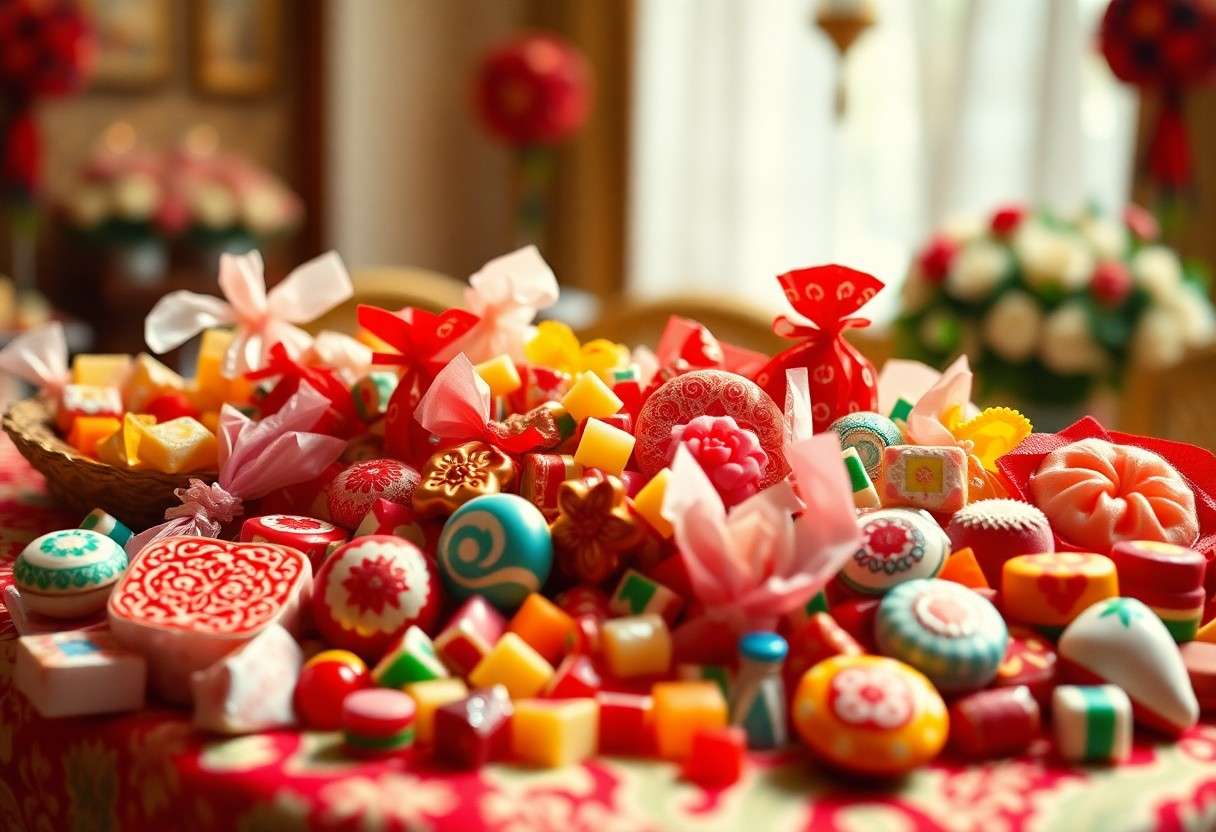
Wedding celebrations are often adorned with sweet delights, and candy plays a significant role in these joyous occasions across cultures. You may find it interesting to learn how various societies incorporate unique confectioneries into their wedding traditions, symbolizing prosperity, love, and happiness. By exploring these diverse customs, you can appreciate the rich tapestry of meanings and practices that give flavor to nuptial festivities worldwide. Join us as we examine into the delightful world of wedding candy and its significance in global traditions.
Sweet Beginnings: The Origins of Wedding Candy Traditions
Ancient Rituals and Symbolism
Candy has been intertwined with wedding festivities since ancient times, steeped in rituals that symbolize fertility, love, and prosperity. In Ancient Rome, for instance, it was customary for newlyweds to share a cake made of barley and honey, a tradition that evolved over time into the delightful confections you may enjoy today. The act of bestowing sweets upon guests represented the couple’s wish for a bountiful future together, where sweetness and abundance would flourish. This early custom laid the groundwork for a variety of different practices centered around sugary treats during wedding ceremonies.
Ancient civilizations across the globe incorporated sweetness into their unions, further enriching the cultural tapestry of wedding candy traditions. In regions of the Middle East, for instance, sugar-coated almonds, known as “confetti,” are often presented to guests at weddings, symbolizing the bittersweet nature of life and the couple’s hopes for a harmonious marriage. These examples highlight the universal desire to use candy not merely as a celebratory treat but as an embodiment of deeper meanings and intentions, setting a precedent for the many variations you’ll encounter as you explore the topic further.
Cultural Variations and Their Meanings
Marriage customs involving candy vary widely, and each culture infuses its unique significance into the sweets offered during the celebration. In some Eastern European traditions, sugar is not merely a delightful indulgence but also a means of blessing the couple’s future happiness and health. For example, in Polish weddings, guests may throw sugar or candies at the couple, symbolizing a life filled with sweetness and abundance. Similarly, across various cultures in Southeast Asia, colorful candies are often gifted during ceremonies, showcasing a vibrant display that welcomes the couple into a new chapter of their lives.
Intriguingly, the variations don’t stop at the types of sweets but extend to the very formats and purposes they serve. In India, the celebration often features sugary confections known as “mithai,” which are rich in flavor and layered with cultural history. The distribution of these sweets not only celebrates the couple but also bridges gaps within the community, fostering connections and goodwill among families. In each instance, candy transcends its role as a mere treat to become a vessel for meaningful messages, steeped in cultural significance.
Global Perspectives: Unique Wedding Candy Customs
Italian Confetti: Celebrating Love’s Sweetness
In Italy, the tradition of confetti, sugar-coated almonds, is deeply rooted in the celebration of love and commitment. Traditionally, five almonds are presented to symbolize fertility, health, happiness, long life, and wealth. These small delights are often beautifully packaged in satin pouches or decorative boxes, serving as charming wedding favors for guests. The crisp exterior gives way to a tender, nutty center, perfectly balancing sweetness and tradition. You’ll find that confetti is often custom-made to match the wedding’s color scheme, adding a personal touch to the occasion.
During the reception, these treats not only serve as a gesture of goodwill but also as a reminder to guests of the couple’s wishes for their future. Many couples add their names and wedding date to the confetti packaging, ensuring that the love shared on that special day lingers on in the hearts of everyone who attended. The history of confetti speaks volumes about how Italians view marriage—sweet, rich, and layered with meaning.
Indian Mithai: Sweets as Blessings and Good Luck
Mithai, a staple in Indian weddings, encompasses a wide variety of sweets that carry deep significance beyond just being delicious treats. Different regions boast different favorites, from the rich, syrup-soaked gulab jamun to delicate, fragrant peda. It is common for families to present these elaborately prepared sweets as a form of blessing, encapsulating hope for a prosperous marriage. Offering mithai to guests emphasizes good fortune and the sweetness of the couple’s life ahead. In many cases, you might find these sweets generously displayed on the wedding feast table, inviting guests to indulge in the joys of celebration.
At Indian weddings, sweets are often seen as an vital component of rituals and ceremonies. When you see the bride and groom feeding each other mithai, it symbolizes the sharing of joy and the promise to take care of each other. With countless varieties to choose from, the selection can also reflect the couple’s background or preferences, serving as a personal marker of their cultural heritage. The act of gifting mithai to everyone present underscores communal joy—everyone is invited to partake in the sweetness and blessings of the union.
Mexican Dulces: The Role of Candy in Festivities
Mexican wedding traditions incorporate dulces—colorfully wrapped candies that add flair to the celebration. You may witness a variety of these sweets being served, from traditional caramel-coated nuts to spiced tamarind treats. Dulces are not just a treat; they infuse joy and vibrancy into the wedding atmosphere, often being included in pinatas or as delightful displays on the reception tables. Sharing these sweets embodies the spirit of hospitality that is so vital to Mexican culture, demonstrating warmth and generosity to guests.
Typically, dulces also play a functional role, acting as both decorations and gifts for attendees, often reflecting the couple’s love for local flavors or cherished family recipes. The vibrant colors and diverse tastes signify good times ahead, capturing the essence of celebration. As the festivities unfold, the mingling of flavors and textures in every piece of candy allows your taste buds to share in the joyous occasion, making the experience increasingly memorable.
The Art of Candy Making: Techniques and Traditions
Crafting Handmade Treats: A Labor of Love
Handmade candy is often considered a cherished art form, where tradition meets personal expression. Many cultures require that a couple’s family create confections as a symbol of love and dedication. For you, this might mean rolling truffles filled with locally sourced nuts and seasonal flavors or meticulously shaping marzipan into intricate designs. Each piece you create not only showcases your skill but also tells a story—the story of your family, your heritage, and your celebration. This process can be painstaking, requiring hours of precision, but the thrill of unveiling your personal creations on your wedding day makes every minute worthwhile.
Your experience in crafting these treats can also lead to a sense of community. Perhaps you enlist friends and family to join in the candy-making efforts, fostering deeper connections while sharing laughter and stories. Whether you’re dipping handmade bonbons in delicate chocolate or pulling taffy by hand, every piece you produce is a labor of love, infusing your special day with the essence of shared experiences.
Modern Innovations: Fusion Flavors and Trends
Today’s candy scene embraces a myriad of influences, encouraging you to venture beyond traditional flavors and textures. The rise of fusion-style candies brings delightful surprises, blending elements from different cuisines to create innovative treats that tantalize the taste buds. Imagine a spiced chai-infused caramel or matcha green tea fudge—each bite an exploration of flavor boundaries that reflects your personality as a couple and your journey toward marriage.
In addition to flavor experimentation, the aesthetics of modern candy-making also play a pivotal role. You might choose vibrant, eye-catching colors and trendy shapes to complement your wedding theme. Instagram-worthy designs, such as donuts filled with gourmet flavored creams or rainbow layered cakes encased in crystal-clear candy wrappers, not only entice guests but also serve as conversation starters during your reception.
As the candy-making landscape evolves, you’ll find a growing emphasis on ingredient transparency and sustainability. Many artisanal candy makers focus on using organic, fair-trade, and locally sourced ingredients, ensuring that the confections you indulge in reflect your values. This commitment to quality and ethical sourcing not only enriches your wedding experience but also resonates with the increasing demand for mindful consumption among consumers. The marriage of tradition and innovation not only creates delicious candy but also a lasting, meaningful connection to the celebrations that surround your special day.
The Role of Wedding Candy in Contemporary Celebrations
In today’s wedding landscape, candy takes on a multifaceted role, transcending its traditional symbolism to become a delightful and necessary element of the celebration. Couples now leverage sweet treats to narrate their unique love stories, reflect their personalities, and engage guests in a deliciously memorable experience. Gone are the days when wedding candy was limited to mere favors; you can find it transforming into culinary centerpieces that tantalize taste buds and spark joy during the event. From color schemes to flavor profiles, candy is now integral to the overall aesthetic of weddings, making them even more extraordinary.
Personalization and Customization of Sweet Favors
Personalized wedding candy favors allow you to add a unique touch to your big day. By incorporating your wedding colors, names, and special dates into the candy packaging or design, you create a cherished keepsake that guests will treasure. Couples are leaning towards bespoke options like monogrammed chocolates, custom-flavored macarons, and even regional delicacies that reflect their heritage or travel experiences. This customization elevates the candy experience, making your wedding feel even more special and uniquely yours.
The rise in social media has also spurred couples to be more imaginative in their candy choices. Visual platforms enable you to showcase your painstakingly crafted candy favors, benefiting from an audience eager for ideas and inspiration. Simple yet elegant tags or beautifully arranged sweet displays can create buzz and excitement around your wedding, leading to a lasting impact well beyond the event itself.
The Rise of Dessert Tables: A New Sweet Trend
Dessert tables have emerged as a popular trend, offering a dynamic and interactive twist to traditional wedding desserts. Instead of a single cake, you can curate an assortment of sweet offerings, from cupcakes and cookies to a variety of candies. These dessert tables not only provide a wider selection for your guests but also reflect your creativity and personal taste. The visual appeal of a carefully designed dessert table creates a stunning focal point at the reception, encouraging guests to indulge and mix-and-match treats for an interactive experience that echoes the celebratory spirit of the occasion.
Moreover, the dessert table can be themed around seasonal elements, cultural traditions, or even your sneak peeks into your journey together as a couple. By incorporating elements that resonate with you and your partner, such as favorite childhood sweets or local specialties, you’re crafting whimsical memories for your guests to enjoy. Such a trend not only leaves room for personal flair but also produces visual and edible diversity that enhances conversations around the table, making your wedding an unforgettable feast for all senses. With this innovative approach, you can ensure that every guest finds something delightful to savor during your celebration.
Beyond the Sweetness: The Symbolic Importance of Wedding Candies
Unity, Prosperity, and Fertility: Deeper Meanings
Wedding candies often carry significant symbolism that extends beyond their sweetness. In many cultures, couples share these treats as a representation of unity and the blending of their lives. For instance, in Indian weddings, the ritual of exchanging sweets symbolizes not only the couple’s union but also their intention to bring joy and sweetness into their married life. Additionally, candy’s association with prosperity and fertility is evident in various traditions, where the distribution of confectioneries to guests signifies the couple’s desire for abundance, happiness, and the growth of a family. This alignment of sweetness with the positive aspects of life reinforces the connection between the couple and their community.
Candies often feature specific meanings tied to local customs. In Japanese weddings, for example, you may find a special candy called “hôgaku-mochi,” which symbolizes the couple’s commitment to working together harmoniously. Likewise, in France, sugared almonds are typically given to symbolize the bittersweet nature of life and the hopes for the couple’s happiness. The thoughtful selections made in these candies reflect a culture’s values and aspirations, allowing guests to connect with the deeper significance of the celebration.
Reflections of Identity: How Candy Unites Cultures
The role of wedding candies in bridal traditions isn’t limited to symbolism; they illustrate how diverse cultures express their identities through shared rituals. For instance, in Middle Eastern weddings, traditional “maamoul” cookies are filled with nuts and dates and often served with coffee to guests, marrying culinary practices with hospitality. Similarly, Latin American weddings feature a variety of colorful candy assortments, representing joy and celebration. These sweets are not only a nod to local flavors but also an invitation for guests to participate in the couple’s story.
Your wedding candy selection serves as a canvas for expressing who you are and where you come from. You might choose to incorporate sweets that pay homage to your heritage, blending flavors and styles to create a uniquely personal experience. As guests indulge in these treats, they partake in an age-old tradition that transcends borders, allowing everyone present to appreciate the convergence of diverse cultures. This shared enjoyment fosters a sense of unity and belonging, reminding everyone that love knows no barriers. From colorful sugar-coated almonds to intricate marzipan, these candies invite people to celebrate both the sweetness of love and the richness of cultural narratives that accompany it.
Final Words
To wrap up, exploring the tradition of wedding candy around the world reveals how these sweet treats are more than just confections; they are symbols of joy, prosperity, and the beginning of a new chapter in life. As you probe into various cultures, you’ll find that each type of candy carries its own significance and is often steeped in rituals designed to share happiness with guests. From the sugar-coated almonds of Italy to the honey drizzled treats in Middle Eastern weddings, these candies play a pivotal role in celebrating love and unity.
Your understanding of these traditions can enrich your own wedding or help you appreciate the diverse ways couples express their love globally. When you sample wedding candies from different cultures, you are not just enjoying a sweet treat, but embracing a narrative that has been passed down through generations. Whether you choose to incorporate these elements into your own celebrations or simply enjoy them as part of a global culinary experience, the essence of wedding candy will always remind you of the universal emotions that weddings evoke.


