Complete Guide to African Inspired Chocolate Flavor Pairings
Most African cacao offers bold, fruity notes; you'll learn which single-origin beans, which spices pose allergy risks, and which citrus and floral pairings best

This article contains Amazon affiliate links. As an Amazon Associate, CandiesAndSweets earns from qualifying purchases.
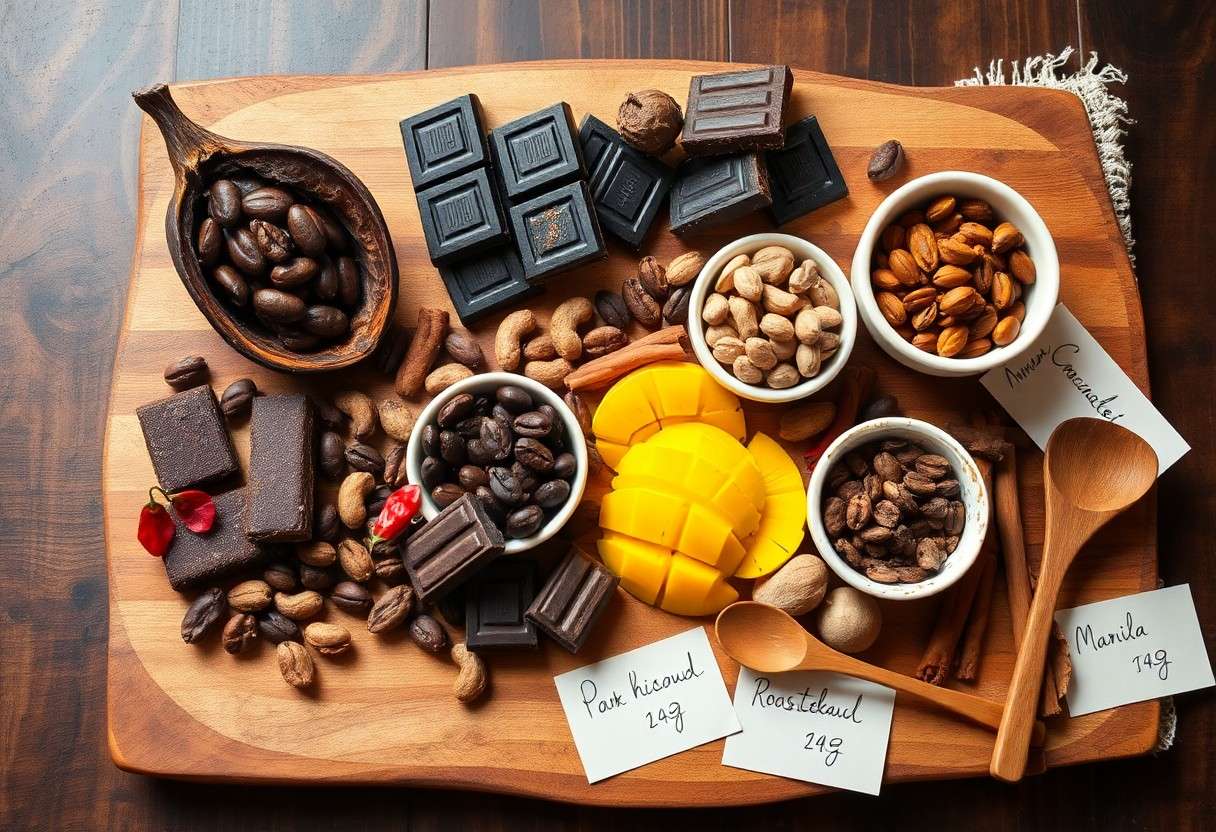
Most African cacao offers bold, fruity notes; you’ll learn which single-origin beans, which spices pose allergy risks, and which citrus and floral pairings best amplify chocolate flavor.
Dominant Types of African Cacao and Flavor Profiles
Forastero dominates many West African plantations and gives you a robust, earthy foundation with low acidity and strong cocoa bitterness that suits dark, spiced pairings.
Criollo and Trinitario appear in smaller lots across the continent, offering you floral, nutty, and fruity nuances that reward light roasts and delicate accompaniments.
| Type | Typical Notes |
| Forastero | Earthy, toasted, low acidity |
| Criollo | Floral, nutty, delicate |
| Trinitario | Balanced, fruity-spice |
| East African specialty | Bright citrus, berry, tea-like acidity |
- Forastero: pairs with toasted nuts, coffee, smoke
- Trinitario: pairs with warm spices and dried fruit
- East African: pairs with citrus, stone fruit, floral notes
West African Forastero and Earthy Undertones
Ghanaian and Ivorian beans tend to present you with steady Forastero character-deep cocoa, firm bitterness, and grounding earthiness that stands up to high-percentage bars.
Fermentation intensity shapes the astringency and must inform how you balance roast, sugar, and dairy to tame tannins while preserving depth.
East African Specialty Beans and Fruity Notes
Tanzanian lots often deliver you bright citrus and floral esters that make single-origin bars sing when you keep roasts light and preserve acidity.
Kenyan micro-lots give you tea-like florals and vivid berry acidity that pair especially well with creamy textures or subtle spice to soften edge.
The regional ferment and terroir produce pronounced berry and citrus esters you can highlight with light roast profiles and pairings like citrus zest, stone-fruit compotes, or delicate floral honey.
Critical Factors in Selecting Pairing Components
Consider how you match each element to the bean: weigh fat content, melting point, acidity and sweetness against the African cocoa profile you are highlighting; you should avoid pairings that become too greasy or mute signature fruit notes.
- Fat content – mouthfeel and coating
- Melting point – service temperature risks
- Acidity vs Sweetness – balance or contrast
Assessing Fat Content and Melting Points
Check the cocoa butter ratio and added fats so you can predict texture: match ingredients with similar melting points to prevent separation, and avoid high-heat service for combos with low melting point inclusions that will lose structure.
Evaluating Acidic vs. Sweet Balance
Match bright, fruity African beans with components that offer clean sweetness or gentle fatty counterpoints so you preserve origin clarity; steer clear of additives that add sharp acidity without complementary body.
The way you counter acidity-with a touch of sugar, a fatty note, or a hint of salt-will control perceived bitterness and finish while keeping the bean’s positive fruit character intact.
Complete Guide to African Inspired Chocolate Flavor Pairings
| Procedure | Checks & Tips |
|---|---|
|
Begin by organizing ingredients and tools, weighing chocolate and spices, and sanitizing surfaces; you should control heat carefully and do not exceed 45°C for dark chocolate while avoiding water contact to prevent seizing. |
Follow a stepwise schedule: temper when needed, infuse at low heat, rest, and perform small-batch tastings so you can identify when flavor balance is achieved without overinfusion. |
Preparing the Chocolate Base for Infusion
Melt chocolate gently using a bain-marie or low-power microwave in short bursts so you can stop before temperatures exceed ideal ranges, and avoid water or steam exposure that will seize the chocolate.
Cool to working temperature and, if tempering, follow your standard seed method so you get a stable snap and shine; proper tempering reduces bloom and improves mouthfeel.
Layering Spices and Botanical Elements
Pair single-origin African chocolates with spices that echo their tasting notes-citrus for fruity Ghana beans, smoked chilies for earthy varieties-and use light touches so you accentuate, not mask, origin traits.
Introduce botanicals slowly, tasting between additions; when using high-coumarin spices like cassia or concentrated extracts, you should limit quantities to avoid health risks and bitter overtones.
Adjust infusion method-macerate spices in warm cream for ganache, steep in cocoa butter for coatings, or toast dry ingredients to soften bitterness-and always use food-grade botanicals with controlled infusion times.
Pros and Cons of African-Inspired Fusion
You must balance adventurous pairings with palate clarity; African spices and single-origin cocoas can deliver vivid floral and smoky notes while demanding precise proportioning to preserve chocolate’s core.
Several operational realities-sourcing consistency, shelf stability, and consumer education-shape whether your blends become signature hits or niche experiments; plan for testing and clear labeling to manage risk.
| Pros | Cons |
|---|---|
| Distinctive brand identity | Niche appeal may limit mainstream sales |
| Use of indigenous ingredients and stories | Supply variability across seasons |
| Enhanced aromatic and flavor complexity | Risk that spices overpower delicate cacao |
| Strong marketing and storytelling opportunities | Higher sourcing and certification costs |
| Appeals to adventurous, premium consumers | Potential for undisclosed allergens to cause issues |
| Room for menu and product diversification | Inconsistent consumer expectations across markets |
Advantages of Unique Flavor Innovation
Experience shows that you can carve a clear niche by pairing Ghanaian or Ugandan cocoa with regional spices, producing memorable signature bars that attract adventurous buyers and press attention.
Pairings that respect balance let you highlight origin characteristics while adding complementary heat, citrus, or floral notes, making your products both distinctive and approachable for curious customers.
Potential Pitfalls of Ingredient Overpowering
Guard against using dominant spices without calibration: berbere, grains of paradise, or concentrated citrus oils can overwhelm subtler cacao aromas, leaving an unbalanced, one-note experience.
Consider how variable spice potency, hidden allergens, and inconsistent harvests can create quality swings that complicate scaling, labeling, and consumer trust.
Avoid large-batch releases before rigorous sensory testing; you should run consumer panels, standardize formulations, and document concentrations to minimize recall risk and protect brand reputation.
To wrap up
With these considerations you can confidently pair African-inspired chocolate with citrus, spice, coffee, and tropical fruits to showcase origin-specific flavors. You should taste deliberately, balance intensity, and document pairings so you reproduce results and teach others to craft consistent, thoughtful combinations.


