How Candy Became Part of Learning Disabilities Support
Just as education evolves to better accommodate diverse learning styles, the unique approach of incorporating candy into support strategies for individuals with

This article contains Amazon affiliate links. As an Amazon Associate, CandiesAndSweets earns from qualifying purchases.
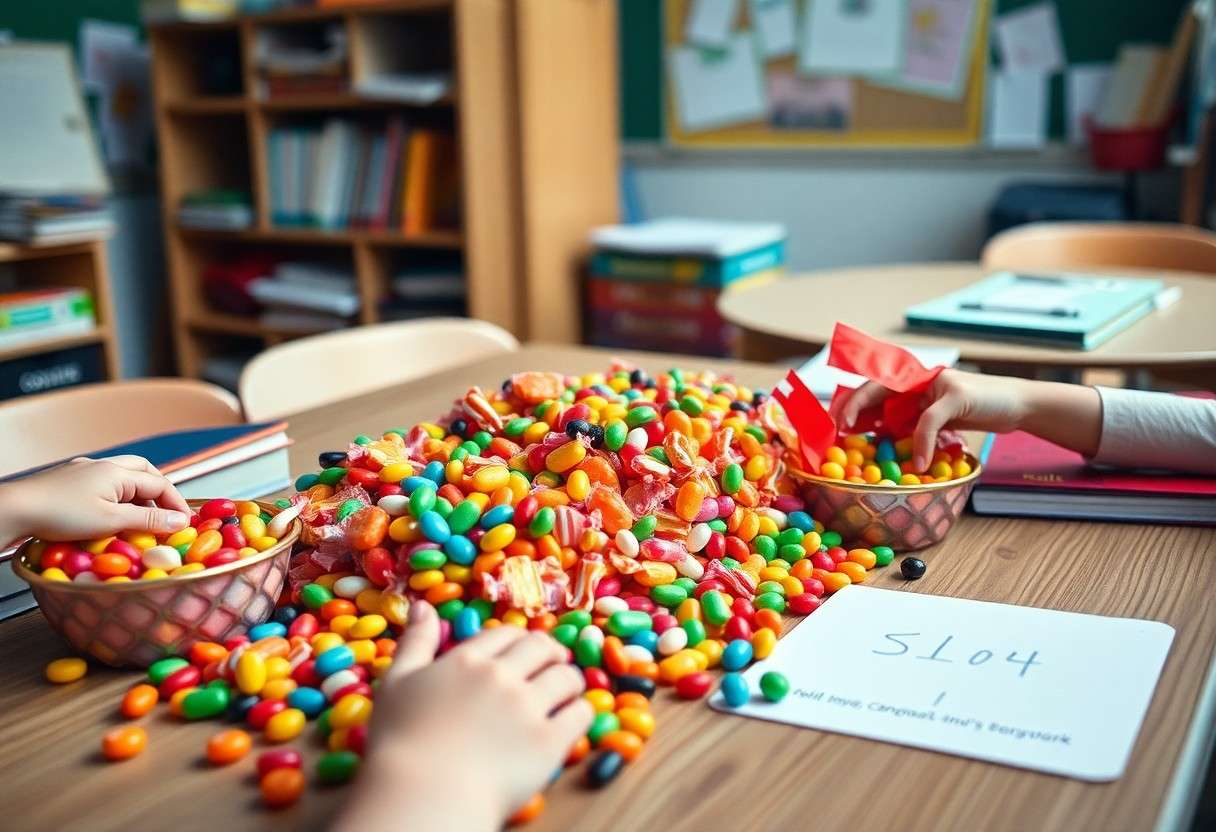
Just as education evolves to better accommodate diverse learning styles, the unique approach of incorporating candy into support strategies for individuals with learning disabilities has gained attention. You may be surprised to learn how this sweet treat can serve not only as a motivational tool but also as a means to enhance focus and engagement in learning environments. In this post, you will explore the innovative ways candy has transformed the support landscape, helping both educators and parents create more effective learning experiences for children facing challenges.
The Sweet Science: How Sugar Affects the Brain
Neurological Impact of Sugar
Your brain thrives on glucose, the simplest form of sugar. Glucose is the primary energy source for brain cells, fueling the complex processes that underpin cognitive functions. When consumed, glucose rapidly enters your bloodstream, leading to an increase in energy levels and improved focus. Studies have shown that moderate consumption of sugar can enhance neuroplasticity, which is the brain’s ability to adapt and reorganize itself. This adaptability is imperative in learning environments, especially for individuals with learning disabilities who may benefit from additional support to process new information effectively.
The Role of Glucose in Learning and Memory
Glucose is not just a quick energy booster; it plays a vital role in how you learn and retain information. Your brain, comprising about 2% of your body weight, utilizes approximately 20% of your total glucose. This highlights how imperative a steady supply of glucose is for optimal cognitive function. Studies indicate that individuals who experience fluctuations in blood sugar levels may struggle with memory retrieval and focus, impacting their learning experiences. In fact, evidence supports that small doses of sugar during study sessions can lead to improved memory retention, making it a useful tool for learning enhancement.
From Classroom to Candy Store: A Historical Perspective
The Evolution of Candy in Educational Settings
Candy’s role in classrooms has evolved significantly over the decades. In the early 20th century, educators began to recognize the benefits of incorporating tangible rewards into learning environments, particularly for students facing challenges such as learning disabilities. As theories of behaviorism gained traction, teachers started utilizing candy as a form of positive reinforcement. This strategy not only motivated students but also made learning more engaging. By the late 1960s, candy became a staple in various teaching methods, especially in special education, where hands-on learning experiences were vital for student success. Recognizing the appeal of sweets among young minds, educators found that using candy could facilitate better focus during lessons and encourage participation in classroom activities.
As educational theories continued to develop, so did the understanding of how sensory experiences, including taste, could enhance cognitive functions. Research began to emerge suggesting that candy could temporarily boost concentration, which led to its widespread adoption as a tool for learning. Consequently, classrooms transformed into environments that didn’t just prioritize academic learning but also embraced the emotional and sensory aspects of education. Teachers became more innovative, using candy in mathematical equations or language lessons to create a more dynamic and interactive learning atmosphere.
Influential Figures and Movements Championing Candy as a Learning Tool
The integration of candy into educational practices was championed by various influential figures throughout history. One notable pioneer was B.F. Skinner, who advocated for the idea of operant conditioning—the concept that behaviors are influenced by the consequences that follow them. His work laid the groundwork for understanding how rewards, including candy, could encourage desired behaviors in students. In the 1980s, initiatives surrounding special education gained momentum, with educators increasingly recognizing the potential of positive reinforcement through tangible rewards. Candy, in this context, emerged as a familiar and effective tool to support students with learning disabilities, helping them find success in their studies.
Organizations advocating for educational reform, such as the National Association of Special Education Teachers (NASET) and the Learning Disabilities Association of America (LDA), further propelled this movement. They emphasized the need for inclusive teaching practices that cater to diverse learning styles and needs. By highlighting research that supported the benefits of sensory engagement and motivation, these organizations encouraged teachers to explore non-traditional methods—like using candy—to promote learning and reinforce positive behavior among students with learning disabilities.
Candy as Motivation: Behavioral Strategies for Engagement
The Psychology of Rewards in Learning
Understanding the psychology of rewards can transform how you engage students with learning disabilities. Research indicates that positive reinforcement significantly enhances motivation and learning retention. A behavioral approach relies on the idea that when you introduce a reward system—like candy—for completed tasks or positive behaviors, it strengthens the likelihood of those behaviors being repeated. This can be especially important in educational settings where students might struggle with traditional learning methods. When they know a sweet treat awaits them for achieving specific goals, they may feel more excited and engaged in their learning process.
Your brain responds to rewards in distinct ways, producing dopamine, which not only triggers pleasure but also motivates future actions. The anticipation of receiving candy drives your students to focus better, participate actively, and strive towards improvement. Using candy as a motivator turns learning into a challenge that they can conquer, nourishing both their appetite for knowledge and their natural enjoyment of sweets.
Practical Applications in Special Education
Implementing candy as a form of motivation in special education settings takes thoughtful planning. You could design a sticker chart where each successful task completion earns a sticker, and a certain number of stickers translates into a candy reward. Or, consider setting up a “mystery box” filled with various candies, allowing students to draw from the box when they achieve their learning objectives or exhibit positive behavior. Such strategies encourage not just the desire for candy, but also help build important skills like goal-setting and self-regulation.
In practical terms, these strategies can be tuned to fit individual student needs. For instance, shorter tasks might be effective for younger or more easily distracted students, who could earn candy more frequently. You might also consider non-edible rewards for those with dietary restrictions. Integrating candy as a motivational tool while balancing its application with genuine support can elevate the educational experience. When students see their efforts recognized, they are likely to develop a sense of accomplishment, encouraging them to embrace learning with a positive attitude.
The Debate: Is Candy a Boost or a Crutch?
Arguments For: Enhancing Focus and Engagement
The incorporation of candy as a reward in educational settings finds support in studies illustrating its effects on focus and engagement, particularly for students with learning disabilities. Research demonstrates that the consumption of small, sugary treats can stimulate the release of dopamine—a neurotransmitter linked to pleasure and reward. This chemical reaction not only boosts mood but also enhances concentration levels, making challenging tasks feel more achievable. By offering candy as a reward after completing tasks, you can create an environment where students are more motivated to participate and engage with their learning materials.
Furthermore, candy can serve as a simple yet effective tool for creating positive reinforcement. For example, a study conducted in special education classrooms revealed that students who received candy as a reward for completing assignments exhibited a 30% increase in task completion rates compared to those who did not receive any rewards. This highlights how something as seemingly trivial as candy can lead to better outcomes in educational settings, especially for those who struggle with attention and motivation.
Arguments Against: Potential for Dependence
Critics of using candy in educational settings often point to the risk of creating dependency on extrinsic rewards for motivation. Over time, students might come to expect candy as a necessary component of their engagement in learning, which can undermine their intrinsic motivation. If students begin to believe that they can only achieve tasks with a sugary reward in tow, it may inhibit their ability to cultivate self-discipline and internalize the value of learning for its own sake.
In a long-term perspective, this reliance on candy may lead students to develop unhealthy habits. When lessons are consistently tied to food rewards, it can established a pattern of food-based reinforcement that can perpetuate a cycle of reward-seeking behaviors outside the classroom. For instance, the development of a binge-reward cycle may emerge where students feel compelled to seek out sugary snacks, leading to potential health repercussions and increased reliance on external validation for their academic performance.
Future Directions: Innovations in Learning Support with Candy
Emerging Trends in Educational Tools and Snacks
Innovative educational tools incorporating candy and other experiential rewards are gaining attention in classrooms across the globe. For example, interactive apps that gamify learning often use virtual snacks as incentives to encourage students to complete tasks. These apps help reinforce concepts while maintaining student engagement, especially among those with learning disabilities. Studies have shown that visuals and rewards enhance retention in students who require additional support, blending technology with traditional rewards in a way that can spark motivation. As this trend grows, educators and developers continue to explore new horizons, integrating nutritional snacks into these educational experiences to create a holistic approach to learning.
Additionally, organizations are experimenting with developing partnerships with local candy makers to create custom snacks designed specifically for learning environments. The idea is to produce treats that not only appeal to taste but also are formulated with educational benefits. For instance, incorporating ingredients known to boost cognitive function—like nuts or dark chocolate—can provide students with the mental energy they need while still allowing them to enjoy a sweet reward. This strategic collaboration can also foster creativity in the classroom and contribute to a richer learning experience for students with diverse needs.
Balancing Nutrition with Motivation
Finding the right balance between motivation and nutrition remains a challenge yet is necessary in shaping effective learning support strategies. Offering candy or sweet rewards can be a double-edged sword; while they undeniably capture attention and interest, they can lead to concerns about health and well-being. To address this, many educators are now turning to healthier alternatives that still provide the same level of excitement and enjoyment for students. Options like fruit snacks, yogurt-covered pretzels, or even homemade treats using natural sweeteners can bridge the gap between motivation and nourishment.
Moving towards this balance involves not just selecting appropriate snacks but also educating students about healthy choices. By incorporating lessons about nutrition alongside the reward system, you can cultivate a more holistic approach to learning. For example, classes can engage in cooking activities where students prepare their healthy treats as part of the learning process. This integration not only teaches valuable life skills but also reinforces the importance of moderation and healthy habits while maintaining the motivational aspect of reward-based learning.
Final Words
Presently, the integration of candy as a supportive tool in learning disability environments reflects an evolving understanding of motivation and reward systems. By associating positive reinforcement with learning, you can create an atmosphere that encourages engagement among students who might otherwise struggle. This approach adapts to the diverse needs of learners, helping you to create a more inclusive experience that celebrates progress and achievement, no matter how small. Utilizing candy as a motivational tool can enhance focus and retention, effectively making the learning process more enjoyable and less intimidating for those with learning disabilities.
As you consider implementing candy into your support strategies, it is important to balance its use with educational goals. You have the opportunity to turn a simple reward into a meaningful part of your teaching methodology. By being mindful of moderation and ensuring that candy complements educational objectives, you can foster a positive learning environment that inspires each student to thrive. By embracing these methods, you are taking a significant step towards supporting individuals with learning disabilities, ultimately building a more adaptive educational framework that acknowledges and nurtures diverse learning styles.