How Handcrafted Chocolate Truffles Are Made From Bean to Bar
Sourcing and Processing Raw Cacao Estate cooperatives supply the bulk of high-quality beans, and you cross-check harvest dates, traceability records, and farmer

This article contains Amazon affiliate links. As an Amazon Associate, CandiesAndSweets earns from qualifying purchases.
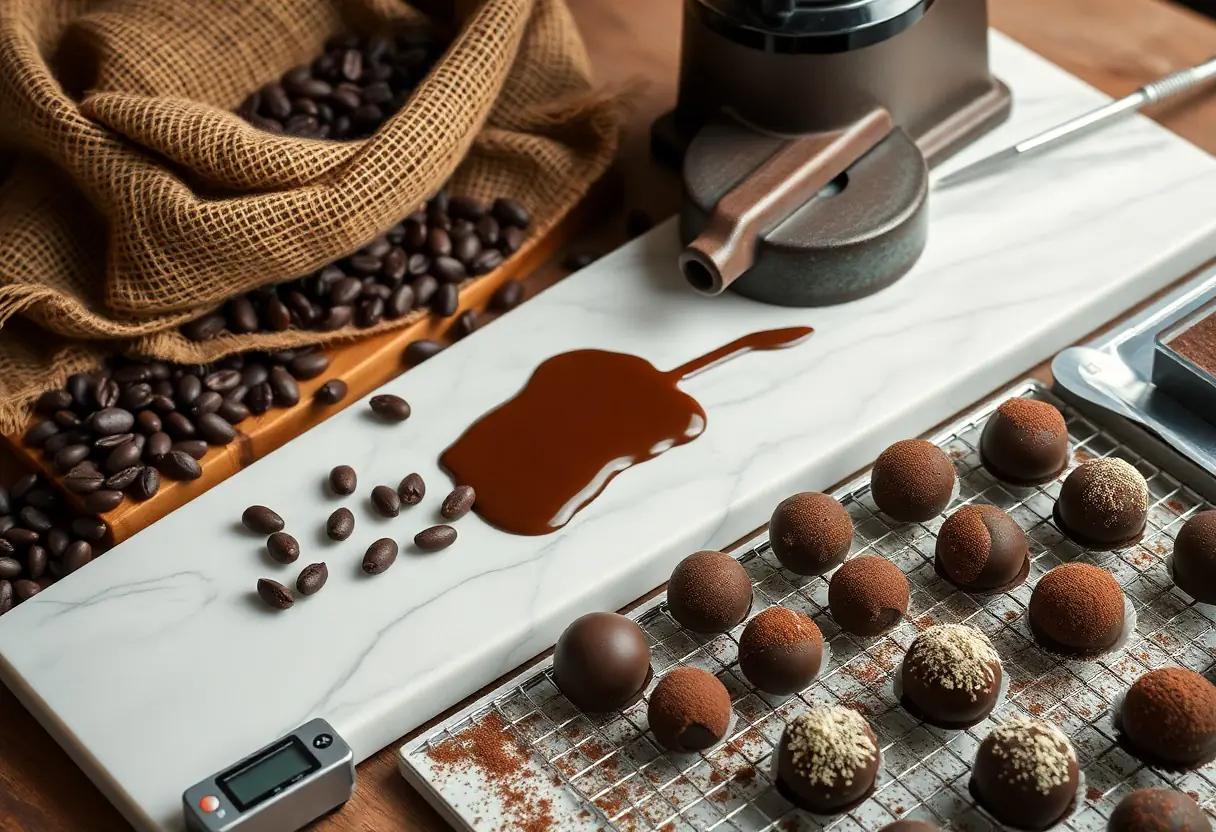
Sourcing and Processing Raw Cacao
Estate cooperatives supply the bulk of high-quality beans, and you cross-check harvest dates, traceability records, and farmer practices to ensure single-origin authenticity. You favor lots with documented care and clear lots segregation so that bean characteristics remain pure through processing.
Processing begins with thorough sorting and moisture assessment, where you reject damaged or tainted beans to avoid contamination risk. You then set roasting curves and keep batch records so flavor development stays consistent from bean to bar.
Selecting Premium Single-Origin Beans
You prioritize small-lot samples and cupping notes, assessing acidity, fruit, and cocoa bitterness before committing to a purchase. You also review lab tests for moisture and mycotoxins to protect quality and safety.
Single-origin choices highlight specific terroir-driven profiles, so you select beans that match the truffle flavor intent and roasting strategy. You keep provenance documentation to maintain traceability and consumer trust.
Fermentation and Sun-Drying Protocols
Fermentation controls enzymatic changes and microbial succession that create flavor complexity, and you monitor temperature, turning frequency, and heap size to avoid overfermentation. You watch for mold growth, which can spoil entire lots if left unchecked.
Sun-drying demands even exposure and airflow, so you spread beans on raised racks and turn them regularly while monitoring humidity. You aim for stable bean moisture below target thresholds to prevent spoilage and lock in desirable flavors.
After fermentation you measure pH and sample beans daily; you typically ferment four to seven days depending on variety and climate. You maintain consistent aeration and timely drying to preserve positive flavor precursors and to avoid contamination.
From Bean to Nibs: Roasting and Winnowing
Roasting transforms green beans into brittle nibs, coaxing sugars and amino acids into flavor while you shape the roast curve to highlight floral, fruity, or nutty notes. You monitor bean temperature and time closely to promote the Maillard reaction and caramelization, and avoid burnt, bitter compounds that can spoil the batch.
After cracking, you separate nibs from shells so the next grinding step works cleanly; mechanical separation removes most husks but can leave fine particles. You watch for fine husk dust that can contaminate product or irritate workers and aim for clean nibs ready for grinding.
Precision Roasting for Profile Development
You program small-batch roasters with exact time-temperature curves, listen for first and second crack, and sample aroma to dial in the profile; controlled roast produces complex, balanced flavors while overroasting yields astringent, burnt notes.
Mechanical Winnowing and Husk Removal
Machines use fans, sieves, and aspiration to lift lighter husks while letting heavier nibs fall; you adjust airflow and screen size to tune separation and protect nib integrity. You keep extraction systems active to capture airborne husk and prevent contamination.
Sieves and oscillating screens further sort nibs by size so you retain uniform pieces for grinding; you set mesh sizes to pass chaff while keeping nib yield high. Regular cleaning and grounding reduce static and improve purity.
Airflow calibration matters: you increase velocity to clear stubborn shells but avoid blowing away small nib fragments, so you balance speed and suction. You run repeat passes to improve purity and maintain dust extraction to reduce respiratory hazard for staff and product.
Refining the Texture: Grinding and Conching
Grinding reduces nibs into a glossy paste, and you monitor mills to reach a target particle size under 20 microns that gives truffles their melt. You must control temperature during milling to avoid burnt or bitter notes that spoil delicate flavors.
Conching develops aroma and mouthfeel while you shear and aerate the liquor; proper timing produces a silky mouthfeel and mellower acidity. You should avoid over-processing, which can strip fragile aromatic volatiles and leave a flat profile.
Stone-Grinding into Cacao Liquor
Stone-grinding crushes nibs slowly into cacao liquor, and you rely on long, gentle passes to polish particles without overheating. You monitor friction heat closely, since excess warmth can scorch flavor and increase bitterness.
Flavor Aeration and Particle Reduction
Conches work by shearing and exposing the chocolate to air so you can remove volatile acids and reduce harshness; this process also promotes fuller, rounded notes. You set duration and temperature to preserve desired aromatics while mellowing sharp edges.
Air flow and mechanical action continue to reduce particle size and coat particles with fat for a smooth finish, so you balance speed and time to improve mouthfeel without causing oxidation. You check texture frequently during runs.
Repeated testing-sensory checks and occasional particle analysis-helps you confirm targets like <20 microns and avoid over-aeration that can strip delicate aromatics; you record time, temperature, and airflow to reproduce consistent truffle batches.
Mastering the Tempering Process
You calibrate your temper by heating chocolate to melt all crystals, typically to 45-50°C, then cooling to 27-28°C and reheating to 31-32°C to form stable beta V crystals. You seed or use a slab technique while controlling shear and time so chocolate sets with consistent internal structure.
Precision requires a reliable thermometer and dry tools; you test by spreading a dab and letting it set. You judge success when it shows a clean snap and glossy surface within minutes; avoid any water contact-even a drop ruins temper.
Thermal Stabilization of Cocoa Butter Crystals
Cooling schedules stabilize cocoa butter crystals: you lower temperature gradually while stirring to encourage form V nucleation. You target intermediate cooling to 27-28°C, maintaining gentle agitation so crystals form uniformly; rapid changes produce unstable forms that yield dull, soft centers.
Achieving Structural Snap and Glossy Finish
Texture and appearance depend on crystal distribution; you finish by warming slightly to 31-32°C so fat mobility locks shapes. You achieve a glossy finish and distinct snap that marks professional handcrafted truffles.
Practice tempering with small batches, noting time and ambient temperature; you can correct dull chocolate by reseeding. You keep the workspace dry, avoid overheating above 34°C, and follow consistent technique to produce uniform gloss and reliable snap every run.
Formulating the Artisanal Ganache
Ganache begins with your choice of chocolate and the ratio you set; single‑origin couvertures give pronounced flavor while milk chocolate softens texture. You adjust cream, butter, and invert sugars to define mouthfeel, then rest the blend until it reaches a spreadable consistency suitable for enrobing or piping.
Technique demands controlled heat and timing to preserve shine and aroma; you should melt chocolate gently and avoid stirring vigorously once emulsified to prevent graininess. Keep temperature below 55°C when combining or risk separation and lost perfume.
Emulsifying Heavy Cream and Infusions
When you heat cream for infusions, steep flavors at low heat and strain thoroughly to remove particulates that can cause texture issues. Use pasteurized cream and add it warm to chopped chocolate, stirring until a glossy emulsion forms, or pulse briefly with an immersion blender to homogenize without over‑aerating.
Managing Texture and Moisture Content
Balance fat and solids to target the firmness you want; increasing cocoa butter tightens structure while a touch of glucose or invert prevents crystallization. Monitor moisture so the ganache stays supple but not sticky, aiming for a firm yet pliable center that snips cleanly.
Control storage conditions and aging to let moisture equilibrate; you should chill ganache to set, then bring it to working temperature before enrobing to avoid moisture migration and surface bloom. Keep packaging low‑permeability and store at 16-18°C with moderate humidity for best stability.
Final Assembly and Hand-Finishing
Finish the line by pairing set centers with shells, trimming edges and giving each truffle a final chill so you preserve a silky texture; strict temperature control during this stage prevents fat bloom and softening that ruin the appearance.
Enrobing Techniques and Shell Formation
Temper your couverture precisely before enrobing so shells set with a glossy snap, using dipping or a panning drum to form even layers; proper temper avoids dull surfaces and seizing that can wreck entire batches while you work.
Artistic Garnishing and Presentation
Apply garnishes with tweezers, stencils and micro-piping to create contrast and signature shapes; use edible metals or freeze-dried powders for visual impact, and keep separate tools to prevent cross-contact with allergens.
Experiment with textures by pairing crunchy inclusions, glossy glazes and soft dustings, testing how each element behaves under chilled storage so your signature flourish holds during transport and display.
Conclusion
So you follow cacao from bean to bar: harvest and ferment the beans, roast and winnow them, refine and conch the chocolate, temper the mass, then prepare ganache and hand-form, chill, and coat each truffle. This careful sequence delivers nuanced flavor, controlled texture, and artisanal quality you can taste in every bite.