Best Cashew Milk Caramels for a Guilt Free Sweet Treat
Many cashew milk caramels give you creamy, guilt-free sweetness, but you must watch for nut allergens and hidden sugars when selecting top brands. The Nutrition

This article contains Amazon affiliate links. As an Amazon Associate, CandiesAndSweets earns from qualifying purchases.
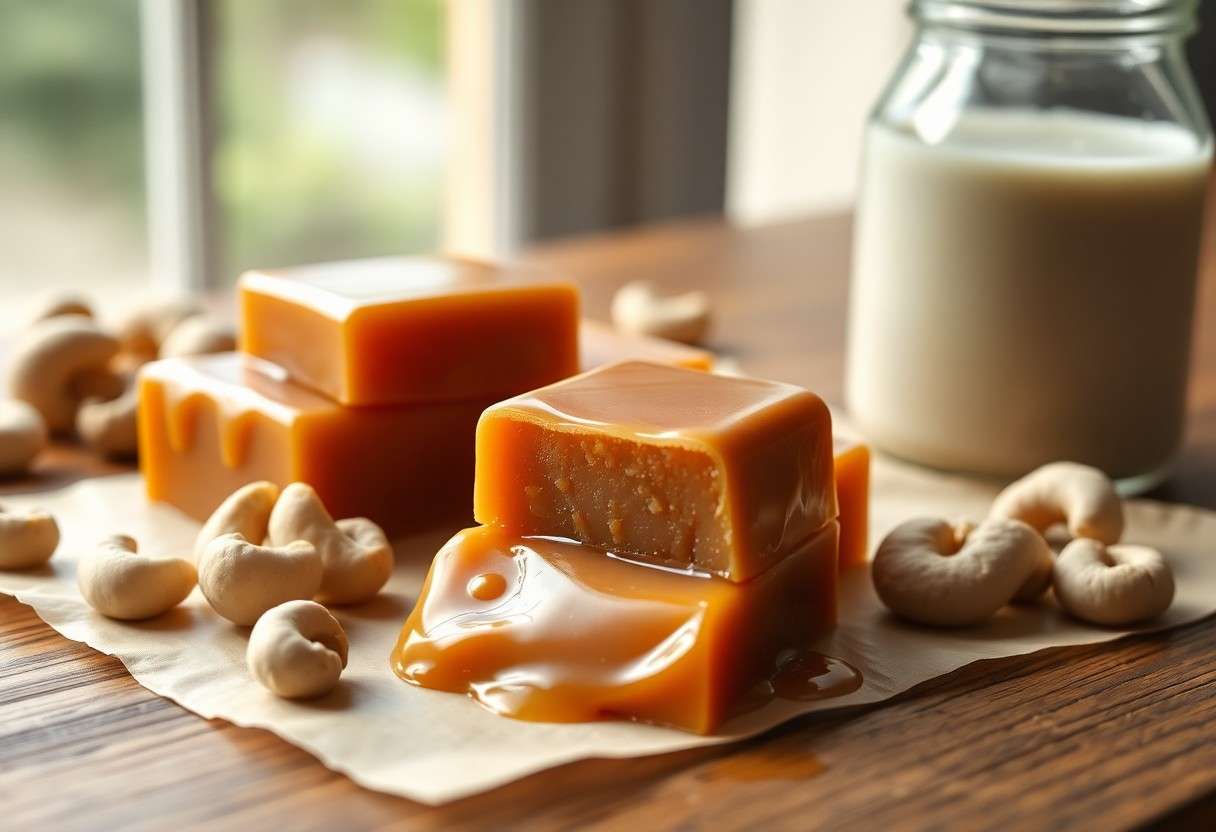
Many cashew milk caramels give you creamy, guilt-free sweetness, but you must watch for nut allergens and hidden sugars when selecting top brands.
The Nutritional Profile of Cashew Milk Caramels
Cashew milk caramels deliver a creamy texture from monounsaturated fats, giving you richness with less saturated fat than dairy while still contributing calories, so practice portion control.
Nutritional perks include small amounts of protein, magnesium, and vitamin E from cashews, but you should monitor labels because added sugars remain the main concern when choosing indulgences.
Plant-Based Fats vs. Traditional Dairy
Compared to cow’s milk confections, the plant-based fats in cashew milk reduce cholesterol exposure and offer a smoother mouthfeel, letting you enjoy caramel with a heart-friendlier fat profile.
You may miss naturally occurring dairy nutrients like B12 and calcium, so prefer caramels made with fortified cashew milk or pair treats with nutrient-rich foods.
Lower Glycemic Index Sweetening Options
Selecting lower glycemic sweeteners such as allulose, monk fruit, or controlled amounts of erythritol can blunt blood sugar spikes and let you savor caramels with reduced glycemic impact.
Explore ingredient lists and serving sizes to confirm tolerance and sweetness balance, since your digestion and blood-glucose response to alternatives like sugar alcohols can vary – individual response matters.
Essential Ingredients for the Perfect Texture
Texture in cashew milk caramels hinges on precise ratios: cashew butter, sweetener, and a binding agent. If you add too much liquid the candy will be sticky; avoid excess moisture and watch for high temperatures that can scorch sugars. You should test small batches to dial in chewiness.
Balance between sugars and fats sets the chew and snap; you want a slightly firm exterior with a tender center. Use brown rice syrup or coconut sugar to reduce stickiness and heat to the chewy stage (245-250°F / 118-121°C) for reliable results.
The Role of High-Quality Cashew Butter
Cashew butter provides the fat and flavor backbone; choose unsweetened, finely ground cashew butter so you control sweetness and texture. You can warm and stir it into the hot sugar mixture to create a glossy, silky caramel.
Natural Emulsifiers and Binding Agents
Choose gentle emulsifiers like sunflower lecithin, tapioca syrup, or a small amount of pectin to bind water and fat without gums. You should add lecithin at low percentages to prevent a greasy mouthfeel and test ratios on a scale.
Natural binders dissolve best when heated gently; dissolve powders in warm cashew milk before combining and use minimal amounts-if you use too much the caramel will become pasty. You can fine-tune texture by adjusting small increments until the bite is right.
Top Commercial Brands for Guilt-Free Snacking
Brands on shelves increasingly pair cashew milk caramels with clean labels so you can indulge without excess. You should look for certified organic, Non-GMO seals, short ingredient lists, and a clear allergen statement noting the treats contain tree nuts.
Check nutrition panels for low sugar serving sizes and avoid products with hydrogenated oils or high-fructose corn syrup so you get authentic cashew flavor. You can rely on brands that display third-party certifications and transparent sourcing to guide your choice.
Leaders in Organic and Non-GMO Confections
Organic makers emphasize traceable sourcing and minimal ingredients so you can trust label claims; seek the Non-GMO Project Verified mark and clearly listed sugars. You should also prefer options with no artificial flavors and straightforward ingredient transparency.
Best Artisanal Small-Batch Producers
Artisanal producers focus on texture and nuance, using small-batch methods and single-origin cashews so you taste the difference; you can expect inventive flavor combos and limited runs. You should weigh price against the care and sourcing that justify a premium.
Handcrafted caramels often use fewer preservatives and fresh cashew milk, giving shorter shelf life but richer taste; you should store them cool and check labels for allergen warnings since they contain tree nuts. You can support makers by buying directly or choosing local shops that list sourcing details.
Crafting Your Own Cashew Milk Caramels
You can fine-tune sweetness and chew by adjusting sugar, cooking time, and the fat content in your cashew milk; choose full-fat cashew milk for creaminess and consider a lower-glycemic sweetener for a lighter finish.
Cashew milk skews thinner than dairy, so you should reduce heat slightly and consider a touch of coconut oil or vegan butter for shine; aim for a glossy, pliable result and balance with unsalted butter or a vegan alternative.
Mastering Temperature Control and Consistency
Heat the sugar and cashew milk steadily while monitoring with a candy thermometer; target the 245-250°F (118-121°C) firm‑ball range for classic chew, and keep a safe distance because boiling sugar can cause severe burns.
Stir gently to avoid crystallization, and test drops in cold water to gauge set; pull from heat slightly early so residual warmth brings the mixture to the perfect soft but set texture.
Temperature Tips
| Stage | Target / Action |
|---|---|
| Soft‑ball | 235-240°F – for very soft caramels |
| Firm‑ball | 245-250°F – classic chewy texture |
| Pour point | Remove slightly early; carryover heat finishes the set |
Essential Kitchen Tools for Candy Making
Sharp bench scraper and a digital scale let you portion and cut cleanly; use a heavy‑bottomed saucepan so heat distributes evenly and a silicone spatula to stir without scratching.
Microplane or fine grater helps with finishing touches like zest or flaked salt, while a reliable candy thermometer and an instant‑read probe ensure accurate readings; prepare parchment or a silicone mat for setting and cutting.
Keep your thermometer calibrated, use a timer for stages, clean tools promptly before sugar hardens, and wear oven mitts to protect against splashes of hot caramel.
Flavor Variations and Gourmet Enhancements
You can tweak sweetness and nutty depth by swapping sweeteners or adding warm spices; keep an eye on sugar temperature because hot sugar can cause severe burns. Aim for a silky cashew cream texture and modest sweetening so the bites stay truly guilt-free.
Experiment with surface treatments like dark chocolate swirls, toasted coconut, or a cocoa dusting to introduce contrast. You should preserve chewiness while allowing a crunchy accent-use toppings sparingly so the delicate cashew flavor remains front and center.
Infusing Sea Salts and Botanical Extracts
Sprinkle flaky sea salt on cooled caramels for a savory pop, or infuse cashew milk with vanilla bean, citrus zest, or a hint of lavender. You must choose food-grade extracts only and start very small, since some botanicals can become overpowering.
Incorporating Superfoods and Toasted Nuts
Roast cashews or almonds until golden to deepen sweetness, then fold in chia, maca, or cacao nibs for added texture and nutrients; you should be cautious around allergies because nut allergies pose serious risk. Keep superfood additions subtle to protect mouthfeel.
Combine about a tablespoon of powdered superfood per batch and toast until golden and fragrant, cooling fully before chopping to prevent steam from softening the caramel; you’ll preserve chew while boosting nutrition with minimal impact on flavor.
Storage and Preservation Techniques
Storage tip: keep caramels in a cool, dry place away from direct heat; place them layered between sheets of parchment and seal in an airtight container to limit moisture and odor transfer. You should avoid plastic wrap alone for long periods because trapped condensation can encourage mold.
Maintaining Softness Through Proper Sealing
Tuck each caramel individually in parchment or wax paper and stack gently so you can seal the box without compressing the candies; this helps you preserve softness and prevents sticking. You should press out excess air before closing and use an airtight lid or vacuum seal for longer-lasting chewiness.
Shelf Life and Refrigeration Guidelines
Expect homemade cashew milk caramels to stay fresh at room temperature for about 5-7 days when kept in an airtight container; refrigeration can extend that to 2-3 weeks if you wrap pieces to prevent moisture absorption. You should thaw refrigerated caramels at room temperature before serving to restore texture.
If you need longer storage, freeze caramels layered in parchment inside a freezer-safe bag for up to 3 months; thaw in the refrigerator overnight to avoid sweating and maintain texture. You must discard any pieces that show an off smell, discoloration, or visible mold to avoid foodborne illness.
Summing up
Following this, you can choose cashew milk caramels that balance flavor and nutrition, favoring recipes with minimal refined sugar and whole-food sweeteners. You will enjoy a creamy, satisfying treat that fits into a mindful diet when you check ingredient lists, portion size, and homemade options for maximum control.


