What Makes Handcrafted Candy Different From Mass-Produced Sweets
Most handcrafted candy shows you the difference: makers use fresh, high-quality ingredients, small batches and hands-on techniques, giving unique textures and f

This article contains Amazon affiliate links. As an Amazon Associate, CandiesAndSweets earns from qualifying purchases.
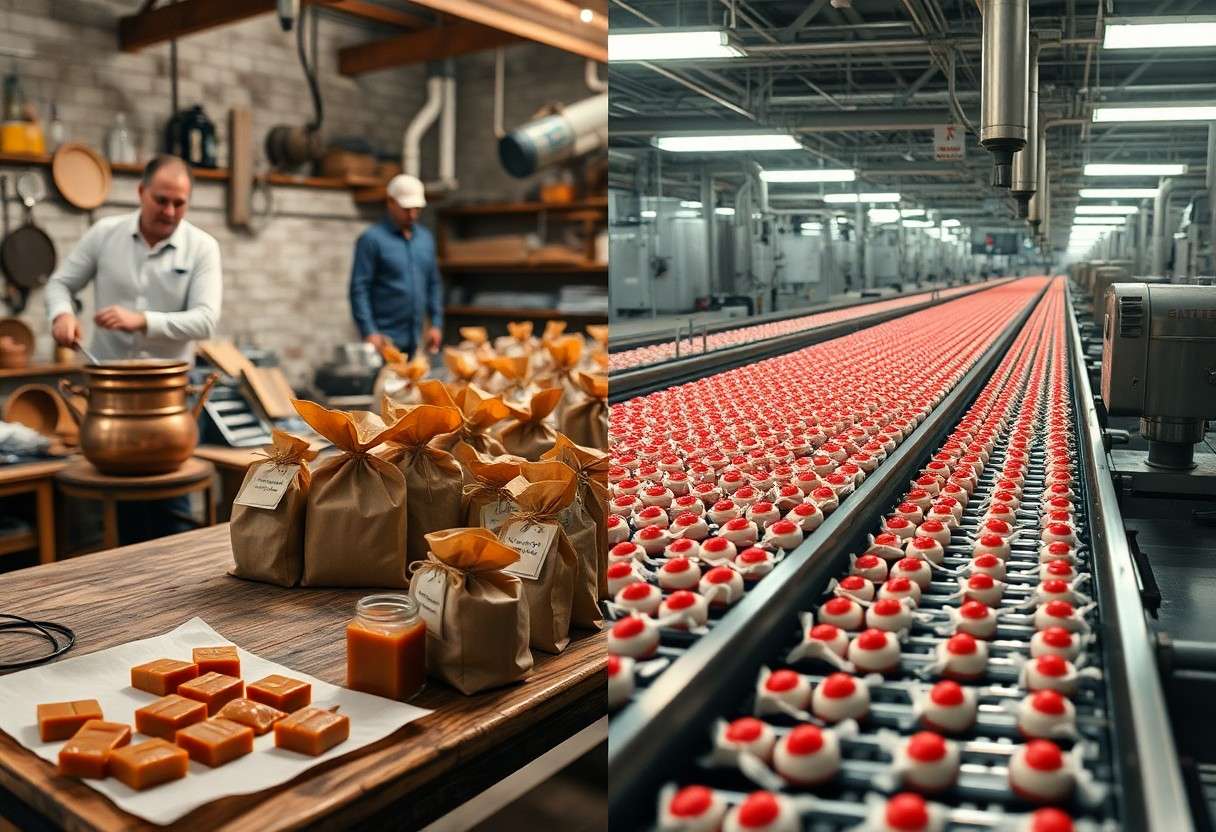
Most handcrafted candy shows you the difference: makers use fresh, high-quality ingredients, small batches and hands-on techniques, giving unique textures and flavors, while mass production often relies on additives and preservatives that can dull taste and pose health risks.
Ingredient Quality and Sourcing
Ingredient quality shapes what you taste and how you can trust the candy; handcrafted makers select single-origin cocoa, real butter, and pure cane sugar while avoiding synthetic preservatives and artificial colors that can dull flavor and raise health concerns.
Premium Natural Components vs. Synthetic Additives
You notice handcrafted sweets use pure vanilla, real fruit purées and unrefined sugars, offering nuanced flavor and fewer unexpected reactions than mass candies that rely on cheap synthetics and high-fructose syrups.
The Role of Local and Seasonal Raw Materials
Local sourcing lets you taste seasonal brightness-berries at peak ripeness or dairy from nearby farms-which yields fresher, more complex candies and often lowers reliance on artificial flavor boosters.
Seasonal ingredients change what you can offer across the year, enabling limited runs with intense, authentic flavors while avoiding the long-shelf preservatives that can carry health and taste trade-offs in mass-produced sweets.
Small-Batch Artistry vs. Industrial Automation
Comparison
| Small-Batch Artistry | Industrial Automation |
|---|---|
| Hands-on control, variable outcomes | Sensor-driven uniformity, high throughput |
| Flavor experimentation, limited runs | Standard recipes, extended shelf life |
| Artisan tools, tactile cues | High-speed machinery, strict QA systems |
Traditional Techniques and Manual Temperature Control
You monitor sugar stages by sight and touch, adjusting heat and timing in real time so you can coax richer flavor and delicate textures while accepting the burn and scald hazards that require careful, skilled handling.
High-Speed Machinery and Standardized Processing
Your lines rely on thermostats and feedback loops to maintain precise temperatures, producing consistent batches with fewer human errors and higher output.
When you evaluate scale, automated systems enforce food-safety standards and reduce injury risk, but they often limit the small tweaks that create the unique taste profiles you value in handcrafted candy.
Texture and Flavor Complexity
Handcrafted confections deliver shifting textures that unfold as you chew, from an initial snap to a lingering creaminess, letting you notice contrasts mass sweets smooth over. Small-batch methods let you taste ingredient interactions and deeper, layered flavors that create a more engaging mouthfeel compared with industrially homogenized products.
Nuanced Flavor Development through Slow Cooking
Slow cooking of syrups and dairy lets you coax out subtle Maillard and caramel notes, so you can detect floral, nutty, and toasted undertones. Artisanal timing gives you control but carries burn and scald risk from superheated sugar, so precise technique protects flavor and safety.
Consistency and Uniformity in Mass-Market Confections
Manufacturers rely on calibrated temperatures and formulaic timing so you get the same texture, sweetness, and snap every purchase, providing a predictable experience for consumers and retailers. Quality tracking means fewer surprises from batch to batch.
Automated cooling, continuous mixers, and strict quality control minimize variation and reduce graininess or crystallization, though you may miss the tiny irregularities that give handcrafted sweets their character.
Preservatives and Freshness Standards
Preservatives in mass-produced sweets prioritize longevity over taste, so you often encounter artificial preservatives that keep products shelf-stable for months while handcrafted makers use minimal additives to preserve freshness and natural flavor.
Short Shelf Life as a Marker of Freshness
Short shelf life often indicates fewer preservatives, and you can taste brighter textures and more volatile flavors when you buy handcrafted candy at peak; that peak freshness is a deliberate trade-off for smaller batches.
Chemical Stabilization for Global Distribution
Chemical stabilization for global distribution means brands add emulsifiers, antioxidants, and synthetic preservatives so you can buy candy months after production, but those additives can mute delicate notes you would detect in handcrafted batches.
Global shipping requirements force formulations with multiple stabilizers and humectants, so you should note that long shelf life often involves complex ingredient lists that may hide allergens or trigger sensitivities, whereas handcrafted options tend to list fewer additives and offer clearer ingredient transparency.
Visual Presentation and Customization
You will immediately notice that handcrafted candies display vibrant, artisanal finishes-hand-painted swirls, uneven gloss, and bespoke color blends that signal care and individuality.
Colors and packaging let you request personalized themes for events, but you should be aware of shorter shelf life and potential cross-contamination risk when small kitchens handle multiple recipes.
Hand-Finished Details and Unique Aesthetic Variations
Artisans apply final touches by hand, so you receive one-of-a-kind pieces where tiny imperfections become part of the charm and story.
Texture differences mean you can detect subtle technique variations, and you must handle these items gently since delicate finishes can chip or melt during transport.
Molded Uniformity and Branded Packaging
Machines stamp out identical candies so you get consistent weight and flavor, making portioning and cost predictions reliable for your needs.
Packaging systems provide you with clear labeling and extended freshness, backed by brand trust and often strict allergen controls that large producers maintain.
Consistency at scale gives you lower prices and dependable supply, while you trade away personalization– preservatives and controlled atmospheres extend shelf life but limit the bespoke visual touches handcrafted treats offer.
The Value of Ethical and Sustainable Production
You can reward ethical and sustainable production by choosing handcrafted candy that reveals its ingredients and origins; that choice supports fair wages and responsible sourcing. Small-batch makers often prefer higher-quality, seasonal ingredients, which gives you flavors and textures absent from mass-produced sweets.
Artisan producers usually limit batch sizes and packaging, so when you buy their confections you reduce waste and encourage practices like compostable wrappers and local procurement; this contrasts with systems that may depend on exploitative labor or low-cost, high-impact inputs.
Transparency in Small-Scale Supply Chains
Local supply chains let you trace ingredients directly to farms or cooperatives, and you can ask makers about methods and certifications; that visibility creates accountability and lowers the chance of hidden risks such as forced labor.
Environmental Footprint of Large-Scale Manufacturing
Industrial candy manufacturing consumes vast energy and water, and you should consider the increased carbon emissions and chemical runoff tied to large-scale processing and ingredient extraction.
Large-scale operations also rely on extensive logistics and heavy packaging, which amplify the product’s environmental footprint through transport emissions and landfill-bound waste; you can favor brands that publish impact data and reduce these harms.
To wrap up
Drawing together the key differences, handcrafted candy uses superior ingredients and careful techniques, so you taste layered flavors and textures that mass-produced sweets flatten. Artisans adjust recipes by hand and make small batches, which gives you seasonal freshness, distinctive appearance, and consistent quality you can trust. The result rewards you with a sensory and narrative experience that prioritizes craft, variety, and traceable sourcing over uniformity and low cost.


