Best Mango Chili Candy Recipes Inspired by Mexican Street Food
Over ripe mangoes meet authentic chile heat in recipes that teach you precise techniques, warn of burn risk from intense peppers, and guarantee delicious, tangy

This article contains Amazon affiliate links. As an Amazon Associate, CandiesAndSweets earns from qualifying purchases.
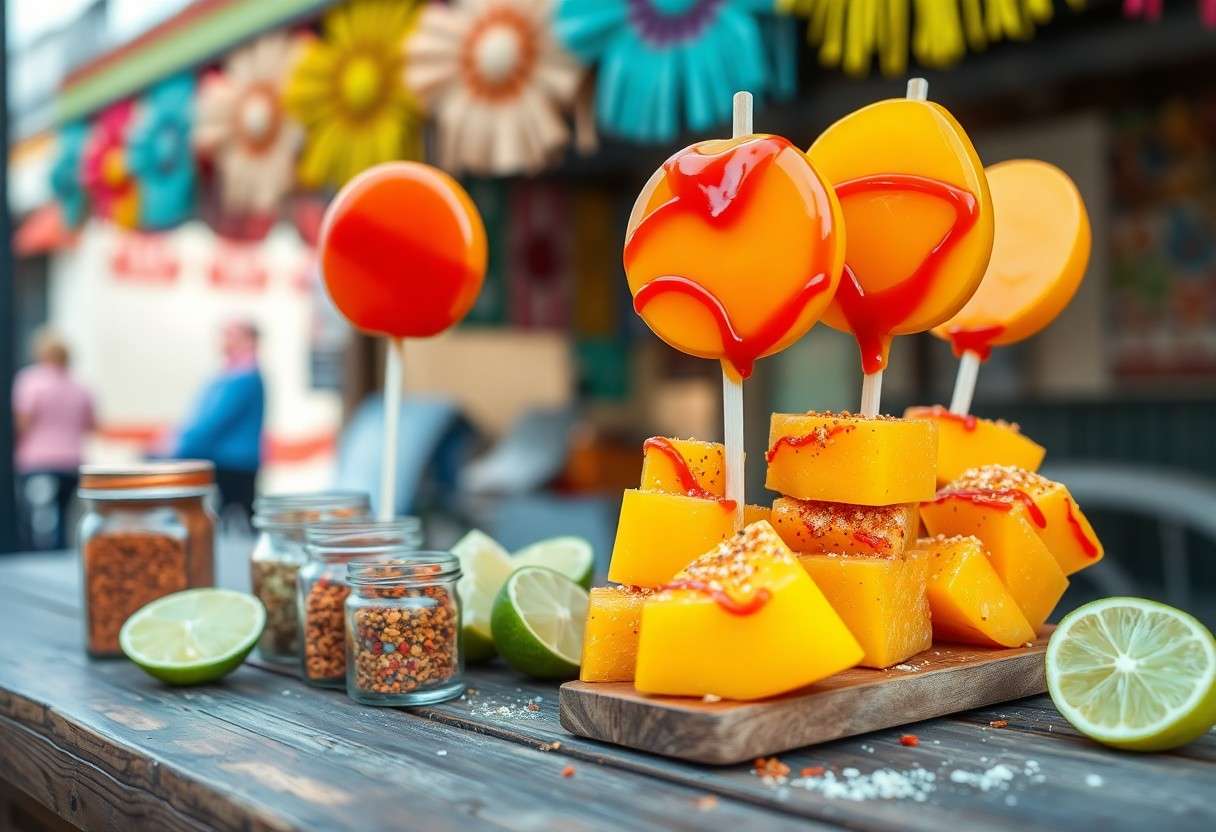
Over ripe mangoes meet authentic chile heat in recipes that teach you precise techniques, warn of burn risk from intense peppers, and guarantee delicious, tangy-sweet results you can master at home.
The Authentic Flavor Profile: Sweet, Sour, and Spicy
You can taste how street vendors balance sweet mango flesh with bright lime tang and a persistent chile bite, giving each candy a layered, memorable punch.
Mangoes’ natural sugars let you soften fiery notes while acids lift the profile, so you maintain a clear sweet, sour, and spicy identity in every batch.
The Role of Chamoy and Tajín in Mexican Confections
Chamoy sauces give you a tangy, slightly savory base that ties fruit and chile together, though too much will overpower fresh mango nuances.
Tajín’s chile-lime dust lets you season with precision, adding salty brightness that enhances sweetness without masking the fruit.
Balancing Heat Levels with Natural Fruit Sugars
Adjust the ratio of fresh mango, lime, and chile powder so you control throat burn, relying on ripe fruit sugars to temper capsaicin intensity.
Ripe mango pieces give you concentrated sweetness and softer texture that mutes heat impact, allowing a satisfying kick without harshness.
Experiment with mango purées or dried mango powder so you can concentrate sugars or introduce texture, and always taste for safe heat levels before serving guests.
Selecting and Preparing the Ideal Mango
Select mangoes with firm but slightly yielding flesh and a vibrant aroma so you can process them into candy without excess water or pulp breakdown; avoid overly soft fruit because overripe mangoes can ferment and ruin batches.
Prepare by washing, peeling, and cutting uniform pieces to ensure even cooking; you should trim bruised areas and work quickly to reduce oxidation for consistent candy texture.
Choosing the Right Varieties for Texture and Acidity
Alphonso and Ataulfo bring buttery texture and high natural sugar, so you can make candies that are rich and tender with less added sweetener.
Haden and Tommy Atkins provide firmer flesh and brighter acidity, which helps you achieve cleaner set and balanced flavor that cuts through chili heat.
Ripeness Standards for Optimal Candy Consistency
Firmness should yield slightly under gentle pressure so you can purée smooth, not watery, pulp; aim for ripe-but-firm to prevent runny or overly sticky candy.
Color shifting toward deep gold with a floral scent indicates peak ripeness, so you can use them immediately; green tones mean more acid and a risk of hard, chalky candy if used too early.
Testing small batches with your chosen ripeness helps you dial sugar, pectin, and cooking time so you avoid brittle or gooey outcomes; always start small and adjust heat and stirring to control final texture.
Homemade Mango Chili Gummies
You can use ripe mango puree, gelatin, sugar, and a splash of lime to get a bright, fruity base; keep the heat measured so the mango’s sweetness sings through while you control the spice level.
Balance texture by adjusting gelatin percentage for firmer or chewier bites, and be mindful that melting sugar and fruit can be very hot – hot syrup can burn if you mishandle it when mixing or pouring.
Gelatin-Based Preparation and Setting Techniques
Mix powdered gelatin into cold mango juice to bloom, then gently heat with sugar until fully dissolved so you preserve clarity and chew; do not boil, and you will maintain a smooth gel.
Allow the mixture to cool slightly before adding chili so you avoid breaking the gel, then pour into molds and refrigerate for at least 2 hours until fully set before demolding and coating if desired.
Infusing Chili Flakes into the Gummy Matrix
Infuse finely ground chili flakes into your warmed mango syrup so you disperse heat evenly; capsaicin can irritate skin and eyes, so you should wear gloves and test small batches to dial heat safely.
Experiment with grinding size, steep time, or substituting chile powder for flakes to avoid gritty texture, and weigh your additions precisely so you maintain flavor balance without compromising the gel’s set.
Dehydrated Mango Slices with Chili-Lime Coating
Tangy mango slices take on a concentrated bright chili-lime kick when you dry them thin and finish with a light dusting of chile and lime zest; you should aim for a chewy texture that still flakes, not a leathery brick. You must watch drying time closely to avoid the risk of mold if under-dried, and you should cool slices completely before coating to keep spices from clumping.
When you package finished slices, use an airtight container with a desiccant pack or a folded paper towel to absorb residual moisture; you will extend shelf life and keep flavors sharp. You can store at room temperature for weeks if humidity is low, but discard any pieces that become sticky or smell off.
Slicing Techniques for Uniform Drying
Thin, even slices around 1/8-1/4 inch dry fastest and most predictably; you should use a sharp knife or mandoline and slice against the grain for consistent texture. You will find uniform thickness yields the best chew and minimizes spots that remain tacky.
Rotate trays mid-cycle so hot spots in your dehydrator or oven don’t over-dry edges while centers stay soft; you should arrange slices in a single layer without overlap to ensure steady airflow. You can trim ragged edges to promote even circulation and quicker drying.
Mastering the Adhesion of Dry Spices to Fruit
Lightly mist mango slices with lime juice diluted with a touch of honey or agave so dry spices cling; you should spray from a distance for even coverage and avoid pooling liquid. You will get more even flavor when spices stick without saturating the fruit surface.
Allow spices to set by gently pressing powders onto the fruit with clean fingers or a fine mesh sieve to dust uniformly; you should prefer finely ground chili for consistent coverage and add a pinch of coarse salt to heighten taste. You can also toast spices briefly to intensify aroma before applying.
Avoid applying heavy wet coatings before full drying, since excess moisture slows dehydration and increases the mold risk; you should pre-dry slices for 10-15 minutes to form a tacky surface, then season so the spice layer adheres quickly and dries as part of the final cycle.
Spicy Mango Hard Candies and Lollipops
You can capture authentic street-food heat by balancing ripe mango purée with a measured hit of chili, then pulling or casting into lollipops for texture and shine. Use clear syrups and minimal fats to keep flavors bright while avoiding cloudiness that dulls the mango.
Mango slices dusted with Tajín or a light chili powder on the finished candy amplify contrast and aroma, so you should portion spice carefully to suit your audience. Keep in mind that molten sugar reaches dangerous temperatures, so protect yourself and anyone nearby.
Achieving the Hard-Crack Stage with Sugar Syrups
Heat syrup steadily to reach the hard-crack stage: 300-310°F (149-154°C), using a reliable candy thermometer to hit the window for a glossy, snap-ready candy. You should avoid rapid boiling that foams and pulls heat unevenly.
Monitor boiling closely and add corn syrup or invert sugar to suppress crystallization without changing clarity; then cool slightly before flavoring. Always use tools that keep you clear of splashes because hot sugar can cause severe burns.
Incorporating Concentrated Chili Extracts for Clear Candy
Concentrated extracts that are water-soluble preserve transparency best, so you should add them off-heat once the syrup cools slightly to prevent volatilization and clouding. Choose extracts labeled for confections and dose conservatively-capsaicin is potent.
Dilute high-proof tinctures or glycerin-based concentrates in a small amount of the syrup base before blending into the batch to reduce streaking and separation. You should avoid oil-based chili essences, which will almost always cause cloudiness and separation.
Test small batches to dial in heat and clarity, wearing gloves and eye protection when handling concentrated chili; you should also label products clearly for spice level since capsaicin contact can irritate skin and eyes.
Artisanal Mango Chili Fruit Leather
You press the glossy mango-chili purée thinly onto lined trays and dry until pliable, producing snackable ribbons that keep a vibrant, tangy-sweet profile with a measured heat.
Mango choice affects texture and heat balance, so you pick firmer fruit and adjust chile cautiously to maintain a pleasant bite without overwhelming sweetness; protect the purée from air to preserve color.
Pureeing Methods for a Smooth, Consistent Base
Blend ripe mangoes with lime and chile until silky, and push the mix through a fine sieve so you get a completely smooth base that dries evenly and avoids fibrous bits.
Slow-Drying Procedures to Preserve Vibrant Color
Dry at low heat (around 135°F/57°C) to protect pigments and flavor, and rotate trays so air circulates evenly; you avoid excessive heat that darkens color and chars sugars.
Allow sheets to cool fully on the tray before peeling, then store in airtight containers so you preserve vibrant color and consistent chew.
Monitor moisture as drying finishes: leather should be tacky but not wet, and if you detect any off aroma discard immediately to prevent mold risk.
Final Words
Conclusively you can master mango chili candy by balancing sweet, tart, and smoky heat with fresh mango, chile, lime, and a measured dose of salt; control sugar temperature for chew or snap and test spice blends that echo Mexican street flavors so your treats stand out.


