How Paper Based Candy Packaging Replaces Single Use Plastics
It's your way to cut plastic pollution by swapping wrappers for paper that lowers microplastic contamination, supports recyclable and compostable waste streams,

This article contains Amazon affiliate links. As an Amazon Associate, CandiesAndSweets earns from qualifying purchases.
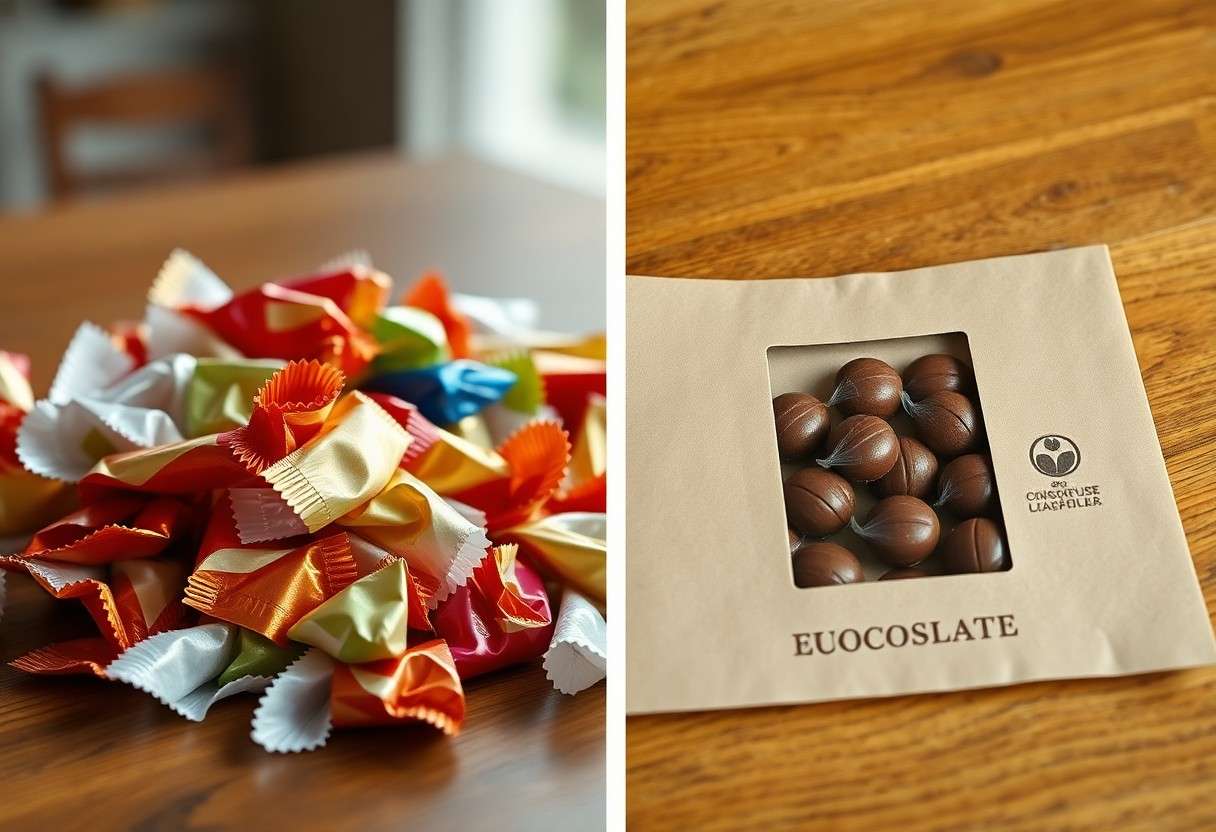
It’s your way to cut plastic pollution by swapping wrappers for paper that lowers microplastic contamination, supports recyclable and compostable waste streams, and protects marine life while maintaining shelf life and branding options you can trust.
The Environmental Impact of Conventional Plastic Wrappers
Plastic wrappers dominate candy packaging and you witness their legacy in overflowing landfills and roadside litter; these materials persist for centuries, fragment into harmful particles, and leach toxic additives that threaten soil and groundwater quality.
Non-Recyclable Multilayer Laminates
Layered laminates combine plastics, foil, and adhesives so you cannot mechanically recycle them; recycling centers often reject these films, leaving them to be incinerated or buried, where they release hazardous residues and contaminate waste streams.
Marine Pollution and the Microplastic Crisis
Ocean currents carry lightweight candy wrappers into rivers and seas, where sunlight and abrasion shred them into microplastics that you may ingest via seafood and drinking water, amplifying toxic exposure through the food web.
Studies show microplastics adsorb persistent organic pollutants and heavy metals, and when you consume contaminated seafood those particles can transfer attached toxins into your body, creating ongoing human health and ecological risks.
Engineering High-Barrier Paper Solutions
Paper engineered with multilayer coatings and tailored fiber blends gives you plastic-grade barrier performance while sharply reducing single-use plastic waste. Designers balance permeability, printability, and end-of-life options so you preserve shelf life and aroma without defaulting to conventional plastics.
Advanced Coatings for Oxygen and Moisture Resistance
Coatings such as bio-based polyesters, thin silica or clay layers, and solvent-free dispersions deliver oxygen and moisture resistance so you can match plastic pouches’ shelf life. Engineers adjust coating thickness to control water vapor and oxygen transmission while prioritizing recyclability or compostability.
You validate coatings via WVTR and OTR testing to confirm barrier targets; high barrier scores reduce spoilage risk but may alter recycling routes, so plan end-of-life handling during formulation.
- Bio-based polyester coatings – low oxygen permeability
- Silica/clay barrier layers – high moisture control
- Waterborne dispersions – improved recyclability
Coating Properties
| Property | Impact on Packaging |
| Oxygen Transmission Rate (OTR) | Controls oxidation, extends aroma retention |
| Water Vapor Transmission Rate (WVTR) | Prevents sogginess and microbial growth |
| Solvent Content | Affects recyclability and worker safety |
Heat-Sealable Fibers for High-Speed Production Lines
Heat-sealable fibers enable you to use existing form-fill-seal equipment by providing fast, reliable seals without additional adhesives; short seal times support high throughput and consistent package integrity. You specify melting points to match line speeds and product sensitivity.
Manufacturers favor bicomponent fibers with a low-melt sheath and high-strength core so you maintain mechanical integrity while achieving narrow seal windows; you may need minor temperature tuning to avoid weak spots.
Operational Integration and Manufacturing Transition
Plant managers should stage conversions so you swap plastic films for paper in controlled batches, tuning speeds and tensions to prevent web breaks. Pilot runs reveal reduced plastic waste and help define paper specifications with suppliers.
You must train operators on humidity control and sealing windows, because improper seals raise contamination and spoilage risks; cross-functional metrics will track yield and quality.
Retrofitting Existing Confectionery Packaging Machinery
Engineers can guide you through retrofits that adjust feeders, rollers, and sealing jaws to handle paper substrates, often requiring minor mechanical adjustments and short stoppages; planned downtime minimizes production impact while delivering long-term cost savings.
Maintaining Structural Integrity During Distribution
Packaging design must account for paper’s different compressive and moisture behavior so you choose board grades and cushioning that preserve product shape; small changes in pack geometry can prevent damage and protect brand trust.
Testing protocols should include humidity cycles and drop tests so you confirm real-world performance; consistent data lets you set handling limits and optimize inner supports to reduce returns.
Regulatory Compliance and Global Sustainability Standards
Regulations around packaging are tightening globally, so you must ensure paper candy wrappers meet both material and labeling standards. This requires tracking material composition, recyclability claims, and certifications to avoid fines and protect brand trust.
Impact of Single-Use Plastic Bans and Directives
European and national single-use plastic bans force you to replace plastic with certified alternatives like paper, delivering reduced plastic pollution and improved consumer perception. Several directives set strict timelines and penalties, so you should align sourcing and production schedules now.
Meeting Extended Producer Responsibility (EPR) Requirements
EPR programs shift end-of-life responsibility to producers, so you will face reporting, collection targets, and contribution fees tied to packaging weight and recyclability. Meeting these rules often requires traceability systems and third-party audits to document reduced environmental impact.
Financial implications include variable EPR fees and potential savings when you design for recyclability, with lower fees for lightweight, mono-material paper designs. Operational changes may include take-back schemes and supplier contracts that document sustainable sourcing to limit your exposure.
Consumer Perception and Brand Differentiation
Perception of paper packaging shifts how consumers judge your product, signaling sustainability and care. When you choose fiber wraps, shoppers often link the look and feel to an authentic, low-waste choice, giving your candy a clear edge over single-use plastic rivals.
The Tactile Appeal of Sustainable Fiber Packaging
Texture of sustainable fiber gives you a warm, premium feel that invites touch and repeat purchase consideration. When you add embossing or natural finishes, the packaging becomes a premium tactile cue that helps dissociate your brand from disposable plastic.
Marketing Transparency and Eco-Labeling Trends
Transparency in your packaging claims helps you build trust; clear certifications and chain-of-custody marks let shoppers verify sustainability quickly. Avoiding vague terms while highlighting verified certifications reduces the risk of greenwashing and strengthens your credibility.
Labels that include QR codes or simple lifecycle summaries let you show provenance and disposal paths, so consumers can confirm compostability or recyclability instantly. Providing scannable lifecycle data and concise end-of-life instructions converts informed interest into consistent purchases.
Economic Viability and Material Sourcing
Costs determine adoption speed; you can compare paper options by life-cycle costing that factors manufacturing, transport, and end-of-life savings. Smaller runs become competitive when you optimize adhesives and inks, and achieving cost parity often unlocks broader retailer interest and consumer willingness to pay a premium for sustainability.
Suppliers with stable fiber sources reduce exposure to market swings, so you should prioritize partners offering traceability and forward contracts to limit price volatility. Certification and strategic sourcing can deliver bulk discounts as you scale, improving margins while cutting plastic use.
Scaling Production to Meet Global Candy Demand
Production lines can be retooled to handle paper wraps, and you will benefit from modular retrofits that minimize downtime and preserve throughput. Pilot programs show that targeted tooling and training let you hit commercial volumes within months while maintaining product quality.
Automation reduces manual variability and helps you preserve seal integrity with paper substrates, though you should plan for upfront capital. Measured efficiency gains typically shorten payback periods and support global rollouts.
Utilizing FSC-Certified and Renewable Raw Materials
Certification assures you of legal and sustainable sourcing; selecting FSC-certified pulp signals compliance and lowers reputational risk. You must require chain-of-custody documentation so claims survive retailer and regulatory scrutiny.
Forests managed for renewal supply fibers that cut dependence on fossil-based plastics, and you can favor suppliers offering post-consumer recycled content to boost circularity. Monitor regional availability to avoid a supply disruption risk that would stall transitions.
Traceability systems let you verify material origins and provide proof to buyers and regulators, increasing brand trust and unlocking incentives for verified renewable sourcing; you should integrate digital tracking early to scale responsibly.
To wrap up
Upon reflecting, you can see how paper-based candy packaging replaces single-use plastics by using renewable fibers, reducing landfill-bound waste, and enabling recycling or industrial composting. You as a buyer or brand can prioritize uncoated papers, clear labeling, and supply-chain transparency to preserve product quality while scaling alternatives that lower plastic use across the confectionery market.