The Complete Guide to Pectin Based Candy Without Gelatin
This guide teaches you to make pectin-based candy without gelatin, with precise recipes, texture-control tips, hot-syrup burn warnings, and reliable vegan alter

This article contains Amazon affiliate links. As an Amazon Associate, CandiesAndSweets earns from qualifying purchases.
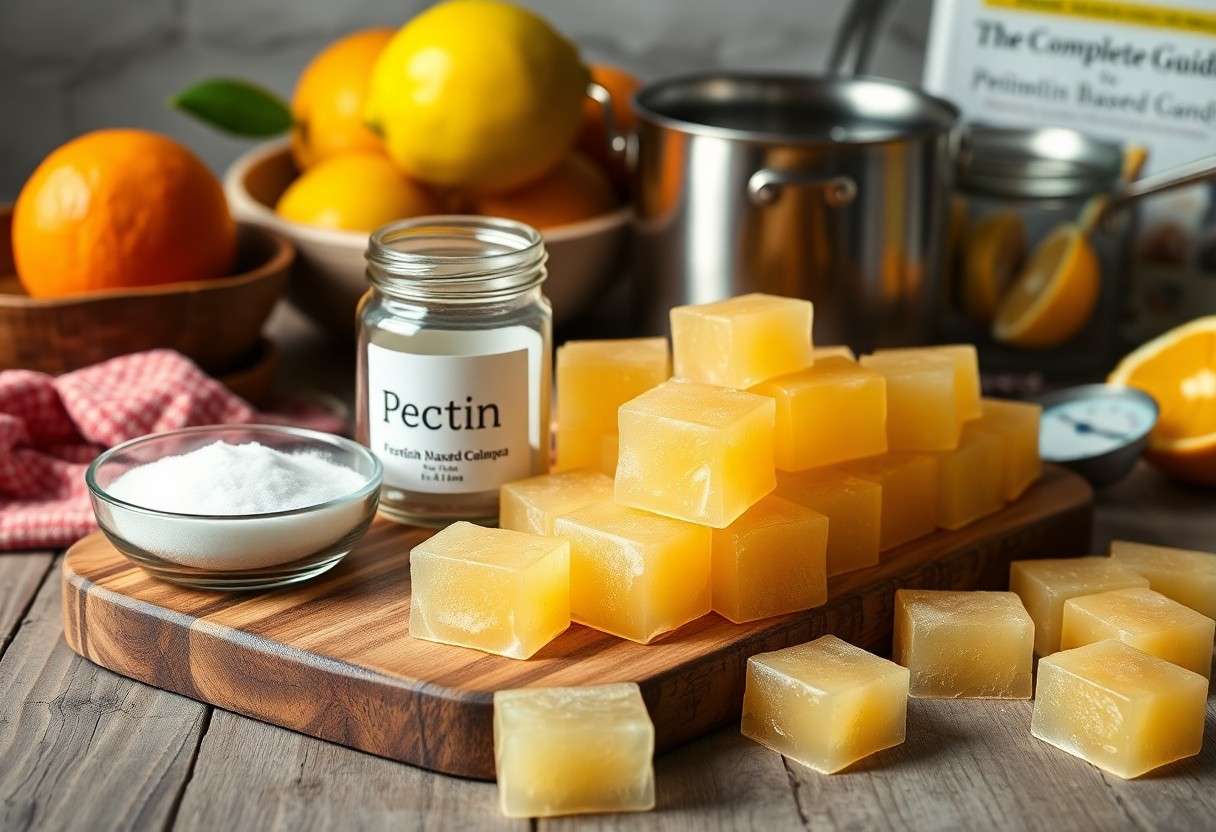
This guide teaches you to make pectin-based candy without gelatin, with precise recipes, texture-control tips, hot-syrup burn warnings, and reliable vegan alternatives for consistent results.
Understanding Pectin Types and Varieties
Pectin exists in multiple grades and you must match the choice to the candy’s texture and ingredient profile; common categories are High Methoxyl and Low Methoxyl. You will find powdered and liquid forms sourced from citrus and apple.
Choose based on sugar level, acid and calcium: HM needs high sugar, LM needs added calcium to gel. Quick reference follows. This table helps you compare common pectin options.
- High Methoxyl: sets with high sugar + acid
- Low Methoxyl: requires calcium for gelation
- Source: citrus peel, apple pomace; powdered or liquid
| Attribute | Details |
| High Methoxyl (HM) | Sets with sugar and acid; glossy, elastic gels |
| Low Methoxyl (LM) | Forms calcium-activated gels; suitable for low/no-sugar |
| Source & Form | Citrus/apple; powdered or liquid concentrates |
| Typical Uses | HM: traditional jellies; LM: diet candies, calcium-set centers |
High Methoxyl Pectin for High-Sugar Recipes
High Methoxyl pectin sets when you achieve sufficient soluble solids and acid, so you should heat fully to dissolve pectin and reach target Brix for a firm set; avoid undercooking which yields a weak gel.
Low Methoxyl Pectin for Calcium-Activated Gels
Low Methoxyl pectin gels when you add measured calcium, and you must control ion concentration and mixing order to avoid a grainy or overly firm texture.
Calcium concentration determines gel strength and set time, so you should titrate additions and test small batches to dial in texture without producing brittle candy.
Key Factors for Successful Gelation
Pectin gelation relies on the balance of pH, soluble solids and pectin type; you must match high‑methoxyl pectin to sugar‑set recipes and avoid prolonged overheating that reduces gelling capacity. Measure Brix and acidity early, control cooking time, and account for added fruit purees that dilute soluble solids.
- pH
- Soluble solids (Brix)
- Pectin type
- Sugar concentration
- Heating time
Recognizing shifts in any of these parameters lets you correct acidity or sugar before the batch fails to set, preventing soft or watery candies.
Balancing pH and Acidity Levels
Acidity determines whether pectin junction zones form; you should target a pH around 2.8-3.5 for high‑methoxyl systems and slightly higher for low‑methoxyl types. Test with pH strips or a meter to keep within range.
You can use measured additions of lemon juice or citric acid to fine‑tune acidity, adding gradually to avoid over‑acidifying which will hydrolyze pectin and prevent gelation.
Managing Sugar Concentrations and Soluble Solids
Sugar raises soluble solids and promotes gel set; you should aim for the target Brix (commonly 65-70% for firm candies) and compensate for moisture from fruit purees. Measure with a refractometer for accuracy.
Monitor prolonged boiling and inversion, because excessive sugar inversion lowers sucrose content and can produce sticky, weak gels; control temperature and cook time to preserve syrup integrity.
Using a refractometer alongside standardized recipes helps you adjust for dilution, guiding precise sugar additions so you avoid under‑set or overly brittle results.
Step-by-Step Production Process
| Stage | Details |
|---|---|
| Process Flow |
Start with sanitized equipment and a clear sequence: batching, pectin dispersion, sugar addition, cooking, depositing and cooling; you should control batch sizes and timing to keep texture consistent and avoid cross-contamination. Mix sugar, acid and adjuncts to the target recipe before heating; you will adjust acid late to reach pH 3.0-3.5, which promotes pectin setting, and log Brix and pH for reproducibility. |
Proper Hydration and Slurry Preparation |
Hydration is done by dispersing pectin evenly into cold water or preblended sugar using high-shear mixing; you must work quickly to prevent lumping and ensure full dispersion. Measure hydration time and allow 15-30 minutes for pectin to swell; you may add calcium only for low‑methoxyl systems and avoid acidifying before full hydration to prevent weak gels. |
Precision Cooking and Depositing Techniques |
Heat the batch to the recipe’s temperature and Brix target while stirring to prevent scorching; you must respect temperature windows because hot syrup can cause severe burns and alter setting behavior. Use temperature‑controlled depositors and maintain syrup viscosity within the depositing window so you can form pieces cleanly; you should monitor conveyor speed and cooling to prevent pieces from sticking or deforming. Calibrate depositors and test deposits on a chilled plate to verify set time and drop weight; you will adjust pump pressure, nozzle size and shear to achieve consistent weight and texture across runs. |
Pros and Cons of Gelatin-Free Formulations
Pros and Cons
| Pros | Cons |
|---|---|
| Vegan and vegetarian friendly | Lower elasticity and chew compared to gelatin |
| Heat-stable during cooking | Can become sticky or lose structure under humidity |
| Clean label appeal for many consumers | Often less transparent; hazy appearance |
| Compatible with acidic fruit systems | Requires careful sugar/acid balance to set |
| Allergen-friendly compared to animal proteins | Prone to syneresis (weeping) if formulation is off |
| Can be blended with starches or gums | May need additional ingredients for chew and bite |
| Suitable for kosher/halal markets | Different manufacturing controls than gelatin |
| Good shelf-life when dried properly | Sensitivity to overcooking reduces gelling power |
Pectin-based systems let you offer animal-free confections while keeping much of the traditional mouthfeel, and they handle higher cooking temperatures without denaturing. Recipes will often require you to tweak sugar, acid, or calcium to hit the desired set and clarity.
You should plan for formulation adjustments and tighter process control, since pectin gels respond to pH and sugar inversions; overheating or wrong acid levels can cause weak sets or weeping during storage.
Advantages of Vegan and Heat-Stable Ingredients
Vegan formulations allow you to serve broader markets and avoid animal-sourced supply issues, giving your product a stronger commercial reach. Heat stability means you can cook longer or at higher temperatures with less risk of breaking the gel, which helps when working with fruit purees or longer cook times. You might also enjoy our guide on Jelly Pairing Guide – Finding The Perfect Combinations For Your Taste Buds.
Limitations in Elasticity and Structural Clarity
Texture differences mean you may find pectin gels less elastic and more tender than gelatin, so you will often combine pectin with starches or gums to increase chew. Clear-batch clarity can suffer when sugar inverts or when impurities are present.
Elasticity also affects molding and stretching; you will need to test demolding times and consider thicker walls or firmer formulas for shaped candies. Control of acid and sugar is key to avoid a brittle or collapsing piece. You might also enjoy our guide on The History Of Jams And Preserves – How They Became A Breakfast Staple.
Practical tips include choosing low- or high-methoxyl pectin based on sugar/acid levels, using controlled calcium for LMP systems, and monitoring cook temperature closely to minimize syneresis and haze while achieving acceptable chew.
Expert Tips for Professional Results
Use tightly controlled temperature and timing so you build predictable gels; keep small test batches to refine ratios and avoid wasting product. Measure sugar and acid by weight, monitor pH, and avoid prolonged boiling because overheating destroys pectin and yields weak sets.
- Choose the correct pectin type for your recipe (high‑methoxyl vs low‑methoxyl).
- Weigh sugar and acid precisely to hit the gel point.
- Cool at consistent temperatures to prevent uneven setting.
Calibrate instruments and document each batch so you reproduce texture and shine; note that inaccurate pH ruins set. Assume that precise acid and sugar ratios are non-negotiable for glossy, stable pectin based candy without gelatin.
Avoiding Common Premature Setting Issues
Prevent premature setting by premixing pectin with sugar to ensure even hydration before adding liquids, since direct addition to cold liquid can cause lumps and rapid gelling. You should aim for smooth dispersion to avoid grainy or brittle texture.
Test small variations of temperature and acid to find your workable window; over‑acidification accelerates set and underheating prevents full gel development. Keep clear notes on pH, brix, and pectin grade so you can reproduce optimal results. You might also enjoy our guide on The History Of Jellies – From Ancient Times To Modern Day.
Enhancing Flavor Release and Shelf Stability
Balance sugar, acid, and pectin so flavors can bloom rather than being masked; excessive sugar dulls delicate notes while too little shortens shelf life. You should add delicate extracts late to protect volatile aromatics.
Layer citrus oils or zests early and water‑soluble flavors near the end to preserve brightness, and use low water activity strategies-like higher solids or coatings-to extend freshness. Keep antioxidants or approved preservatives when necessary to help shelf stability.
Store finished pieces in airtight, cool containers to prevent moisture migration and flavor loss, because humidity is the main enemy of texture and can turn firm candies sticky.
Final Words
Ultimately you can master pectin-based candy without gelatin by following tested ratios, controlling acidity and temperature, and selecting the right pectin type; you will get consistent texture, clear flavor, and reliable shelf life when you measure precisely and use timers. Trust your senses during cooling and adjust sugar or citric acid to tune chewiness and tartness; practice produces batch-to-batch consistency and creative flavor combinations that suit dietary needs.