Temperature-Controlled Manufacturing Optimizes Candy Texture and Shelf Life Performance
With the right temperature control in manufacturing, you can significantly enhance the texture and shelf life of your candy products. This method not only impro

This article contains Amazon affiliate links. As an Amazon Associate, CandiesAndSweets earns from qualifying purchases.
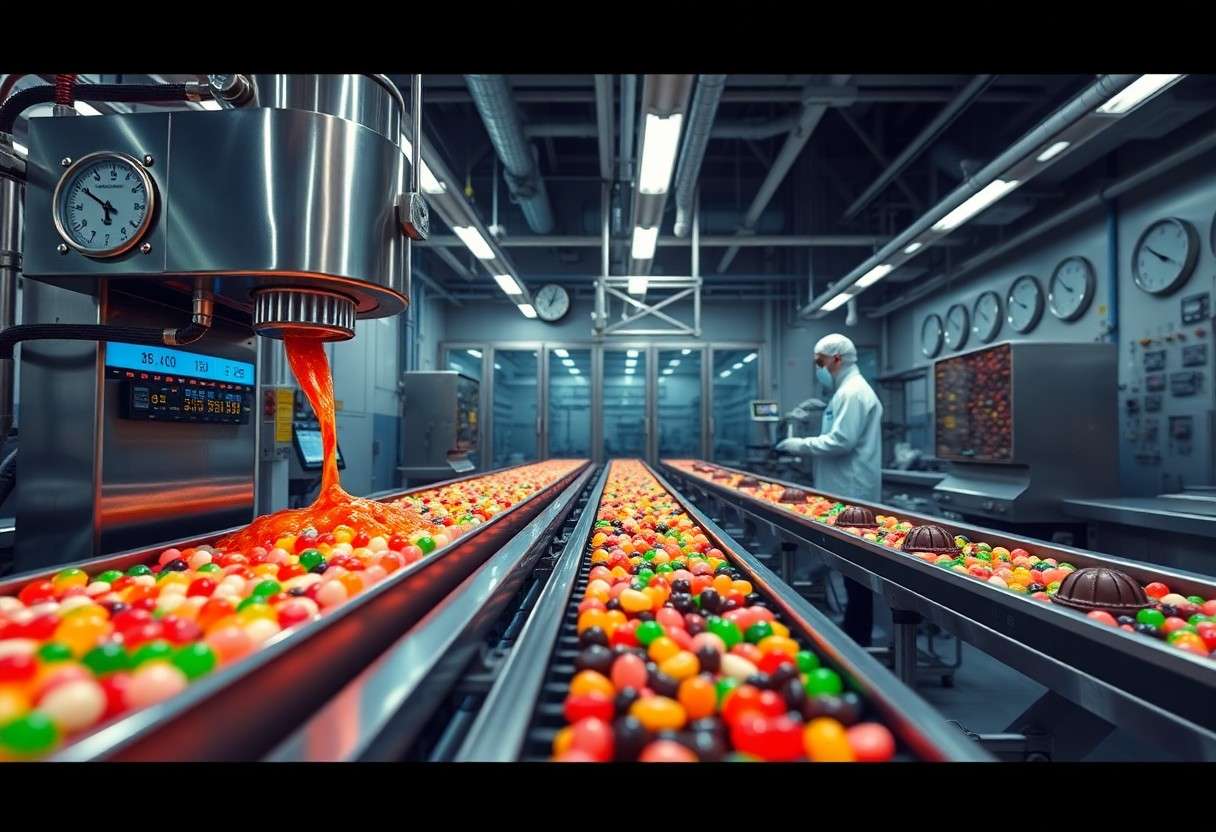
With the right temperature control in manufacturing, you can significantly enhance the texture and shelf life of your candy products. This method not only improves consistency but also ensures that your confectionery remains delightful to consumers over time. By understanding the role of temperature in the production process, you can effectively minimize spoilage and maintain the intended quality of your sweets. This blog post will guide you through the benefits of temperature-controlled manufacturing and how it can transform your candy business.
The Science Behind Temperature Control
Thermal Properties of Ingredients
Your choice of ingredients plays a significant role in how temperature affects the final candy product. Each ingredient has specific thermal properties, which influence melting points, crystallization behavior, and overall texture. For instance, sugar’s melting point is around 160°C, while gelatin starts to melt at lower temperatures, approximately 30°C. Understanding these properties allows you to tailor the manufacturing temperature to enhance your desired results.
| Ingredient | Thermal Property |
| Sugar | Melting point: approx. 160°C |
| Gelatin | Melting point: approx. 30°C |
| Corn syrup | Dissolves easily at high temperatures |
| Chocolate | Melting point: approx. 30-32°C |
Impact of Temperature on Candy Texture
Your candy’s texture heavily relies on maintaining specific temperature ranges during production. For example, if cooking temperatures are too high, it can lead to a hard, brittle texture, while lower temperatures can create a chewy, soft consistency. Adjusting temperatures during critical stages like boiling and cooling directly affects the desired mouthfeel and overall quality of the candy.
| Temperature Range | Texture Outcome |
| Above 150°C | Hard and brittle |
| 100-120°C | Chewy and soft |
| Below 100°C | Sticky or gooey |
For example, caramels require a specific cooking temperature of around 118°C to achieve that perfect chewy consistency. At this stage, sugar undergoes Maillard reactions that not only affect flavor but also the texture, resulting in a delightful experience for your consumers. Maintaining precision in temperature provides greater control over the final texture of your confections, directly linking production techniques to the end product’s quality.
| Temperature Effect | Example |
| High Temperature | Brittle toffee |
| Medium Temperature | Soft caramels |
| Low Temperature | Gummy candies |
Manufacturing Processes Influenced by Temperature
Temperature plays a pivotal role in candy manufacturing, affecting everything from the cooking phase to finishing techniques. Variations in temperature can alter the texture, flavor, and shelf life of the final product. Understanding how to manipulate temperature through different manufacturing processes enables you to achieve the desired outcomes in quality and consistency. Below are key processes influenced by temperature:
| Manufacturing Process | Temperature Influence |
| Cooking Methods | Determines sugar crystallization and moisture content. |
| Cooling Techniques | Affects texture and final product consistency. |
Cooking Methods and Temperature Settings
In candy manufacturing, cooking methods such as boiling, steaming, or frying all require specific temperature settings to optimize texture and taste. For example, in traditional boiling methods, temperatures need to reach around 115°C to 130°C for proper sugar concentration, which directly influences the candy’s hardness or chewiness. Variations of just a few degrees can result in significant differences in product consistency. Implementing accurate temperature controls through digital thermometers or automated cooking systems will enhance your ability to replicate the desired boiling points consistently.
| Cooking Method | Ideal Temperature Range (°C) |
| Hard Candy | 150-160 |
| Soft Candy | 118-130 |
Cooling Techniques for Optimal Texture
Cooling techniques, including air cooling, water cooling, and chillers, have a decisive impact on the texture of candy. Proper cooling allows more even distribution of sugar crystals, which is vital for maintaining smoothness and preventing graininess. For instance, rapid cooling may yield a brittle texture ideal for hard candies, while slower cooling is beneficial for achieving a softer, more pliable consistency. By employing temperature-controlled cooling methods, you can ensure your candies achieve the intended mouthfeel and structure.
Effective cooling techniques are further enhanced by the integration of technology, such as cryogenic cooling systems, which utilize liquid nitrogen. This method expedites the cooling process far more than traditional approaches, ensuring that texture remains consistent throughout the mass of candy. Additionally, the fast reduction in temperature minimizes moisture absorption, which can adversely affect candy quality over time. Implementing these advanced cooling methods ensures that your products not only taste great upon release but also retain their desired attributes throughout their shelf life.
Quality Control and Testing
Measuring Texture and Consistency
Texture measurement employs various techniques such as tactile sensors and trained panel evaluations. These methods enable you to quantify attributes like chewiness, firmness, and smoothness that directly influence consumer experience. For example, a texture analyzer can provide precise metrics on hardness and elasticity, allowing you to identify the optimal formulation needed for your candy products. Furthermore, consistency measurements ensure that every batch meets your quality standards, giving customers the same delightful experience with each purchase.
Your approach to texture must also consider storage conditions. Variations in temperature and humidity can alter the texture of your candies significantly. Conducting routine tests during different phases of production helps identify any issues early, safeguarding the final product from texture defects like stickiness or graininess that can occur post-production.
Shelf Life Assessments
Shelf life of candy products hinges on understanding how temperature fluctuations impact ingredients over time. Regular assessments using accelerated shelf-life testing can simulate various storage conditions, allowing you to predict how long your candies will maintain their quality. You might incorporate both sensory evaluations and chemical analyses to track freshness, assessing changes in flavor, color, and texture as indicators of product viability.
Innovative packaging solutions also play a role in extending shelf life, and you can explore moisture- and gas-barrier materials that protect your products from environmental factors. Implementing real-time monitoring of temperature during distribution allows you to gather data on how external conditions affect product longevity.
Testing shelf life not only reveals how long your candies will remain appealing but also helps you plan inventory and maximize sales. By collecting data over extended periods, you’ll establish benchmarks that inform your production processes, thus ensuring that you consistently deliver high-quality candies that align with consumer expectations while minimizing waste.
Benefits of Temperature-Controlled Manufacturing
| Enhanced Consumer Experience | Reduction in Production Waste |
| Temperature-controlled processes ensure that candies achieve the desired texture, whether chewy, crunchy, or smooth, greatly impacting customer satisfaction. | By maintaining optimal temperatures, you minimize product defects, resulting in lower disposal rates and higher overall efficiency in production. |
| Uniformity in texture and flavor enhances brand loyalty, as consumers are more likely to repurchase products that consistently meet their expectations. | This efficient manufacturing approach can lead to significant cost savings by optimizing ingredient utilization and reducing raw material waste. |
Enhanced Consumer Experience
Your customers often judge candy not only by taste but also by its texture and appearance. Temperature-controlled manufacturing allows you to fine-tune these properties, producing candies that are consistently enjoyable to consume. This consistency leads to positive reviews and heightened brand loyalty. A study found that 75% of consumers are more likely to repurchase a product that meets their texture preferences, demonstrating how temperature management in production directly correlates with customer satisfaction.
In addition, the ability to control temperatures throughout the manufacturing process facilitates the incorporation of various ingredients, such as seeds, nuts, or inclusions, without compromising their integrity. This capability enhances the overall candy experience, enabling you to introduce innovative flavors and textures that delight your customers, improving market competitiveness.
Reduction in Production Waste
Through precise temperature control, you significantly reduce the occurrence of production errors, leading to a decrease in the amount of product that needs to be discarded. Many manufacturers face challenges like crystallization or uneven cooking, which can compromise the finished product. By managing temperatures closely, you not only enhance product quality but also streamline the manufacturing workflow, effectively minimizing costs associated with wasted materials. Companies that have implemented rigorous temperature controls report reductions in waste by up to 20%, which translates into substantial savings.
Your production processes can be honed to not only meet consumer expectations but also to operate with enhanced sustainability in mind. Adjusting temperatures to align with ideal manufacturing conditions helps ensure every batch of candy lives up to quality standards while aligning with your business goals. The reduction in waste is not just economic; it also reflects a commitment to responsible sourcing and production practices that resonate with today’s environmentally conscious consumers.
Case Studies in the Industry
- Case Study 1: Chocolate Bonbons Production – A major manufacturer implemented a new temperature management system that maintained an optimal range of 25-30°C during the refining process. This led to a 15% increase in product consistency and eliminated complaints about graininess.
- Case Study 2: Gummy Candy Shelf Life Expansion – By improving cooling tunnels to regulate temperature at 4°C, a gummy candy producer extended the shelf life by 30%, allowing for a reduction in waste and a 10% increase in profitability.
- Case Study 3: Hard Candies and Humidity Control – Implementing precise temperature control coupled with humidity management led to a 20% reduction in crystallization issues, resulting in a smoother texture for hard candies.
- Case Study 4: Seasonal Chocolate Lines – A factory adapted temperature settings seasonally, which improved production efficiency by 25% during the summer months while maintaining quality standards.
Successful Implementations
Case studies reveal significant advancements in candy manufacturing through temperature control. The chocolate bonbons producer noted that by integrating precise temperature feedback systems, they could swiftly respond to deviations, enhancing overall product quality. This increased their market competitiveness, as the final product’s consistency became a key selling point.
An example from the gummy candy sector highlights an innovative approach to shelf life management. By maintaining optimal processing temperatures, the manufacturer minimized ingredient degradation. The result was a remarkable increase in retail shelf presence and a decrease in returns due to spoilage.
Lessons Learned from Temperature Management
Challenges in temperature management often lead to valuable insights. The candy manufacturer noted that variances in temperatures during the cooling process could yield vastly different textures. They adjusted protocols to monitor and maintain tighter temperature control, reducing variability and improving product reliability.
Understanding the correlation between temperature spikes and flavor deterioration has also been imperative. A detailed analysis showed that even minor fluctuations could result in a noticeable loss of flavor profile, prompting manufacturers to invest in better insulation technologies and real-time monitoring systems.
| Key Insights | Description |
|---|---|
| Temperature Consistency | Maintaining stable temperatures prevents texture and taste degradation. |
| Fluctuation Impact | Minor temperature changes can lead to significant sensory differences. |
| Investment in Technology | Enhancements in monitoring technology allow for proactive adjustments in production. |
| Procedure Revision | Adjustments in operational protocols are imperative for quality control. |
Insightful evaluations reveal that adopting advanced temperature management practices often results in higher quality candies that meet consumer expectations. Manufacturers who prioritize temperature stability not only enhance product integrity but also increase operational efficiency, driving greater profitability. The data underscores the need for continuous investment in heating and cooling technologies to stay competitive in the evolving confectionery market.
| Temperature Management Practices | Outcomes |
|---|---|
| Real-time Monitoring Systems | Improved responsiveness to variations, minimizing production errors. |
| Enhanced Insulation | Reduced costs associated with heating and cooling, lowering overall energy expenditure. |
| Staff Training Programs | Better understanding of the impact of temperature on product quality among operational teams. |
| Automated Temperature Controls | Increased precision, leading to fewer defects in final products. |
Future Trends in Candy Manufacturing
Innovations in Temperature Control Technology
Emerging technologies enhance temperature regulation in candy manufacturing, leading to improved texture and flavor profiles. For instance, smart temperature control systems using IoT devices allow real-time monitoring and adjustments to maintain consistent conditions throughout the production process. These innovations often integrate predictive analytics, which optimize processing times and reduce waste by aligning production schedules with real-time temperature data.
Furthermore, advancements in heat exchange systems increase efficiency by minimizing energy consumption. Some manufacturers are adopting modular temperature control units that can be easily adjusted based on specific product requirements. This flexibility not only supports a broader range of candy types but also fosters rapid adaptation to consumer preferences, ensuring that your products meet market demands.
Temperature Control Innovations in Candy Manufacturing
| Technology | Benefits |
|---|---|
| IoT Temperature Monitoring | Real-time adjustments, reduced waste, optimized processing |
| Modular Control Systems | Flexibility for diverse products, energy efficiency |
Sustainable Practices in Candy Production
As you navigate the evolving landscape of candy manufacturing, sustainability plays a pivotal role in shaping consumer preferences and regulatory standards. Many manufacturers are transitioning to renewable energy sources, such as solar and wind, to power their facilities. Compostable packaging materials are also on the rise, significantly reducing plastic waste. Such initiatives not only improve your brand image but also resonate with environmentally conscious consumers seeking sustainable options.
Shifting towards sustainably sourced ingredients ensures that your supply chain supports ethical farming practices. Sugar from certified organic farms, for example, contributes to healthier ecosystems and aligns with increasing consumer demand for transparency and ethical sourcing methods. By embracing these practices, you position your candy brand as a leader in sustainability and attract a loyal customer base looking for responsible choices.
Conclusion
With these considerations, you can see how temperature-controlled manufacturing significantly enhances candy texture and shelf life performance. By maintaining optimal temperature conditions during production and storage, you ensure that your products have the right consistency and maintain their quality over time. This not only elevates customer satisfaction but also helps in reducing waste and improving overall profitability.
To maximize your product’s potential, it’s imperative to implement effective temperature management strategies throughout the supply chain. For more insight into best practices in confectionery storage, you can explore Understanding Candy Storage Solutions for Businesses – Spaceman. By doing so, you’ll position your business for sustained success in the competitive candy market.