How Almond Milk Chocolate Compares to Traditional Recipes
Just compare texture, flavor, and nutrition: you gain lower saturated fat and dairy-free benefits, must consider nut allergy risk, and accept different melting

This article contains Amazon affiliate links. As an Amazon Associate, CandiesAndSweets earns from qualifying purchases.
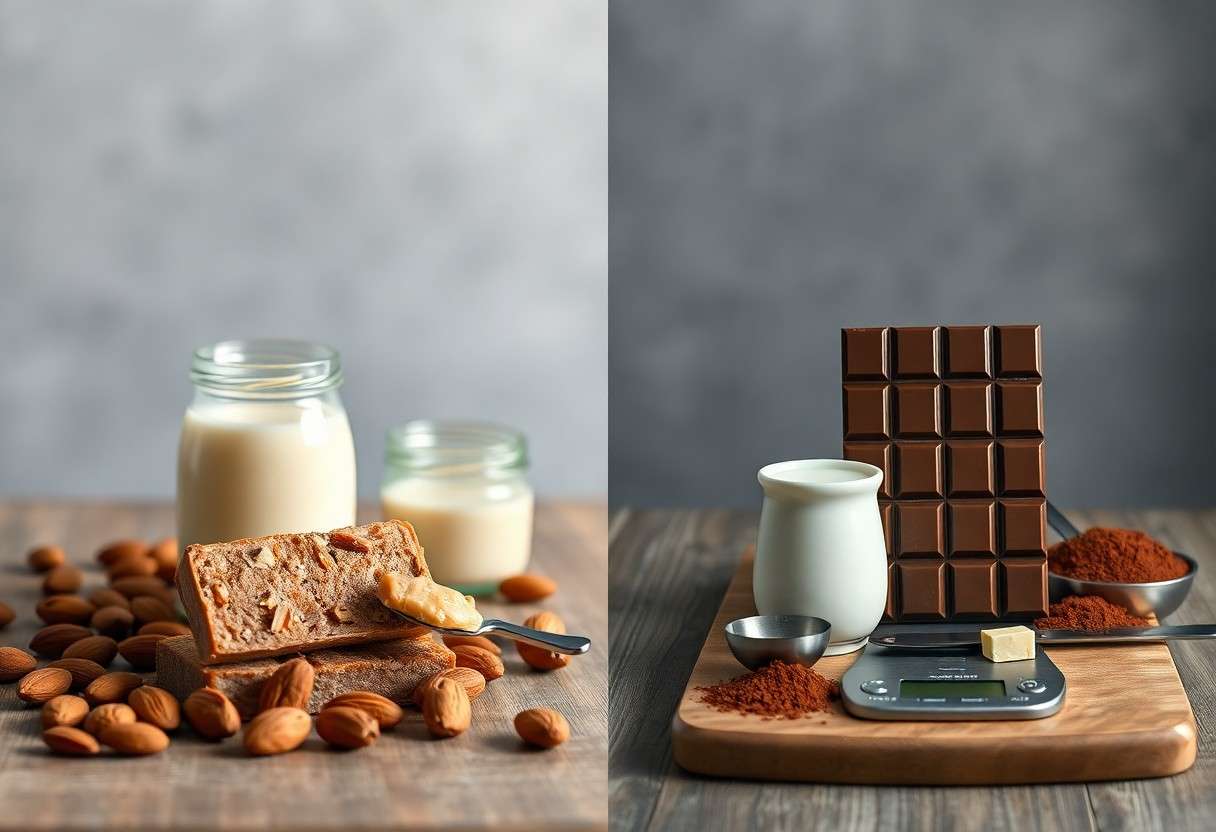
Just compare texture, flavor, and nutrition: you gain lower saturated fat and dairy-free benefits, must consider nut allergy risk, and accept different melting and snap that affects tempering and mouthfeel.
Comparative Ingredient Analysis
Ingredient Comparison
| Ingredient | Traditional vs Almond Milk |
|---|---|
| Protein source | Dairy uses casein for structure; almond uses nut proteins with weaker binding. |
| Fat profile | Traditional relies on milk fats for snap; almond relies on vegetable oils with lower saturated fat. |
| Emulsifiers | Traditional often uses soy lecithin; almond formulations favor sunflower lecithin or plant-derived blends. |
| Sweeteners | Both use sugar, but almond recipes commonly blend alternatives or polyols to adjust mouthfeel and calories. |
Dairy Solids versus Almond Protein Bases
Almond-based recipes replace dairy solids with nut proteins and oils, so you will notice a lighter mouthfeel and reduced structural fat; you may require stabilizers to mimic creaminess. Lower saturated fat and cholesterol-free composition are positive, while reduced protein-bound structure can lessen snap and melt behavior.
Dairy solids supply casein and lactose that contribute to set and characteristic snap, so you will get creamier texture and more predictable conching. Higher saturated fat and the presence of milk allergens are trade-offs when compared to almond formulations.
Sweeteners and Emulsifiers in Plant-Based Formulations
Alternative sweeteners such as cane blends, polyols, or stevia alter crystallization and perceived sweetness, so you will often blend types to match traditional taste. Emulsifiers like lecithin disperse cocoa and nut oils; mono- and diglycerides may be animal-derived, affecting vegan claims and labeling.
Choices about sweeteners influence shelf stability and consumer tolerance, so you will weigh glycemic impact against texture; using polyols can lower calories but introduce digestive sensitivity for some. Selecting sunflower lecithin preserves vegan status and reduces allergen risk.
Emulsifiers stabilize cocoa butter and almond oil blends to preserve texture over time, so you will prevent separation with proper selection; plant-derived options ensure vegan compliance, while improper blends can cause fat bloom or off-texture.
Flavor Profile and Palate Development
Palate shifts with almond milk chocolate because you notice brighter top notes, a lighter finish, and altered sweetness perception driven by lower milk solids and different fats.
The Classic Creamy Profile of Traditional Recipes
Traditional milk chocolate rewards you with a dense, velvety mouthfeel from cocoa butter and milk solids, delivering long mid-palate sweetness and a smooth finish while often carrying higher saturated fat than plant-based alternatives.
Exploring the Nutty Complexity of Almond Milk Chocolate
Almond milk chocolate nudges you toward nutty aromatics and a quicker melt because plant oils and nut proteins change emulsification, creating a cleaner aftertaste and distinct almond notes.
You should balance formulations-adding cocoa butter or toasted almond essence can restore depth and mouthfeel, and you must always flag nut allergy risks when serving for safety.
Textural Integrity and Mouthfeel
You will notice almond milk chocolate often feels lighter on the tongue because reduced milk fat cuts down on coating and creaminess compared with traditional dairy recipes, altering the expected richness you anticipate.
Almond-based formulas depend on particle size and emulsification; if not optimized, graininess or separation can occur, while careful grinding and stabilizer balance give you a clean, airy mouthfeel that still satisfies.
Evaluating the Snap and Melting Point
Snap in almond milk chocolate tends to be less pronounced because milk fat and crystallization behavior differ; you may detect a softer break and a lower melting point that melts faster in your mouth.
Temperature control during tempering becomes more exacting with almond milk; if mismanaged, fat bloom or texture collapse can appear, so you should monitor cooling curves and tempering windows closely.
Mimicking the Viscosity of Milk Fat
Viscosity adjustment relies on emulsifiers and tailored fat blends to recreate milk fat’s mouth-coating; you can use specific ratios to achieve a richer glide without adding dairy. You might also enjoy our guide on What are the most popular chocolate candies?.
Hydrocolloids such as xanthan or guar, paired with almond oil and lecithin, let you tailor flow and suspension; test small batches to balance thickness and finish that you prefer.
Experimentation with conching time, shear rate and emulsifier dosage helps you approximate dairy-like viscosity; track sensory tests and adjust until the chocolate delivers mouth-coating richness without greasiness.
Nutritional Differences and Dietary Impact
You often find almond milk chocolate with lower saturated fat and lactose-free labeling, but you must watch for added sugars that can offset those benefits while protein content usually falls compared with dairy recipes.
Compared to traditional chocolate, the calorie profile shifts toward unsaturated fats and sweeteners, altering mouthfeel and satiety so you should assess ingredient lists rather than assume a healthier product. You might also enjoy our guide on What countries have unique chocolate candy traditions?.
Caloric Distribution and Macronutrient Ratios
Calories per serving can be lower in almond versions, yet you should check macronutrient ratios: many trade dairy protein for oils and sugars, resulting in reduced protein and sometimes higher added sugars.
Allergen Considerations and Vegan Benefits
Tree nut content makes almond milk chocolate dangerous for people with nut allergies, so you must avoid it if you have a tree‑nut sensitivity; at the same time, it offers clear vegan and dairy-free advantages for plant-based diets.
If you follow a plant-based diet, almond formulations are often lower in protein but frequently fortified with calcium and B12 to help match nutrient needs-verify fortification on the label.
Labeling and advisory statements reveal potential cross-contact risks, so you should look for “made in a facility with…” warnings and, when necessary, choose alternatives like soy or pea protein for higher protein or to avoid nut exposure.
Culinary Performance and Tempering
Tempering almond milk chocolate demands small adjustments because its fat profile and added water reduce cocoa butter dominance, so you may see a shorter working time and increased sensitivity to temperature swings.
You should lower target tempering temperatures slightly and consider adding a small amount of cocoa butter or compatible vegetable fat to encourage stable β-form crystals, yet expect more frequent fat or sugar bloom than with traditional recipes.
Structural Stability in Confectionery Arts
Molds filled with almond milk chocolate can finish with a softer snap and duller surface, so you must extend cooling holds and control humidity to preserve shape and gloss for molded pieces.
Baking Applications and Heat Resistance
Baking with almond milk chocolate typically works well in batters and doughs because oven temperatures melt inclusions, but you should note the lower melting point which can ruin tempered decorations or thin coatings when exposed to heat.
Adjustments such as reducing added liquid in ganaches, using higher cocoa-solids couverture, or adding stabilizers will help maintain texture; choose 55-70% dark bases or increase cocoa butter to improve heat resistance in fillings and glazes.
Environmental and Sustainability Factors
- Almond milk chocolate
- Traditional chocolate
- Water footprint
- Cocoa supply chain
- Deforestation
- Greenhouse gas emissions
- Ethical sourcing
You compare lifecycle impacts when choosing between almond milk chocolate and traditional recipes, since almonds often cut GHG emissions but can raise water use and monoculture risks you should track.
Almonds demand irrigation while dairy drives methane and feed-related land pressure, so you prioritize transparent sourcing, supplier disclosures, and certifications to reduce biodiversity loss.
Water Footprint of Almond versus Dairy Production
Water use per litre of almond milk can be several times higher than dairy in arid regions, so you evaluate regional irrigation practices, drought risk, and supplier reporting before favoring one recipe.
Ethical Sourcing in the Cocoa Supply Chain
Cocoa production faces deforestation, child labor, and price squeezes, so you look for traceability, Fairtrade or Rainforest Alliance labels to lower social and environmental harm.
Assume that you prioritize suppliers publishing traceability, paying living wages, supporting agroforestry to limit deforestation, and enforcing bans on child labor to protect communities and long-term yields.
Final Words
Taking this into account, you can expect almond milk chocolate to deliver a lighter, slightly nuttier profile with lower saturated fat and often less cocoa butter than traditional recipes. You should adjust emulsifiers, stabilizers, and added fats to match creaminess and snap if you want a closer match while keeping a pleasing flavor for dairy-free diets. You might also enjoy our guide on What Are the Different Types of Chocolate Candies?.