How to Make Gourmet Chocolate Truffles at Home Like a Pro
There's a precise method you follow to make gourmet truffles: you melt and temper high-quality chocolate, whip a silky ganache, and chill before shaping, while

This article contains Amazon affiliate links. As an Amazon Associate, CandiesAndSweets earns from qualifying purchases.
There’s a precise method you follow to make gourmet truffles: you melt and temper high-quality chocolate, whip a silky ganache, and chill before shaping, while avoiding burns from hot ganache and keeping tools dry; with practiced technique you’ll achieve professional, glossy finishes.
Primary Factors in Selecting Professional Grade Ingredients
Choose ingredients that let you control texture and flavor: select couverture chocolate with clear origin notes, fresh dairy with stable butterfat, and pure vanilla. Inspect packaging dates and storage conditions to avoid stale or off-flavor components.
- Couverture chocolate: look for single-origin, clean flavor, correct cocoa percentage
- Butterfat in dairy: higher percentages deliver silkier ganache
- Emulsifiers and flavorings: avoid hidden stabilizers that ruin tempering
Identifying High-Quality Couverture Chocolate
Assess the snap, gloss, and aroma of the block before you buy; true couverture chocolate melts evenly and offers predictable tempering. Check the cocoa percentage and ingredient list so you don’t end up with additives that cause failed crystallization or off-flavors.
The Importance of Butterfat Content in Cream
Select cream with at least 35% butterfat when you make ganache so you achieve a glossy, stable emulsion; lower fat can lead to grainy texture and separation. Keep cream chilled and heat gently to preserve structure.
Thou should test small batches and note that overheating can break the emulsion, while high butterfat gives superior mouthfeel and longer shelf life, so adjust proportions to match your recipe.
How-to Prepare a Silky Ganache Base
Heat heavy cream until it just simmers, not a boil; chop chocolate finely, then pour the hot cream over it and let it sit 2-3 minutes so you can stir gently to form a smooth emulsion. Avoid overheating the cream because scalded cream will separate and yield a grainy ganache.
Whisk slowly from the center until glossy and smooth, then let the mixture cool to a workable temperature before adding butter or liqueur so you preserve texture. Strain if needed to remove any solids and achieve the silky texture you expect from professional truffles.
Mastering the Ratio for Perfect Consistency
Balance chocolate and cream by weight: for classic truffles aim for about 2:1 chocolate to cream; use 1:1 for softer ganache and increase toward 3:1 for very firm centers. Adjust for white chocolate, which requires less cream, so you achieve perfect consistency every time.
Infusing Natural Aromatics and Liqueurs
Measure aromatics into the cream-vanilla bean, citrus zest, tea leaves, or fresh herbs-then warm gently and steep off heat for 10-15 minutes so you extract clear flavors; strain before pouring over chocolate. When using liqueur, add it after the ganache cools slightly to avoid evaporating alcohol and do not boil alcohol.
Finish by tasting and adding small amounts of liqueur or zest-start with a teaspoon per 200g ganache and increase cautiously; too much liquid will thin the ganache, so if you add more spirit reduce cream slightly to maintain structure and texture.
Essential Tips for Tempering Chocolate at Home
Heat the chocolate slowly and measure with a reliable thermometer so you control the tempering chocolate process and avoid burning or seizing. Keep water away from tools to prevent grainy texture and work over a bowl of warm water if you need gentle reheating.
- Target temps: dark 31-32°C, milk 30-31°C, white 28-29°C
- Keep tools dry and use a clean, dry bowl
- Avoid overheating; stir constantly for even heat
Use consistent stirring and small batches so your temperature stays steady. This preserves the glossy, snap finish you want. This ensures professional-looking truffles every time.
Utilizing the Seeding Method for a Snap Finish
Seed chopped, fully tempered chocolate into melted chocolate to encourage beta crystals; you will see viscosity increase as the mass cools. Stir until smooth and keep the working temperature within the target range so you get a clean, shiny snap finish on your truffles.
Seeding Method at a Glance
| Step | Action |
| Melt | Heat two-thirds of chocolate to the higher temp |
| Add seed | Stir in chopped tempered chocolate off heat |
| Stir | Cool to working temp, test for firmness |
Troubleshooting Temperature Fluctuations
Keep an eye on ambient temperature because rapid changes cause temperature fluctuations that lead to bloom, dullness, or a grainy texture; you will need to re-temper if crystals form incorrectly. Use a bowl of warm water to gently correct small drops without overheating.
Monitor for signs like streaks or soft centers and act quickly: cool slightly if too warm, warm gently if too cold, and dry tools if humidity interferes to prevent bloom.
Troubleshooting Guide
| Problem | Fix |
| Overheated (grainy) | Bring down temp slowly and re-temper with seeding |
| Too cool (thick) | Warm gently to working temp, stir to redistribute heat |
| Humid or wet tools | Dry thoroughly; replace contaminated chocolate if seized |
How-to Shape and Hand-Roll Truffles Like a Pro
Hand shaping starts with chilled ganache that holds form; you should scoop with a small cookie scoop and shape quickly between lightly floured palms to prevent melting. Chill ganache before shaping and work quickly to avoid overheating so coatings set properly.
Balance pressure while you roll to keep spheres uniform; too much friction will melt edges and ruin texture. Even, gentle pressure and brief chilling after initial shaping give you professional consistency.
Precision Techniques for Uniform Sizing
Measure portions with a scale or small scoop so each truffle matches in weight; you can aim for 10-12 g per piece for consistent results. Weigh each portion and line them on a tray to chill before rolling to maintain uniformity.
Scoop technique matters: release ganache onto parchment, then you can use a heated spoon for smoother surfaces or a cooled scoop for cleaner balls. Consistent sizing ensures even coating and an orderly presentation.
Traditional and Modern Rolling Methods
Place traditional truffles on a chilled tray and roll them gently between your fingertips for a rustic, hand-crafted finish; modern methods let you use silicone molds or enrobing tools for precision. Handle tempered chocolate carefully to maintain shine and avoid overheating.
Roll using a gentle palm rotation for hand-rolled spheres or employ a rolling mat for faster, uniform shaping; you should chill between passes to prevent smearing. Quick chills reduce stickiness and help coatings adhere smoothly.
Finish by dusting with cocoa, powdered sugar, or finely chopped nuts-if you use powdered sugar you should know it may melt on warm ganache, so cool thoroughly before finishing. Well-chilled truffles produce the best texture and appearance.
Expert Tips for Enrobing and Decoration
- tempering
- enrobing
- thin shell
- sea salt
- botanicals
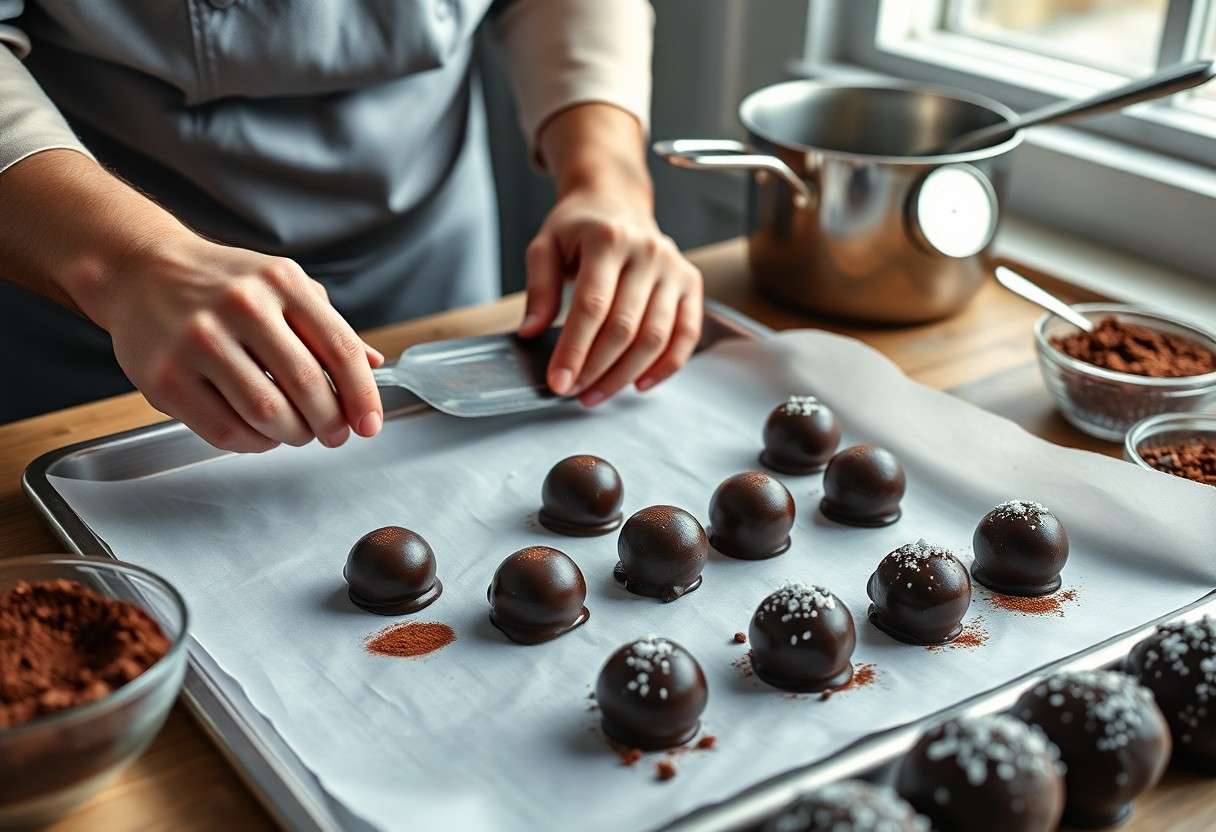
Mastering the dip-and-scrape motion lets you control coating thickness; keep tempered chocolate at its working temperature and avoid introducing water since it will seize the chocolate. You should use a warm, dry workspace and quality tools so your results stay consistent and glossy.
Follow with gentle tapping and a side-to-side scrape to remove excess, then chill briefly to set shells without condensation; use a cooling rack so air circulates underneath. You can reserve slightly thicker spots for decorative accents to create contrast.
Achieving a Thin and Crisp Outer Shell
Temperature control is the most decisive factor: keep tempered chocolate in its narrow working range so your coating crystallizes into a thin and crisp outer shell. You will notice that the right temperature also boosts shine and snap.
Cool pieces on a wire rack in a dry area and avoid sudden refrigeration that causes bloom; patience yields the best texture and appearance. You may reheat and retemper small batches if the shell dulls or softens.
Creative Garnishing with Sea Salt and Botanicals
Scatter flaked sea salt onto still-wet coating so it adheres and adds crunch, and press edible botanicals lightly to avoid bruising delicate petals. You should aim for balance so garnishes enhance rather than overpower the ganache.
Layer contrasts by pairing coarse salt with citrus zest or tiny herb leaves to create visual and flavor interplay; taste-test combinations before finishing a whole batch. You can trim stems and use tweezers for precise placement to keep each truffle elegant. You might also enjoy our guide on Why Cashew Cream Truffles Are the Expert Approved Treat.
Assume that grain size, placement, and timing will change the eating experience dramatically, so test a variety and note which combos deliver the best texture and safety for your audience. You might also enjoy our guide on Best Premium Truffle Collections for Gifting and Sharing.
Environmental Factors for Preservation and Storage
- Temperature
- Humidity
- Packaging
- Shelf life
- Fat bloom
Control ambient conditions to protect truffles: keep them in a cool, dark place away from direct light and strong odors, and avoid rapid temperature swings that cause fat bloom. You should monitor for moisture and mold and rotate stock to extend shelf life.
Ideal Humidity and Temperature Settings
Maintain stable ranges to prevent condensation and texture changes: aim for 10-18°C and 40-50% RH, and store in airtight containers to block humidity. You should avoid colder spots that trap moisture and warmer areas that promote melting.
Ideal Settings
| Temperature | 10-18°C (50-64°F) |
| Humidity | 40-50% RH |
Best Practices for Professional Packaging
Use layered packaging: food-grade liners, airtight pouches, and insulated outer boxes; include cold packs for shipping and clearly label production dates so you can manage rotation and quality. You should consider vacuum-sealed or nitrogen-flushed packs for extended storage.
Assume that exposure to warm temperatures will cause fat bloom or melting, so pack with adequate insulation and cold sources to preserve appearance and texture during transit.
Summing up
Presently you can make gourmet chocolate truffles at home like a pro by choosing high-percentage chocolate, warming cream gently, and cooling the ganache before shaping. Use a thermometer, strain for silkiness, chill to firm, then roll with light hands and finish with cocoa, nuts, or a tempered shell for snap. Practice timing and small adjustments to flavor and texture to achieve consistent, professional results. You might also enjoy our guide on Top 5 Luxury Truffle Collections for Connoisseurs.