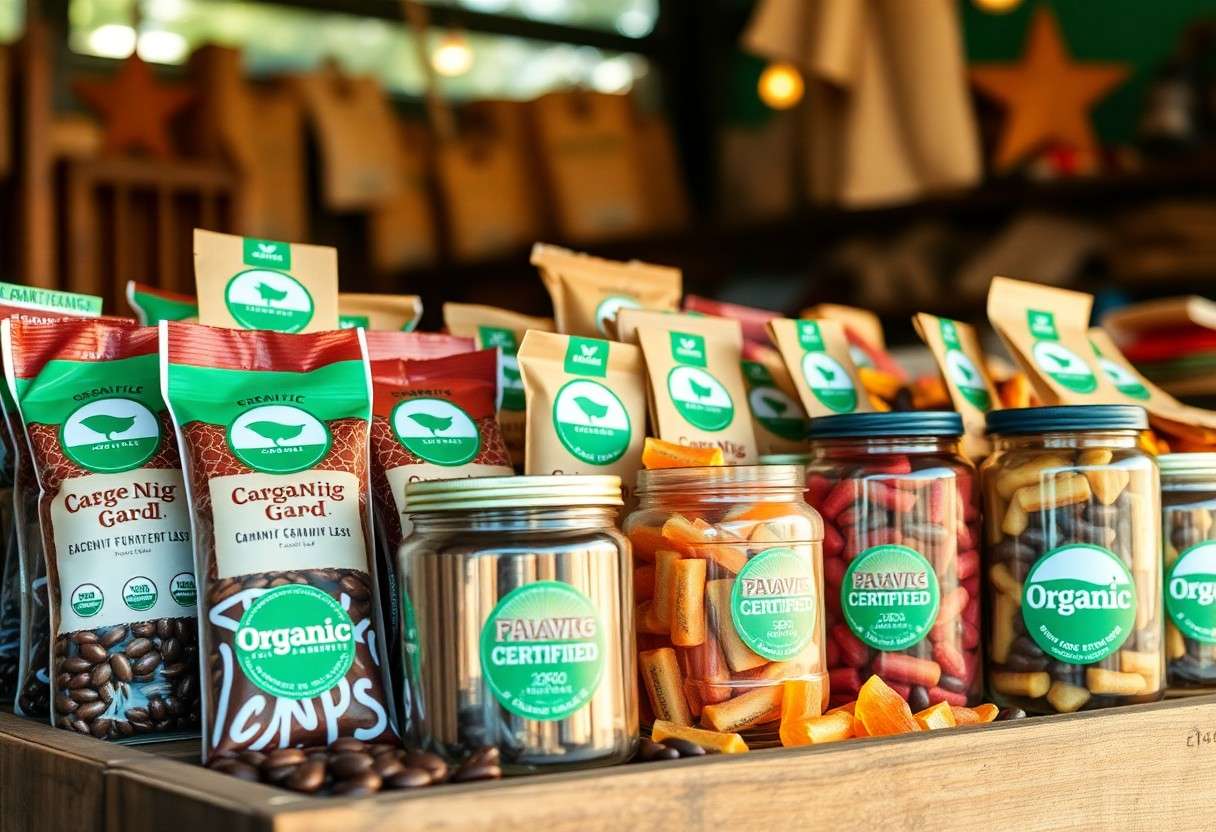
Guide to Clean Label Certification Standards
Certification proves you meet clean-label rules, guiding your product through ingredient transparency, warning about mislabeling risks, and boosting consumer tr

This article contains Amazon affiliate links. As an Amazon Associate, CandiesAndSweets earns from qualifying purchases.
Certification proves you meet clean-label rules, guiding your product through ingredient transparency, warning about mislabeling risks, and boosting consumer trust so your brand looks sane and smart on a crowded shelf.
Decoding the Buzzwords: Essential Factors
Labels can be slippery, so you should focus on a short ingredient list, clear certifications, and honest source claims when judging a product’s clean-label cred.
- Clean label – minimal, readable ingredients
- Natural – beware vague claims
- Organic – certified farming practices
- Non-GMO – genetic integrity assurance
- Free-from – specific allergens or additives excluded
The real winners pair a short ingredient list with visible third-party certification and supplier transparency.
The “No-No” List of Scary Ingredients
Scan labels for artificial colors, synthetic preservatives, high-fructose corn syrup, and vague “natural flavors” that hide industrial chemistry; you deserve clarity, not confusion.
Transparency: More Than Just a Glass Bottle
Peek beyond packaging: QR codes, batch numbers, and origin stories give you traceable proof, while public audit summaries and supplier lists show if brands actually practice what they preach.
Digging into sourcing and third-party reports helps you spot genuine traceability and audit integrity versus marketing smoke and mirrors.
The Alphabet Soup: Major Certification Types
| Certification | What it means |
|---|---|
| USDA Organic | Limits synthetic inputs; trust but verify for fraud risk |
| Non-GMO Project | Third-party GMO screening, transparency-forward |
| Fair Trade | Worker/producer welfare and supply-chain premiums |
| Gluten-Free | Minimizes cross-contact for allergens |
| Vegan | No animal ingredients; watch processing aids |
- USDA Organic
- Non-GMO Project
- Fair Trade
- Gluten-Free
- Vegan
You will spot seals that scream credibility and tiny stickers that whisper marketing; you should learn which actually protect you and which are mostly PR, since fraud can make labels dangerous.
Certified marks matter when you care about health, ethics, or allergies, and you should prioritize seals with clear standards and third-party audits to avoid costly surprises. You might also enjoy our guide on Ethical Cacao Sourcing: Revolutionizing the Chocolate Industry.
Organic, Non-GMO, and Everything In-Between
Organic choices will cut your exposure to certain pesticides while Non-GMO Project labels aim to reduce engineered ingredients; you should weigh cost, benefit, and whether the certification covers processing steps.
Niche Badges for the Ultra-Picky Eater
Curious shoppers love niche badges like Gluten-Free or seed-to-shelf claims, but you should check ingredient lists and cross-contact notes because small-print exceptions can spoil strict diets.
Perceiving the tiny disclaimers and testing logos will protect you from hidden allergens and misleading marketing while letting you enjoy legitimately safer options.
The Good, the Bad, and the Costly: Pros and Cons
You get cleaner ingredient lists and more shelf appeal that shoppers notice, but you also face tighter rules that can complicate recipes and sourcing.
Bureaucracy forces you into audits, documentation, and supplier checks that feel endless, so expect operational headaches alongside consumer trust gains. You might also enjoy our guide on How can I make environmentally-friendly chocolate candies?.
| Pros | Cons |
|---|---|
| Cleaner ingredient lists | Higher certification costs |
| Increased consumer trust | Frequent supply-chain audits |
| Premium pricing opportunities | Ingredient restrictions |
| Better shelf differentiation | Ongoing renewal fees |
| Marketing stories that stick | Potential SKU consolidation |
| Long-term brand value | Short-term margin pressure |
Why Your Marketing Team Will Throw a Party
Marketing will have you riding a PR high as the clean-label badge turns into trust signals, better shelf visibility, and storytelling that commands attention.
Why Your Finance Department Might Cry
Finance might cry because you’ll absorb upfront certification fees, testing bills, and supplier premiums that bite margins before any pricing upside arrives.
Forecasts should force you to model both the upfront costs and the potential long-term premiums so you can justify whether the certification becomes a profitable investment.
The Road to Redemption: A Step-by-Step Guide
|
Assessment
Checklist lays out what you must ditch and keep so you can swap vague claims for clean-label compliance without drama. |
Plan
Timeline breaks the process into bite-sized milestones so you and your team can track supplier audits, reformulations, and the sweet payoff: certification. |
Auditing Your Secret Pantry of Additives
Audit your labels and supplier lists to unmask hidden additives and flag ingredients that could torpedo certification.
Navigating the Paperwork Labyrinth
Forms will demand ingredient specs and supplier declarations, so you must assemble clean copies, safety data sheets, and chain-of-custody notes.
Deadlines bite; if you file complete dossiers early you avoid delays and fines and get your badge of approval faster.
Pro-Grade Cheats: Tips for a Smoother Ride
Pick the few non-negotiables that keep audits from turning into crises: clean label proof, batch traceability, and stamped lab reports. You skim the fine print, but you should demand raw-data access and supplier chains mapped in plain English.
Trim your checklist to practical wins: schedule random testing, insist on third-party certification, and keep a digital folder of compliance receipts for every SKU. You’ll thank yourself when an inspector shows up unannounced.
- Prioritize traceability over glossy claims
- Require raw lab data, not summaries
- Spot-check suppliers for greenwashing
Finding Suppliers Who Actually Tell the Truth
Vet suppliers by asking for full ingredient histories, recent lab curves, and references you can call; when answers are vague, treat greenwashing as a red flag and walk. You’re buying trust as much as ingredients, so make them earn it.
Keeping Your Label Squeaky Clean for the Long Haul
Check your label every quarter for subtle ingredient swaps, rebranded suppliers, or new allergens; a single unlabeled additive can trigger a recall and wipe out the goodwill behind your clean label. You need proofs, not promises.
Update your SOPs and SKU versioning so you can prove what was on pack on any given date; automate supplier alerts and keep audit trails for every ingredient batch to avoid messy disputes. You’ll sleep better knowing history is retrievable.
Assume that regulators or consumers will test your claims; keep raw reports, contact points, and a clear change log handy so you look transparent not defensive.
Conclusion
Considering all points, you get that Clean Label Certification turns opaque ingredient lists into a party of honesty, helping you pick snacks without squinting at tiny fonts. Trust the marks you vet, check claims, and keep your taste buds amused while shopping with less label drama. You might also enjoy our guide on Essential Guide to Halal Confectionery Options.