Complete Guide to Hosting a Chocolate Tasting Party at Home
Many hosts ensure you plan tasting order and pairings: offer varied cacao percentages, clearly label and warn about nut and dairy allergies, and store samples a

This article contains Amazon affiliate links. As an Amazon Associate, CandiesAndSweets earns from qualifying purchases.
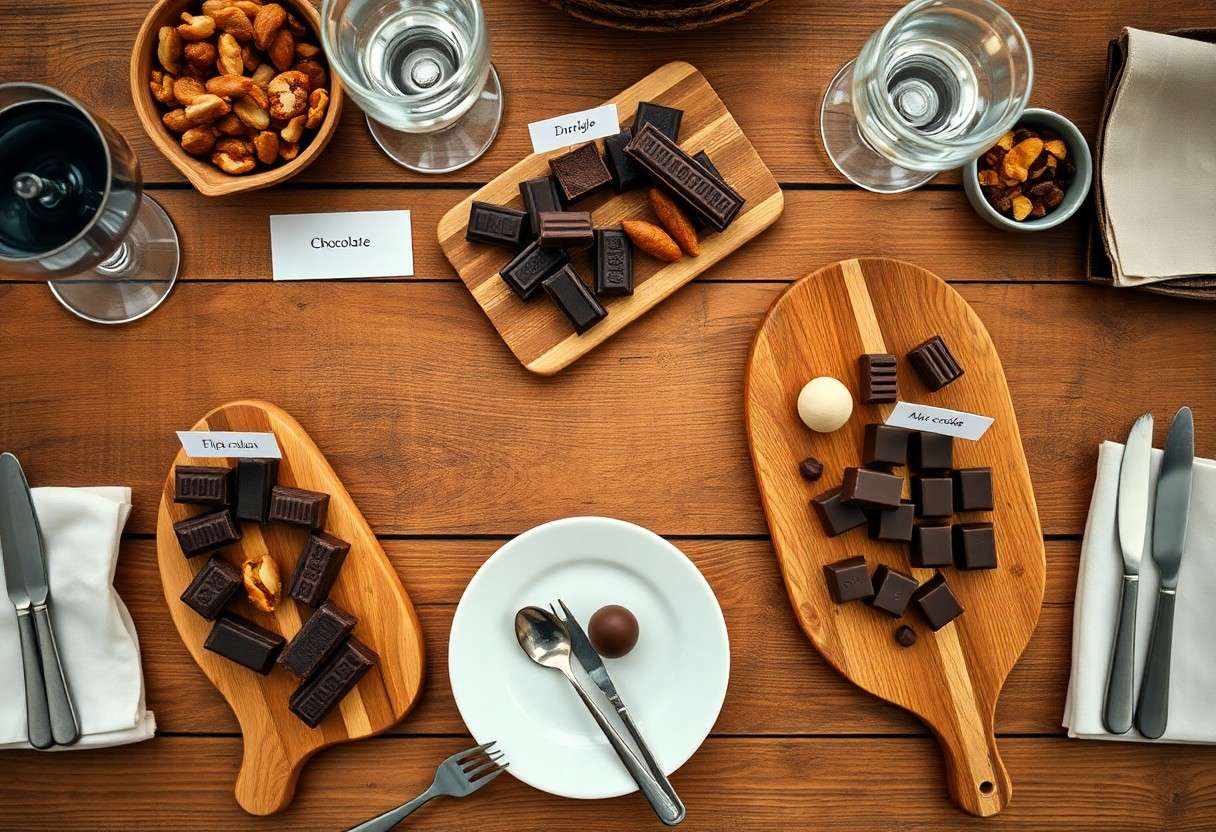
Many hosts ensure you plan tasting order and pairings: offer varied cacao percentages, clearly label and warn about nut and dairy allergies, and store samples at cool, dry temperatures to preserve flavor.
Selecting the Confections: Exploring Key Chocolate Types
Choose a variety of dark, milk, and white chocolates so you can showcase contrast in cacao intensity, texture, and common allergens like nuts and soy.
Balance plain bars with ones containing salt, fruit, or nuts to give you and guests clear tasting anchors and avoid serving overly sweet bars first.
- Dark Chocolate
- Milk Chocolate
- White Chocolate
- Single-Origin
- Cacao Percentage
| Dark | High cacao, intense, tannic notes |
| Milk | Creamy, lower cacao, sweeter mouthfeel |
| White | No cocoa solids, buttery, very sweet |
| Ruby | Fruity, slightly tart, novel color |
| Couverture | High cocoa butter for superior melting and coating |
Distinguishing Between Single-Origin and Blended Bars
Compare single-origin bars, which let you trace floral or fruity notes to a specific region, with blended bars that give you consistent, crowd-pleasing flavor.
Taste with intention and note how single-origin samples present distinct regional notes while blended bars emphasize balanced profiles so you can guide guests.
Understanding Cacao Percentages and Flavor Profiles
Percentages tell you the proportion of cocoa solids and fat, so higher numbers mean more bitter, tannic structure while lower numbers lean sweeter and creamier.
Lower-percentage bars highlight dairy and sugar notes and you should check labels for emulsifiers or added flavors that mute true cocoa character.
Knowing how to read percentages and listen for acidity, bitterness, and mouthfeel helps you pair each bar with suitable wines, coffees, or palate cleansers.
Essential Factors for a Professional Tasting Environment
Set a controlled space for tasting: quiet, well-ventilated, with comfortable seating so you focus on flavors and not distractions. Keep surfaces clear of food or floral scents; avoid perfume and cooking odors because strong scents can mask delicate notes.
- Temperature
- Lighting
- Palate
- Presentation
- Hygiene
Organize labeled samples, rinse water, and neutral backgrounds to make comparisons fair. Recognizing that consistent temperature and lighting are key to reliable tasting results.
Optimizing Room Temperature and Lighting for Sensory Focus
Keep ambient temperature near 20-22°C (68-72°F) so chocolate maintains texture and aroma, and use soft, neutral lighting to prevent color bias and eye strain while you taste.
| Optimal Room Settings | |
|---|---|
| Temperature | 20-22°C (68-72°F); stable throughout the session |
| Lighting | Neutral, dimmable LEDs (2700-3500K); avoid colored bulbs and harsh glare |
| Air & Scents | Low airflow; no perfumes or cooking smells that mask aromas |
Necessary Equipment and Presentation Materials
Gather neutral plates, labeled sample cups, tasting mats, clean water, napkins, pens, and spittoons if you prefer not to swallow every sample; prioritize sanitation with tongs or gloves.
Include bite-sized portions served from light to dark, clear numbering, and printed score sheets so you and your guests can track impressions and compare notes; keep extra water and palate cleansers on hand. You might also enjoy our guide on Plan the Ultimate Chocolate Tasting Party at Home.
Complete Guide to Hosting a Chocolate Tasting Party at Home
| Step | Action |
|---|---|
| Setup | Set a quiet space with neutral lighting and comfortable seating |
| Timing | Plan 60-90 minutes with breaks between samples |
| Tasting Flight | Arrange 4-6 samples from mild to intense, label and portion |
| Sensory Guide | Provide scoring sheets, palate-cleansers, and note allergens |
| Wrap-up | Collect scores, discuss favorites, and share take-home notes |
Curating and Preparing the Tasting Flight
Select a balanced selection of 4-6 chocolates showing different cacao percentages and origins; label each piece clearly and portion uniformly so guests can compare texture and flavor. You should warn about any nut or dairy allergens and serve bars at room temperature to release aroma and mouthfeel.
Executing the Five-Senses Evaluation Technique
Use a simple five-senses checklist: observe appearance and sheen, listen for the snap, inhale aroma, feel texture, and let a small piece melt to assess flavor and finish; ask guests to score aroma, texture, flavor, and aftertaste. You should provide water and plain crackers to reset palates between samples.
Observe palate fatigue signs and space intense samples so you do not overwhelm guests; pacing prevents misjudging delicate flavors. You can encourage short note-sharing after each round to capture differences while impressions are fresh.
Expert Tips for Palate Management and Pairings
You should sequence chocolates from mild to intense and keep portions small to protect your palate management; note sensations on a sheet and rest between samples to observe evolving flavors.
- Start light, then move to higher % cacao for clearer pairings.
- Use neutral bites and water to reset for consistent tasting.
- Limit strong-flavored foods that can linger and mask nuances.
Mix a steady rhythm for tasting so you avoid fatigue. Assume that you space tastings with plain water and a neutral cracker between bars to maintain clarity. You might also enjoy our guide on Tips for Tasting Chocolate Like a Seasoned Expert.
Selecting Effective Palate Cleansers to Prevent Fatigue
Choose simple rinses like room-temperature water and unsalted crackers as primary palate cleansers, and introduce mild apple slices or plain bread sparingly to refresh your taste without adding competing flavors. Avoid strong mint and citrus oils that can dominate.
Strategic Beverage Pairings to Enhance Cocoa Notes
Pair beverages by intensity to highlight specific cocoa notes; delicate darks benefit from light teas, while bold bars match with fuller-bodied beers or fortified wines-keep sips small and neutral between tastings. High-tannin wines can mask subtle notes, so use them cautiously.
Consider matching texture as well as flavor: creamy chocolates work with malty stouts or nutty sherries, while bright, fruity bars shine with floral teas or single-origin coffees to reveal layered beverage pairings.
Pros and Cons of Various Hosting Formats
Formats you choose determine whether you emphasize learning or conviviality; small seated tastings support education and control, while open mingles boost social energy and casual discovery.
Space and timing influence logistics; you must plan for allergies and proper cleaning to avoid cross-contamination, which can be dangerous for sensitive guests.
| Pros | Cons |
|---|---|
| Small seated tasting: focused learning | Small guest list limits attendance |
| Open mingle: lively social atmosphere | Harder to control tasting order |
| Structured class: clear learning outcomes | Requires more prep and timing |
| Blind rounds: reduce bias | Can confuse untrained guests |
| Virtual tasting: wider reach | Depends on guests’ tech reliability |
| High-end single-origin focus: memorable experience | Higher cost per guest |
Structured Educational Sessions versus Casual Socials
Structured sessions let you guide tasting order, explain origins, and control pacing; provide tasting sheets and clear prompts so guests learn without feeling rushed.
Casual socials encourage mingling and easy sampling, and you should accept less depth in exchange for atmosphere; plan breaks to reduce palate fatigue.
The Benefits and Limitations of Blind Tasting Methods
Blind tastings remove labels so you reduce preconceptions and get honest reactions, but you must brief guests clearly to prevent frustration.
Sensory overload is a real risk in blind rounds; you should limit samples, use neutral cleansers like water and plain crackers, and pace the session to protect focus.
Tasting blind can also spark better discussion when you follow with reveal rounds, allowing you to combine objective impressions with contextual learning and restore appreciation for provenance and technique. You might also enjoy our guide on Tasting Chocolate – How to Identify Flavor Notes.
Summing up
With these considerations you can host a focused, enjoyable chocolate tasting at home. You should select a range of cocoa percentages, serve neutral palate cleansers, guide guests from milk to dark, and provide tasting sheets so guests record aromas and textures.
You will control portion size and pacing, suggest simple pairings, and close with shared favorites to reinforce learning and conviviality.